
Vanessa Wakeman On Transformational Communication Strategies To Shift Systems And Build Movements
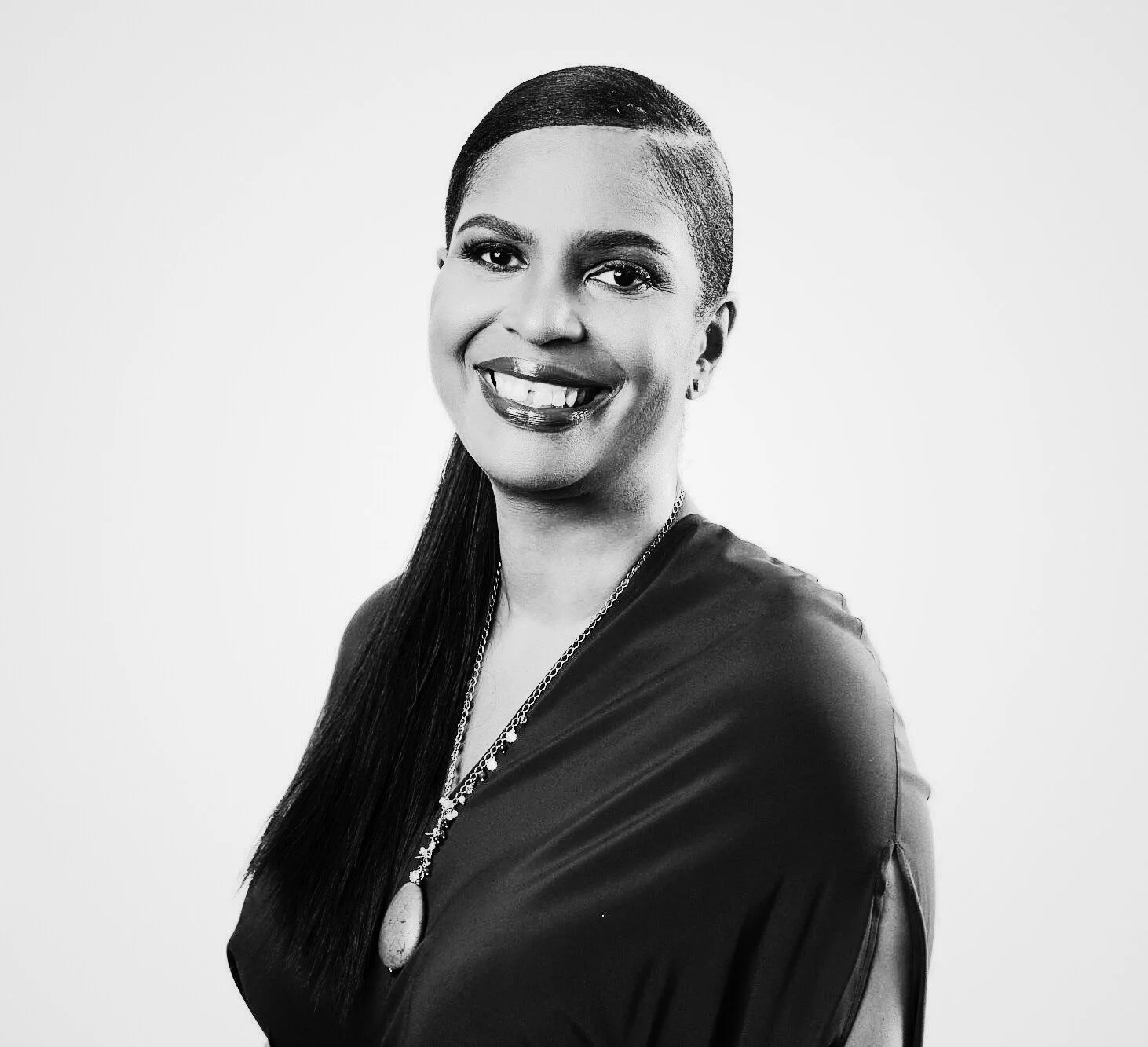
Vanessa Wakeman is the founder and CEO of The Wakeman Agency, she serves as a trusted advisor to non-profits, foundations and socially responsible companies globally.
An accomplished strategist focused on leveraging communications in pursuit of systemic justice, Vanessa has led engagements across numerous social issues, including healthcare, education, arts, civil rights, philanthropy, social innovation, economic mobility, children’s advocacy, animal rights, environmental and technology sectors, amongst others.
Vanessa has been inducted into PRWeek's Hall of Femme, noted as one of the 100 Most Influential Black Leaders in New York on City & State's Black Power List and named one of 50 Game Changers of PR by PR News.
Vanessa discusses harnessing strategic communications to support values-driven systemic transformation and justice, and why socially responsible companies create healthy, equitable environments through storytelling, building trust, and shifting cultures.
Highlights from the interview (listen to the podcast for full details)
[Indio Myles] - To start off, can you please share a bit about your background and what brought you to this world of social enterprise?
[Vanessa Wakeman] - I wanted to do work that mattered. My background is in corporate America, and early in my career I worked in Wall Street environments with technology. That was fine, but it wasn’t work that lit my soul on fire. I didn’t feel like I was making a meaningful contribution to the world or helping shape it in the way I hoped to.
I decided I wanted to do something different and launched the agency. I had zero experience in communications or events. I had some strategy experience, but it wasn’t within this sector. What I did have was a deep desire to learn and provide value.
Today, 22 years later, we’re doing just that. We’re working with a global roster of clients on a variety of social issues, and we’re helping them understand how communications is the foundation for pulling the levers of change in social innovation, social enterprise, and transformation. I’m excited to be a part of this.
As the founder and CEO of The Wakeman Agency, can you share how it supports mission-driven causes and organisations in communicating impact?
We are a strategic communications agency helping organisations think about the various ways communication can be used, whether it’s for fundraising, programming, audience engagement, or shifting perceptions. If you look at organisations working towards social change or social innovation, there’s always a need to educate audiences about the cause behind the work and, ideally, catalyse them into action.
Our work involves creating narratives and telling stories that drive engagement. We strongly believe in organisations having a clear narrative: something people can understand, relate to, and share, helping to build momentum around a mission-driven cause.
That could take the form of earned media through public relations, or the creation of a broader, overarching narratives that help people make sense of complex or evolving issues. Sometimes it’s as simple as finding new mediums for storytelling, like an exhibit designed to prompt fresh thinking.
It’s critical organisations understand the need for narrative resilience, the ability for a story to withstand the pressure of external forces, misinformation, or disinformation. We work within the ecosystem of communications, knowing that language evolves, thinking evolves, and change is constant. That means we must continually interrogate and examine: does this still work? Is this still the right language? Is it the appropriate story? Or are we entering a new chapter?
Our role is to help organisations build the right communication channels and structures, and then support them in executing those strategies. We serve as both a strategic advisor and a thought partner in bringing those tactics to life.
What have you learned about influencing social change, and how is communications key to reshaping systems and power dynamics within these spaces?
One of the things I often say is our organisation has a strong understanding of the politics of social change. When we think about that, we’re looking at the power dynamics inherent in relationships, dynamics that can either impede or accelerate progress.
We consider the narratives; what is the story being told? We look at policy; what can be changed? And we examine the institutions involved; how are they perceived by the public? All of these elements are at play simultaneously.
Through communications, we’re trying to tell a story and build a narrative that helps people understand: this is the current state, this is the desired state, here’s how you can be involved, and here’s the common goal. I’m simplifying it, but at its core, that’s what we aim to do.
When I talk about communications, I don’t just mean we build a story and send it out into the world. Ideally, there’s a two-way conversation. We’re telling these stories, and then our audiences respond. Some may say, “this doesn’t reflect my experience,” or “yes, this is exactly what’s happening,” or even, “I wasn’t aware of this issue.” That input allows us to strengthen the narrative.
The goal is to craft a story people can see themselves in, something they recognise as true and meaningful. When that happens, they’re more likely to want to be part of the journey and help advance the cause.
What strategies have you found particularly effective for businesses or non-profits wanting to drive momentum in addressing the issues they’re tackling?
The first and most important thing is to consider the investment. Often, when someone is building an enterprise (or in the case of a non-profit, operating on a more conservative budget) communications view it as a bonus or an extra. We need to shift that thinking and help people understand the value of communications from the outset.
You want to tell a compelling story. You want people to understand who you are. You want them to move with you on your journey. Communications enables all of that, so prioritise it. That doesn’t necessarily mean hiring a full agency; Maybe it’s a part-timer or an individual consultant. There are many ways to bring in communications expertise depending on where your organisation is in its maturity.
Second, think about who you are today and who you want to become. How do you want your audiences to perceive you? When you’re building something, it’s often hard to see beyond the immediate day-to-day.
I remember when The Wakeman Agency was only six months or a year old, and I tried to think five years ahead. It was difficult, I could barely manage tomorrow. But it’s so important to create space for that longer-term vision and think: how do I want people to understand what I’m doing?
Recognise the pace of societal change and the evolution of your organisation may not always align. Still, they influence each other. As society shifts, whether it’s through conversations around climate, migration, or how we support unhoused populations, those external forces impact how people perceive your work.
That creates an ebb and flow in urgency and focus, and it’s essential to pay attention to those shifts. What does your community need? What does your city need? What does your global audience expect?
Finally, even if you occupy a small space, think about the expertise and insights you’re developing. What can you offer that helps build your credibility and demonstrates your value in the broader ecosystem of the work?
What does authentic leadership in communications look like for organisations pursuing systemic justice, and how can leaders inspire a culture of communicating impact within their teams?
There’s a common (and false) assumption that all leaders are great communicators. They’re not! We expect leaders to step onto a stage and rally the team, but the reality is that most people aren’t born with that skill. Some are natural communicators with a certain charm that draws people in, but for the majority of people, it’s a skill that’s nurtured over time.
Communication is a skill that requires time, energy, and sometimes support. Leaders need to be willing to practise and work on their presentation. There’s nothing wrong with saying, “I want to be able to communicate better,” and getting help to do so. It’s about thinking through the return on that investment: confidence, connection, and influence with both your team and your broader audience.
I’ve attended talks by people I was really excited to hear from, and they didn’t meet expectations. Others, unexpectedly, have blown me away with their presence. I’ve also been in internal team meetings where leaders failed to build trust or inspire confidence. That’s why communication matters, even at the most basic internal level.
There’s a reputational aspect to all this. Communication is about trust, and with trust comes accountability. Leaders need to think about how they’re showing up and communicating through that lens. It’s a muscle that takes time to develop.
Another aspect of authentic leadership is the ability to fail forward. Whether what you’re building becomes a massive success or ends in failure, there are valuable insights gained from that experience. We encourage leaders to take the time to reflect, because those lessons often hold meaning for others as well.
At The Wakeman Agency, we talk a lot about thought leadership and how to help executives elevate their visibility. I’m not interested in thought followers. If you’re repeating what everyone else is saying, that doesn’t move the needle. What excites me is hearing a unique perspective, a point of view only you can bring that can accelerate progress on an issue. That’s a gift that creates a meaningful experience for others.
What advice would you offer to emerging changemakers or storytellers who want to build their own nonprofit, social enterprise, or organisation making a difference?
The first thing I’d say is this: at last count (though I haven’t checked recently) there were around 1.5 million nonprofit organisations in the US alone. Globally, that number is even higher, and there’s a lot of repetition and overlap in missions.
My first recommendation is to look at what already exists. If your idea is similar to one already in motion, consider supporting that initiative rather than launching another. Creating something new can increase competition for limited dollars and resources.
If your idea doesn’t yet exist, then absolutely go for it. Just understand that while we all want change to happen quickly, it usually takes time. Be confident in your ability to create change, but also be prepared for the peaks and valleys along that journey. I’ve seen many incredible organisations in the US and internationally doing meaningful work but I’ve also witnessed just how much effort it takes, so be mindful of how you care for yourself.
Think carefully about your available resources and what kind of change you want to make. Sometimes we think of change with a capital “C, transformational, system-shifting change. These are changes that reimagine how we cross the street or that introduce a new way of doing something entirely. But change can also be small and deeply impactful, something that fills a gap that mattered enormously to a particular community.
Consider where you can make the greatest change, based on your resources and your concept.
Also, we need to challenge the idea (one that is especially prevalent in the US) that there’s a single archetype for innovators, disruptors, or CEOs. Traditionally, that archetype has been a white male of a certain age in Silicon Valley. But in reality, there’s space for everyone. Your skills, thinking, and geography are all valuable.
We need to reimagine and rethink how we talk about and encourage engagement in social innovation, social enterprise, and social change. There is no one model of who gets access.
What inspiring projects or initiatives have you come across recently that are creating positive change?
There are so many interesting and exciting projects happening right now. A lot of them are focused on responding to shifts in the current political climate in the US, particularly around justice and equity.
Much of the work we’re currently doing is rooted in these themes, helping organisations think through how they can continue their efforts despite threats from the current administration. I won’t name specific organisations at the moment, but I’m deeply inspired by the number of groups, many of which we’re not even working with, who are showing up to care for their communities. These organisations understand just how important this moment is for our country.
To finish off, what books or resources would you recommend to our audience?
I’ve been thinking about this question, and instead of recommending specific books, I want to invite people to read things that bring them joy and allow them to think differently.
For many years, my entire reading list was made up of business books and professional development titles. I have two or three shelves in my library dedicated to them. At some point, I decided that was enough and started branching out to read more fiction and non-fiction that wasn’t part of my usual repertoire.
About a year ago, I joined a book club and was introduced to books I’d never have picked up on my own. Initially, I thought, “Why am I here? These aren’t the kinds of books I normally read.” But I’ve genuinely enjoyed the experience of immersing myself in different genres and ways of thinking. It’s been eye-opening to see how authors create new worlds, and it’s helped me reawaken parts of my creativity in unexpected ways.
If you’re an innovator, builder, or someone creating something new, there’s a lot to be gained from stepping outside your usual comfort zone. Let your brain explore a different environment. Lately, I’ve been reading quite a bit of science fiction, something I never thought I’d enjoy! But I now find myself thinking, “Wow, I love how they’ve constructed this world.”
As someone working in communications, narrative, and storytelling, reading outside my norm has been a real gift. It’s helped me appreciate the richness that different perspectives and genres bring to the creative process.


On Episode 609 of Impact Boom, Vanessa Wakeman of The Wakeman Agency discusses harnessing strategic communications to support values-driven systemic transformation and justice, and why socially responsible companies create healthy, equitable environments through storytelling, building trust, and shifting cultures.