
Megan Jones On Pioneering Circular Economy Solutions And Systems Change In Australia’s Solar Sector

An adventurous childhood spent exploring remote parts of Australia instilled a strong sense of environmental stewardship in Megan that has inspired a career focussed on creative problem-solving to complex, emerging issues.
After gaining exposure to the renewable energy sector whilst studying her MBA, Megan found her 'genius zone' - driving transformation across the solar energy sector towards the circular economy.
In 2021 Megan co-founded Circular PV Alliance and was appointed the inaugural CEO in 2024. Leading from the front into largely unchartered territory is where Megan has found her feet professionally, whilst staying true to her environmentalist values. Megan's approach is evidence-based and collegial, with a deep understanding that building new industry ecosystems requires astute commercial sensibilities aligned to socio-environmental benefits.
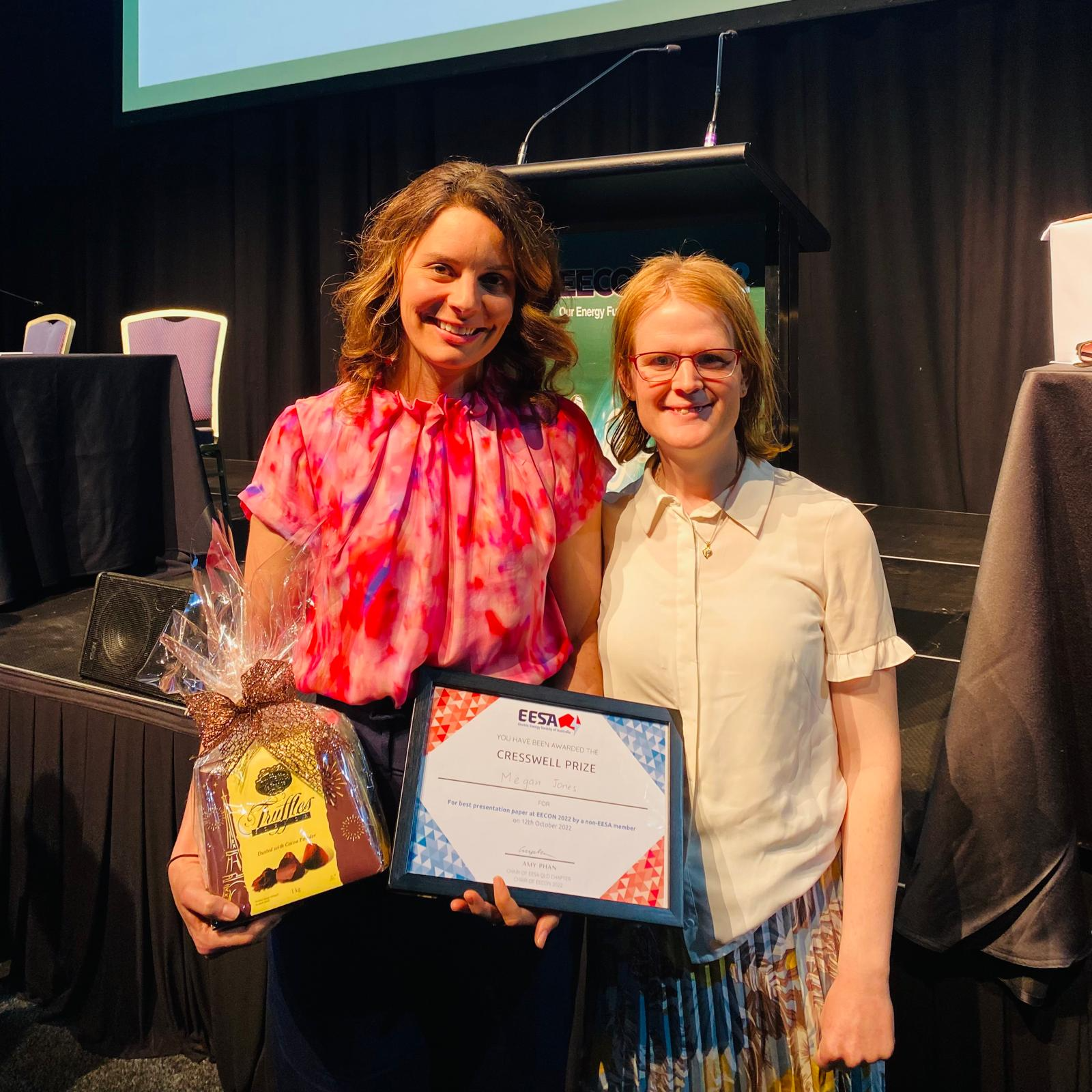
Megan's commitment to impact and value has been recognised by industry, having been identified as one of Australia's Top Green Energy Players by The Australian newspaper and being awarded the Cresswell Prize by Engineers Australia.
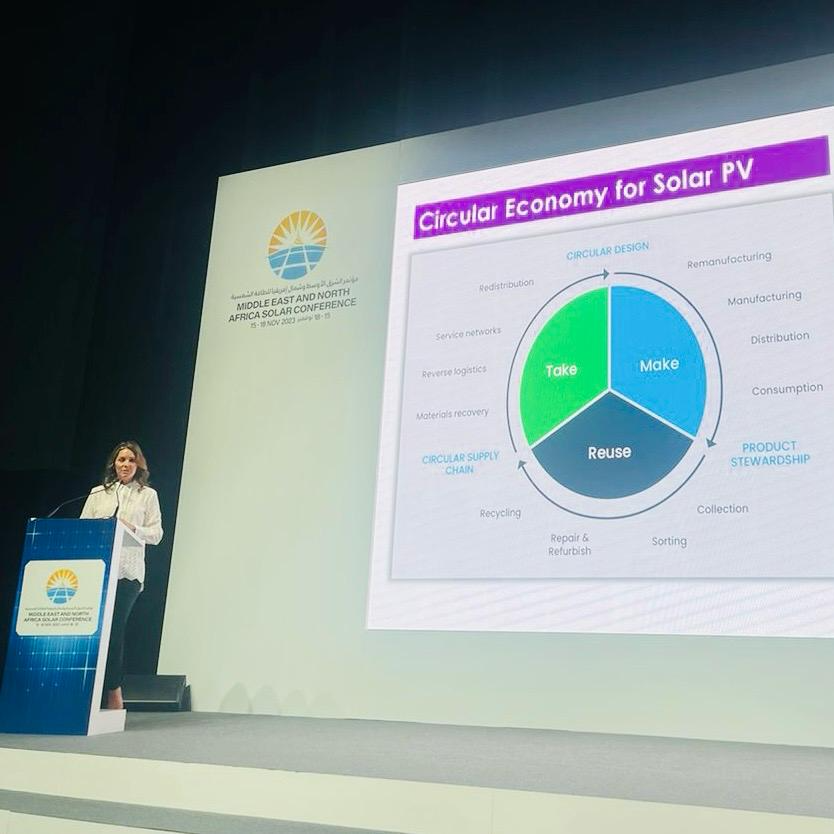
Megan discusses how circular economy principles are transforming Australia’s solar industry, the importance of co-designing tools to prevent wasting precious resources, and why now is a critical moment to activate community-led approaches to the renewable energy transition.
Highlights from the interview (listen to the podcast for full details)
[Indio Myles] - To start off, can you please share a bit about your background and what led you to working in social entrepreneurship and environmental impact?
[Megan Jones] - That’s a really interesting question and something I’ve been reflecting on a lot lately. I think it has a lot to do with my childhood. I grew up living in and visiting remote parts of Australia, as a child I lived in the Northern Territory, Western Australia, and Queensland. Early on, I learned to love the environment, and I spent a lot of time camping in remote places.
I remember as a kid, we’d be right out in the middle of absolutely nowhere, and yet we’d still find a piece of rubbish or something like that. As a kid, that absolutely killed me. I’ve always had this profound desire to prevent environmental pollution and littering, so I think it started in that kind of sphere.
One of the towns I spent a bit of time in as a kid was Port Hedland in Western Australia, and I had a lot of friends who were Aboriginal or had come from overseas. There was a detention centre in Port Hedland, and my dad took me there one day as a kid. He told me that we need to appreciate how lucky we are that we get to live in this beautiful country [without having to struggle for it like other communities do].
I think those were two key points in my childhood that gave me this real grounding. Since then, I’ve always had this drive towards environmental and social stewardship.
From there, I think I can trace it back to a career that initially led me into town planning and urban design, but that never really filled my cup.
I’ve always had this big-picture, blue-sky view of things, and fifteen years ago, I was introduced to the solar energy industry. I just knew when I started working in that space that it was an industry where I could have a real impact.
My interaction with the industry has evolved over time, and it’s kind of led me here to talking to you today.
As CEO of Circular PV Alliance, can you share more about the organisation and the values it represents?
Circular PV Alliance is an industry body, and we’re dedicated to supporting the transition of the solar energy industry into a circular economy. As an industry body, our work focuses on evidence-based advocacy, research, and providing value to our members by creating tools that promote the growth of businesses in the sector, specifically those providing circularity services to the solar energy industry.
That’s essentially what we do, but in terms of our values, we’re apolitical and we prefer to let the facts and evidence do the talking. While we are a not-for-profit, we approach our work with a commercial mindset.
We know that in order to create enduring and lasting change, we need to develop solutions that are financially viable and commercially attractive. That’s how we can help promote investment in this emerging industry. Those ideas underpin our approach.
We deeply value collaboration, innovation, and co-design processes. We actively work with our members and project partners to create tools and frameworks with an industry-led mindset. This means everything we do, talk about, and focus on is practical, fit for purpose, and meets the market where it’s at, responding to what the industry actually needs at the time.
We took this exact approach when we were developing CPVA Certified, which is the world’s first circularity assurance and certification framework for solar energy projects. That program was incubated through the Taronga Hatch Accelerator, and it’s a great example of how we have put our values into practice.
What inspired you to co-found Circular PV Alliance, and why is now such a critical moment to focus on solar panels and the circular economy?
CIRCULAR PV ALLIANCE STARTED OUT AS A GROUP OF PEOPLE WHO CAME TOGETHER ONLINE TO solve THE PROBLEM OF USED SOLAR PANELS TURNING UP AT LOCAL RUBBISH TIPS. At the time, I was studying my MBA, and My thesis was focused on the Australian solar panel recycling market as an emerging business opportunity.
One of my mentors tagged me in one of these LinkedIn posts with the photos of panels at the tip, and I just organically started reaching out to the people commenting on it. Fast forward a few months, and we’d had a number of informal meetings with this group of passionate individuals.

We realised that in order to really shift the needle on stopping solar panels from being thrown out, we needed to establish some kind of entity or business. We agreed the right structure was a not-for-profit, peak industry body model.
At the time, the two main energy industry bodies were struggling to work together to solve the issue, and Circular PV Alliance was created to explicitly focus on this particular problem. It was a big gap the industry was facing.
To your question about why this is such a critical moment, there are three main reasons. The first is that we’re about 15 years past the solar boom in Australia, which took off around 2010. That boom made us the biggest adopter of rooftop solar in the world.
The second reason is our current net zero targets and the massive renewable energy rollout underway. This rollout is going to require hundreds of millions of new solar panels to be installed, most of which will be deployed in utility-scale solar farms.
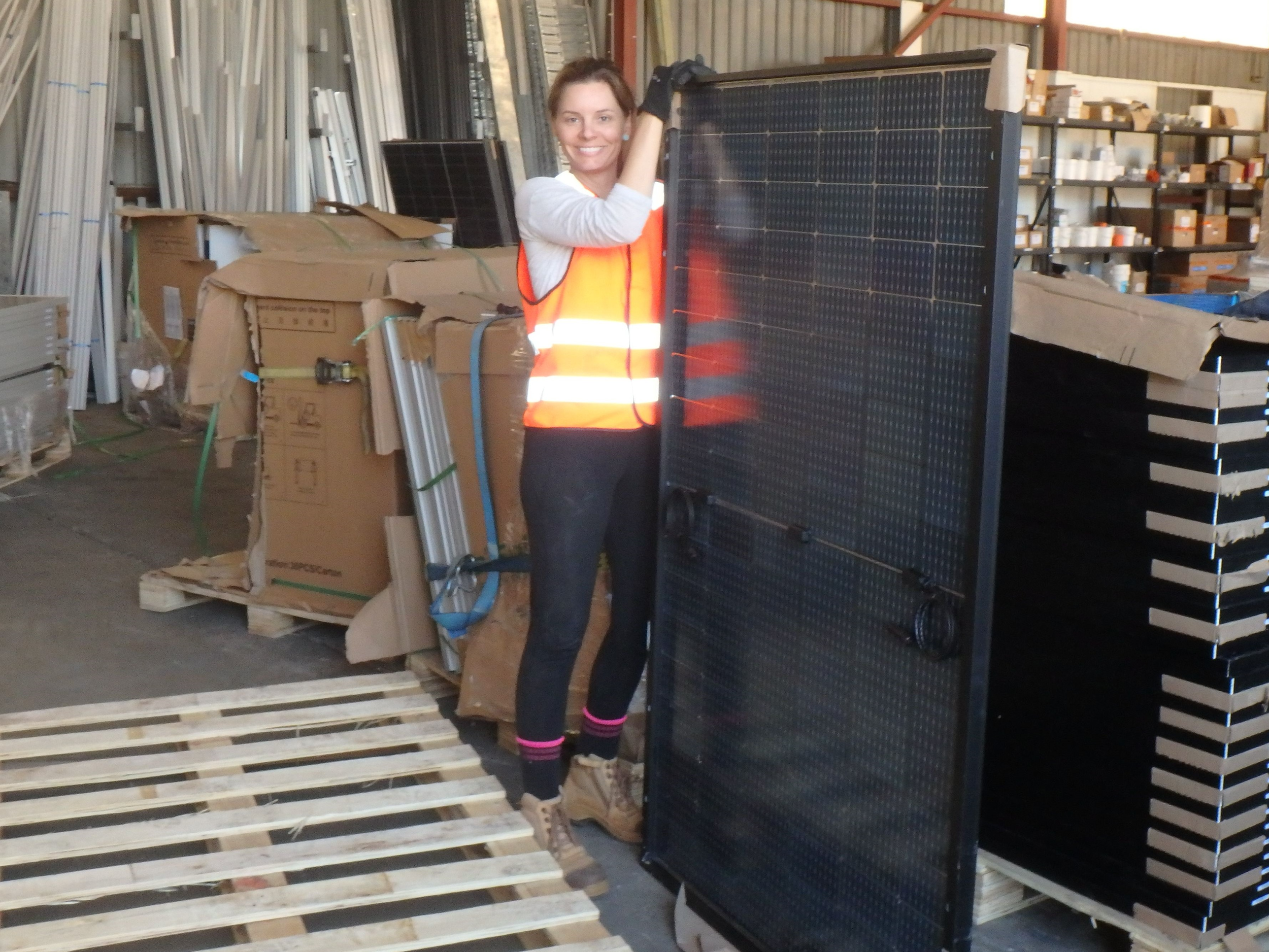
During the construction of these solar farms, thousands of panels will inevitably be damaged, and again, there’s currently no clear pathway or national incentive to keep these panels out of landfill. That’s a huge gap we urgently need to address.
The third reason (sorry, this is a bit of a long-winded answer, but there are so many layers to this!) is the global demand for critical minerals and materials. We’re not the only country deploying large-scale solar. There’s massive demand for materials like silver, silicon, and even antimony, all of which are contained in solar panels.
Here’s the staggering part: there’s more silver in the 140 million solar panels currently installed in Australia than in Australia’s largest silver deposit, which is located near Mudgee (about an hour and a half from my home in Dubbo).
We’ve got this incredible urban reserve of silver and other critical materials that could be recovered. Through the circular economy, we can create a whole new resource recovery market for Australia, one that supports local manufacturing and reduces waste.
Where do you see the intersection between environmental impact and social entrepreneurship helping to generate momentum for systems change in Australia?
The intersection of environmental sustainability and social enterprise is a key factor, and it’s gaining much more attention at the moment, particularly within the renewable energy industry.
I live in the bush, and we’re hosting lots of large-scale solar and other renewable projects. There’s a lot of change happening in regional communities that are being asked to host these projects. At the same time, we also need to consider mining communities that are being impacted by the transition to renewable energy.
If we look at it through that lens, there are some compelling and impactful opportunities here, ways we can create win-win outcomes for both communities and industries.
Recently, the Productivity Commission released its report into circular economy opportunities in Australia, and I found two of its recommendations particularly interesting. The first was to establish a product stewardship scheme for small-scale rooftop solar in Australia. The second was to explore opportunities to reuse decommissioned mine sites. Essentially using this already-disturbed land for clean energy projects. That taps into my land use planning roots as well.
I find those perspectives fascinating, and I believe this presents an excellent opportunity to start a new dialogue. With federal support, we can begin productive conversations between the energy and mining sectors and explore new ways of working together.
We can collaboratively address some of the social impacts facing these communities, and, at the same time, more effectively deliver new energy projects across the country. If we can get these two critical sectors talking constructively about land use, we have the potential to create a whole new system for energy project delivery, while also helping communities embrace emerging workforces and future opportunities.
What role does stakeholder collaboration play in shaping policy reform, and how have you navigated the complex solar and circular economy ecosystem to drive tangible impact?
Collaboration is essential if you’re looking to create enduring systems change and drive meaningful transformation. At Circular PV Alliance, we take this very seriously and embed a co-design approach into all of our work.
We’re a member-based organisation, and we always invite our members to be actively involved in everything we do. But we don’t stop there. We also work with private enterprise, academia, and government to ensure that what we deliver provides genuine value, is practical, and is fit for purpose. Our goal is to meet the market where it is, in terms of what can be delivered and achieved.
We applied this approach when developing CPVA Certified. As I mentioned earlier, we incubated it through the Taronga Hatch Program, and as part of that, we established a dedicated project working group. That group included representatives from universities, solar project developers, local councils, and other peak industry bodies.
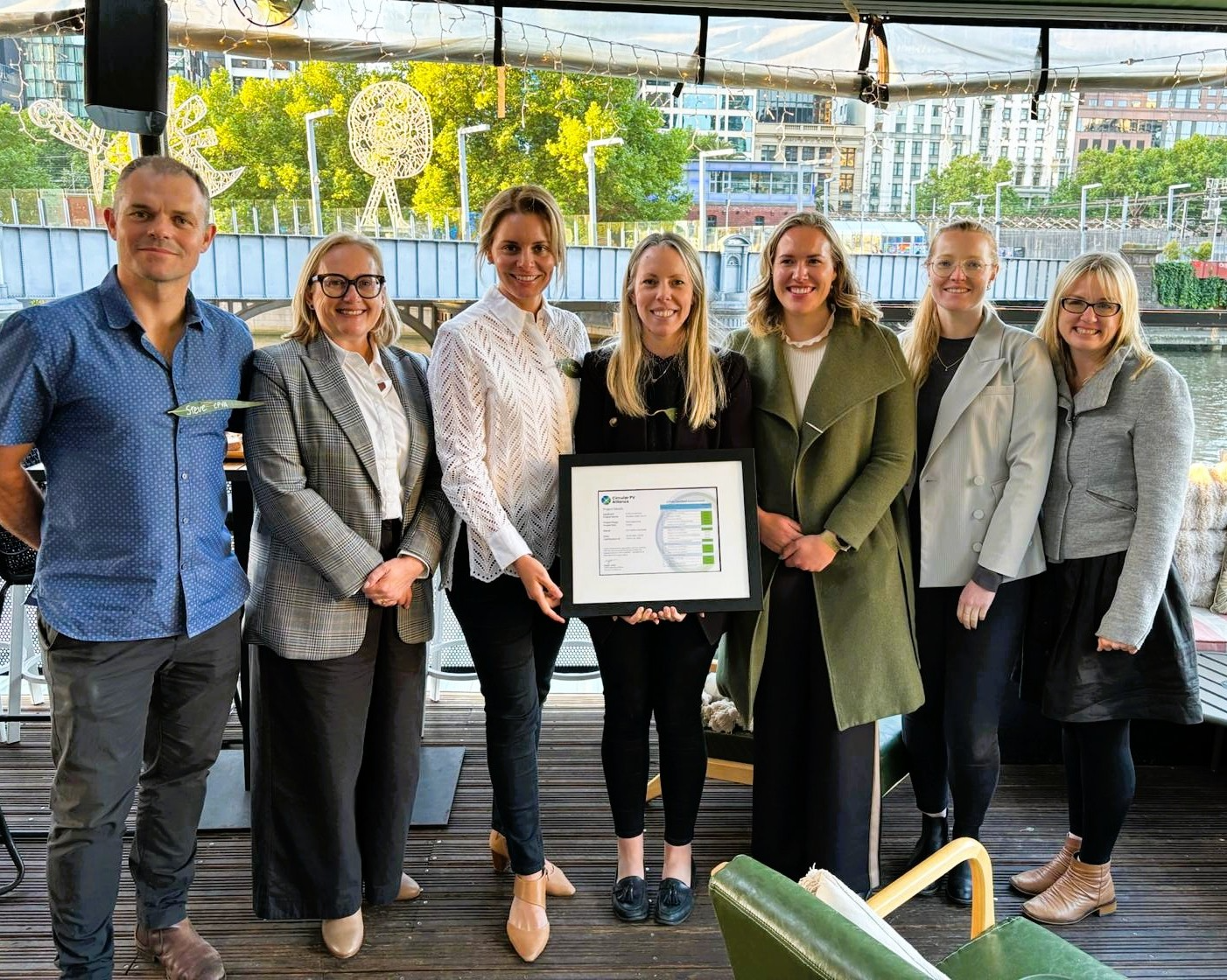
Because of this collaborative, cross-sector approach, the framework we developed was not only practical but also delivered real results. It influenced the way solar projects are designed and delivered, and it helped create a tangible outcome (keeping solar panels out of landfill and diverting them into the circular economy).
In terms of measurable impact, we’ve now diverted over one million solar panels from landfill through CPVA Certified, which is incredible. The scale of our impact grows with the size of the projects we certify. The bigger the solar project, the more panels involved, and the greater the environmental and industry-wide impact we can make.
What advice would you give to an aspiring changemaker, policy leader or entrepreneur wanting to lead deep environmental and systems transformation?
I think sometimes (maybe I’m speaking for myself here) we can get stuck in cycles of imposter syndrome. We tell ourselves, surely someone else has already thought of that idea, and that doubt can hold us back. But Circular PV Alliance is a great example of why that thinking doesn’t always hold true. At the time, nobody was doing anything about solar panels turning up at landfill, and that meant there was a real opportunity to do something.
My advice would be to just start. There’s no perfect moment, and there’s no perfect solution. We’re far better off having a bunch of imperfect solutions that are at least making a small impact than a whole bunch of great ideas that never get done because we’re too scared to share them.
We worry that if something’s not 100% ready, it shouldn’t be shared yet, but the truth is, you’ve got to take that first step. Once you start, you build momentum from there, and you often end up with a better outcome than you originally thought possible. So just get started.
What inspiring projects or initiatives have you come across recently creating a positive change?
I’m inspired by the work being done to include our First Nations communities in the energy and resource recovery sectors. What we’re starting to see now is a shift, moving beyond simply gaining project approvals from Traditional Custodians (which is, of course, still very important) to something more empowering.
What’s emerging is local people setting up businesses in their own communities to service the energy sector and the recycling industry. I think that’s a fantastic trend that’s gaining momentum. What’s coming from this is a wave of new leaders in community: people who are showing what a different future might look like when it comes to work, business, and career pathways for our First Nations communities and young people.
Seeing these local leaders step up is incredibly inspiring. They’re creating long-term, positive social and community change, and that kind of leadership can have ripple effects for generations.
To finish off, what books or resources would you recommend to our audience?
Any of the publications that Circular PV Alliance has created, they’re all available for free on our website, circularpv.com.au. If you want to learn more about solar and the circular economy, definitely jump on and have a look.
There are also a few life-changing books that I’ve read. I’d recommend anything by Louise Hay or Gabor Maté. Their words carry so much wisdom. Some of the things I’ve read in their books really helped me reframe my own thoughts and outlook on life, and understand the power of the mind and the body.
Once you unlock that potential within yourself, you can create truly amazing change in the world.



On Episode 636 of Impact Boom, Roz Holt of The Nest Community discusses transforming a grassroots craft initiative into one of Australia’s largest textile reuse hubs, tackling textile waste through community-led circular economy solutions, and why creativity, skill sharing, and collective action are essential for lasting social and environmental impact.