
Jenae Tien On Embedding Allyship And Inclusive Cultures Within Classrooms And Corporates
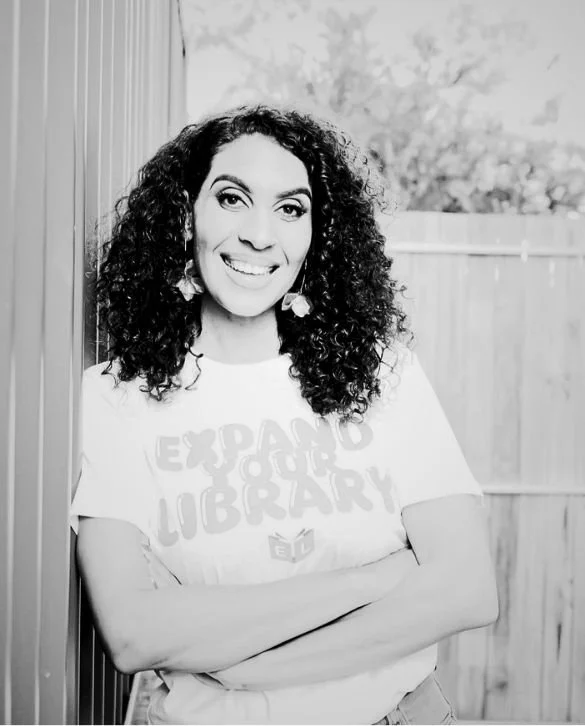
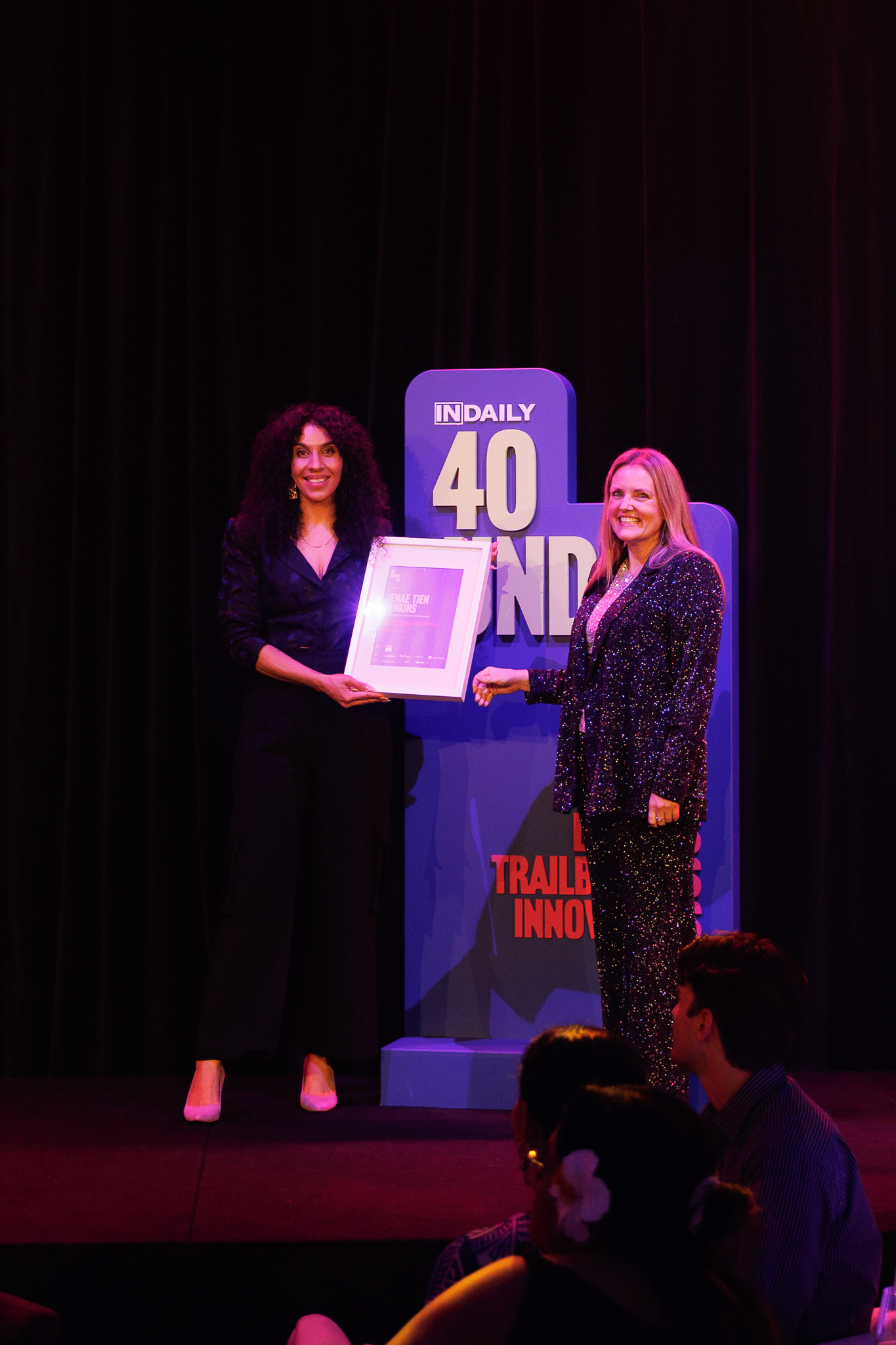
Jenae Tien is a multidisciplinary consultant, award-winning producer, author, and social entrepreneur recognised in Queensland’s 40 Under 40 Awards for 2025.
As Founder and Director of Expand Today Pty Ltd, trading as Expand Your Mind Consulting and Expand Your Library, Jenae leads a consultancy dedicated to building equity and belonging across education, media, and community sectors. Her work helps organisations move beyond tokenism, activating allyship, strengthening inclusion, and interrupting cultural stereotypes through training, strategy, and storytelling.
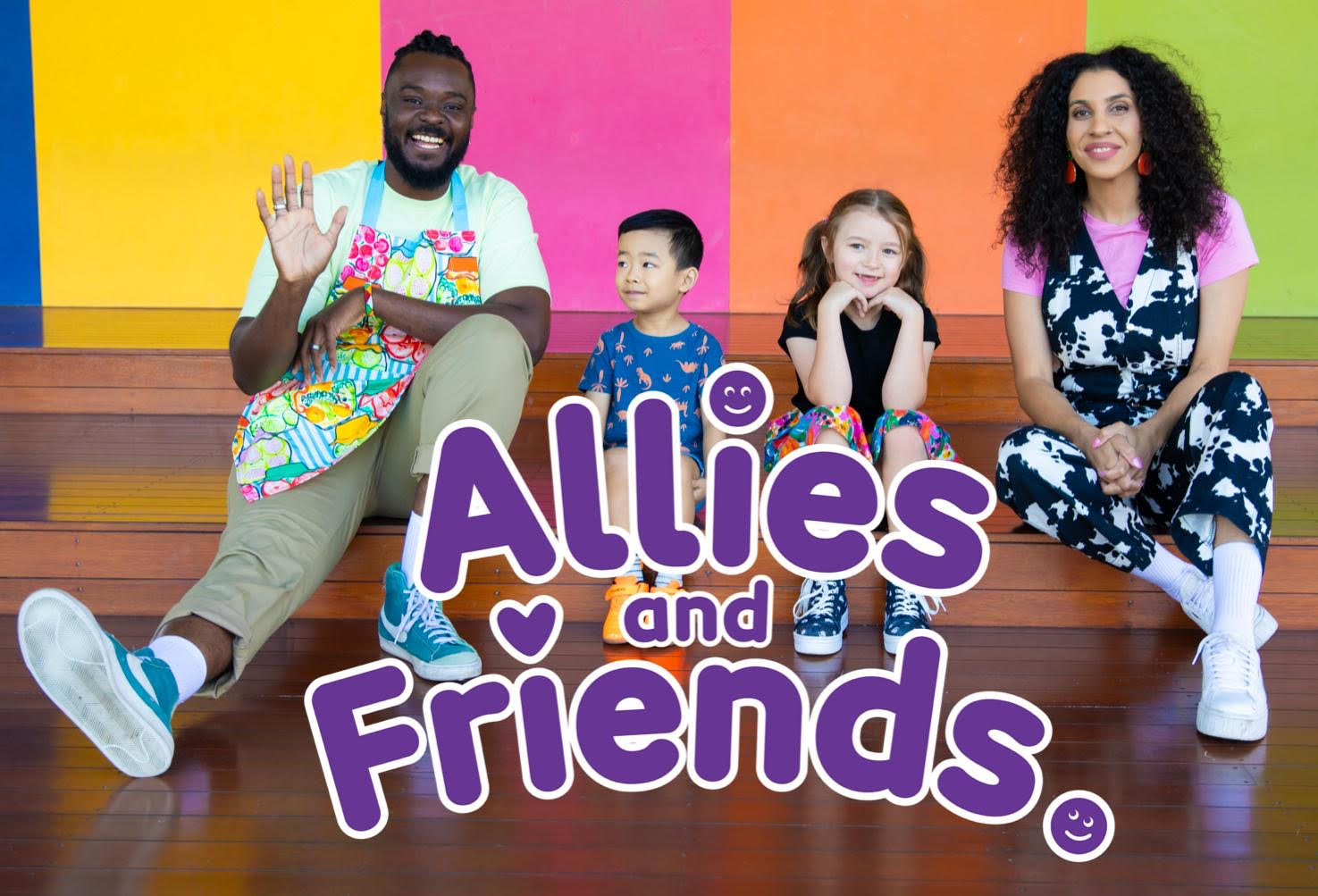
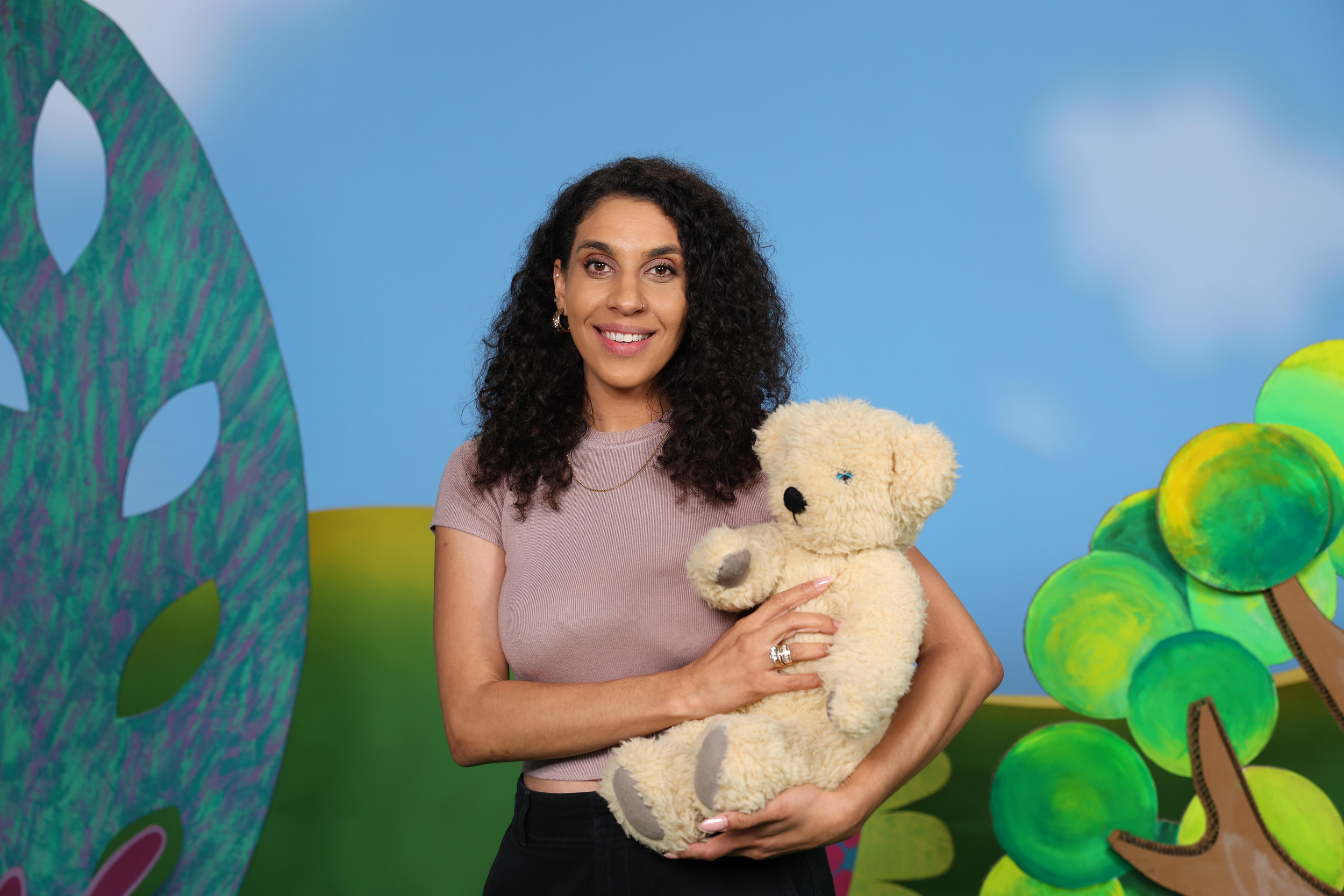
She created Allies and Friends, a national early childhood toolkit with ABC Kids Early Education, which inspired a collaboration with Play School where she was invited to be a producer and diversity, inclusion, and allyship consultant on the Play School special ‘All Together’, which was later nominated for a TV Week Logie Award.
Through her programs and partnerships, Jenae bridges cultural divides, promotes psychological & cultural safety, and equips communities to thrive through authentic connection.
Jenae discusses catalysing authentic, inclusive communities across education, media, health and corporate sectors, and how effective allyship, diverse storytelling, and early childhood education can drive long-term cultural and systemic change.
Highlights from the interview (listen to the podcast for full details)
[Indio Myles] - To start off, can you please share a bit about your background and what led you to working in social enterprise?
[Jenae Tien] - My background is in media. I’ve spent over a decade working across the industry. I have a Bachelor in Communications, not journalism as many might assume, and a postgraduate diploma in education (with a focus on autism). I’m currently working towards my counselling accreditation, and for someone who wasn’t particularly strong at school, I find it interesting that I keep going back!
I’ve worked in media producing radio, events, social media content, documentaries, and podcasts. You name it, I’ve likely had something to do with it, and my focus has always been on how content can amplify voices we don’t hear enough of.
When I entered the media space, I was also a new mum. We’d just had our first child, and we were preparing for our second. A few years later, as the Black Lives Matter movement was gaining momentum in Australia, it became a difficult time to be a Black journalist. I also began to see race and racism not just through my own experiences, but through the eyes of my young children. That changed everything.
I was already doing a lot of work in community, listening to the stories that make our country so rich and diverse. But I felt a pull to create something on my own platform, on my own time, and on my own terms. That’s how Expand Your Library began, which later evolved into a company, Expand Today. It now has two arms: Expand Your Library and Expand Your Mind consulting.
I still call myself a baby business; we’re growing and learning as we go. Every year teaches me something new about how to lead with purpose and run a business that has both heart and rigour.
The real turning point for me, though, was the Impact Boom Female Founder Forward Accelerator Program. No, I’m not being paid to say that! The program, run by Tom and Sarah, was incredible. It gave me clarity, confidence, and most importantly, community. It helped me articulate what I wanted to do in business, and that I actually could run one.
We now know our purpose is about helping organisations and educators build equity and belonging through responsive training, strategy, and storytelling to drive cultural change.
As the founder and director of Expand Today, can you please share more about your specific activities and how you’re fostering equity and belonging?
The business is built on the belief equity and belonging are not add-ons. They’re a way of being, working, and doing; that’s the foundation of everything we do.
We work across education, corporate, and media sectors, and we’re also starting to branch into health, because racism impacts people’s wellbeing. It’s not just a social issue, it’s a health issue too.
Our approach is deeply relational and responsive. We create experiences, not just workshops. We invite people to pause and reflect on their patterns, to explore how identity and bias are always in play, and to recognise how culture shows up in daily interactions. For many people, if we haven’t taken the time to stop and think, we don’t realise how our biases affect our everyday actions.
We’ve developed early childhood resources like the Deck of Diversity, and of course, Allies and Friends. These resources are designed to teach children about bravery, allyship, and kindness.
On the corporate side, our work around cultural safety is about creating environments where people feel seen, safe, and empowered to contribute fully. At the core of everything we do is the belief strong communities rely on human diversity, not a single conception of ability, culture, or thought.
The real challenge is going beyond just being “okay” with difference. That’s where we come in. Because everyone can say, “we’re okay with difference,” but how are you allowing it in? How are you now working in ways that might not traditionally align, so you can step aside and let someone else take up space? How are you actively elevating other voices?
We believe everyone has the power to set the tone or culture in their workplace, community, or even home. The way you respond gives others a reason to either raise the bar, or lower it.
Ultimately, we exist to help individuals, teams, and communities shift from awareness to accountability. From wanting inclusion to actually living it.
What do you believe is the role of early education in disrupting cultural stereotypes and fostering inclusivity?
I never thought I’d find myself working in early childhood education. I’m not a teacher, and I don’t claim to be one. But what I love about early education is that we get to shape how children see the world, and how they see themselves in it. That’s incredibly powerful.
I’ve had so many children come up to me, and families tell me that after engaging with Allies and Friends, they were excited to see someone who looked like them on the screen. We really only scratched the surface: there are so many families I wish we could have represented if we’d had more time. That’s the power of representation, seeing your culture, language, skin tone, family, and story reflected in mainstream media.
Allies and Friends was that kind of gift. First of all, shout out to early childhood educators, props to you. I always say you’re co-parenting with educators. The values we instil in our children at home, we hope their educators will carry on and even enrich.
Early childhood is the beginning of belonging. It’s where children learn what kindness means, what fairness looks like, and how to be a good friend. It’s more than just numbers and letters. It’s more than academics.
The early childhood framework lays a great foundation. When we expose children to diversity early, through books, play, music, and the people around them, we’re not just teaching inclusion as a ‘nice to have’. We’re actively interrupting bias and showing them that inclusion is a ‘need to have’.
The truth is, stereotypes aren’t formed in adulthood, they’re absorbed in childhood. Early education has an extraordinary opportunity to reimagine that story.
Programs like Allies and Friends, and the Play School special show that when you centre kindness, allyship, or courage and they’re the the focal points of the classroom, children don’t just learn to accept difference, they learn to celebrate it. They learn to understand and interpret difference as something good and valuable.
What does meaningful allyship mean to you, and how can organisations or individuals begin practising it more intentionally?
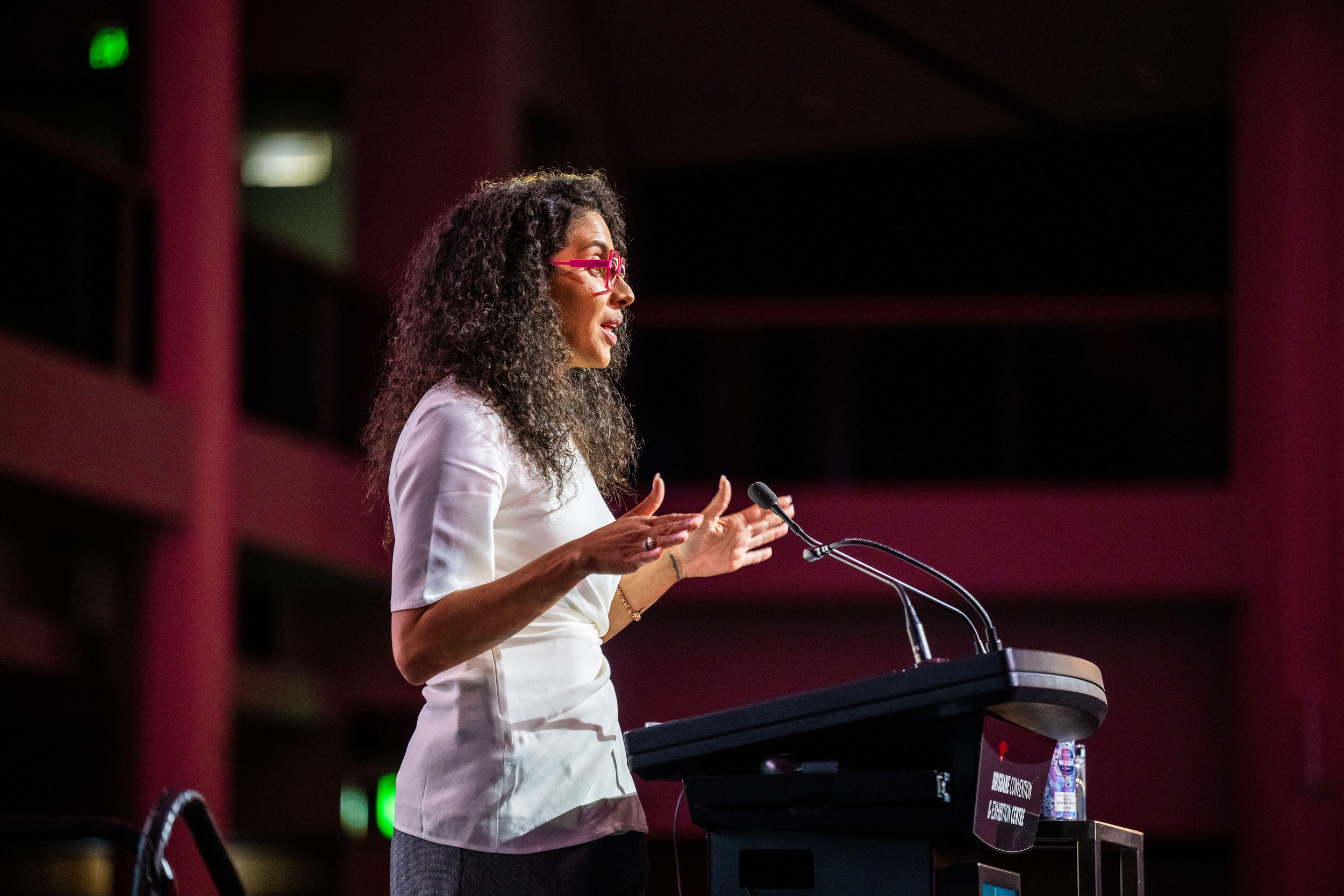
Something you just said reminded me of a moment when I was speaking at the Reimagine Conference, allyship is my go-to topic. I told the story of my first ally. I didn’t realise she was my ally at the time. She was a woman who ran the family daycare I attended as a child. She was kind and loving and all the wonderful things.
When Allies and Friends was released, she reached out to me on Facebook. She told me how proud she was, but she also shared some things she hadn’t told me when I was younger. She shared how she had been quietly fighting on my behalf, and how early I had experienced racism, even as a child. She couldn’t stop those outside experiences, but in her care, I was safe.
That’s the power of allyship. Somewhere deep in my wiring, I knew I was important, regardless of how I was being treated elsewhere, because of this one woman who consistently showed up for me. Allyship isn’t just a fluffy or feel-good thing. It has the power to change the entire trajectory of someone’s life.
I remained that loud, proud young child who’s now been able to grow platforms and speak up, because someone like her said, “Your voice matters. I’ve got your back. You belong.”
Sometimes I think allyship is taken for granted or treated like a trend, but in truth, it has the ability to reset someone’s GPS, to help them stay on their path and live out their purpose.
When I’m coaching or facilitating, I often share our five-step framework for allyship. I won’t go into all the detail here, but the first step is to see the system. You need to understand the system we’re all navigating. Question what within your organisation’s ecosystem benefits others, or doesn’t?
Next, you have to start with yourself. What biases, cultural stories, or lived experiences do you carry that might impact someone else’s experience?
Then it’s about centering and strengthening relationships, followed by sharing power through co-design. Finally, the fifth step is about sustaining practice through repair, because the truth is, you will get it wrong. I’ve gotten it wrong so many times. But you have to be willing to return, repair, and try again. At the heart of all of this is trust. Trust isn’t something you can declare, it’s something people feel through your consistent actions.
I know it might sound a bit corny because everyone references her, but I absolutely love Brené Brown. She talks about a “jar of marbles” to explain trust to leaders. Every person you meet has an empty jar. Your job is to fill that jar with every act of kindness, advocacy, follow-through, compliment, or moment of speaking up.
Each act of kindness, follow-through, advocacy, compliment, or moment of having someone’s back, that’s a marble in their jar. But often people think, “My door’s open, that’s enough.” That might be one marble, and sure they got the job, but what’s their experience once they’re in your team? How are you consistently filling that jar to build real trust?
If you think about how many marbles it takes to fill a jar, it’s a lot. It’s more than one policy, one morning tea, or a diversity banner. Working in a relational way means doing multiple, consistent things to build trust. Then, and only then, might you see a breakthrough. You might find that a team member opens up or brings more of themselves to their work, because they know you’re a safe person and a safe space.
Those are what I call “marble moments”, and it’s something you can easily build into your workplace culture. For example, in your morning huddles, you can ask, “Tell me about your week. How have you filled up somebody’s jar?”
But remember: to earn those marbles, the person on the receiving end must feel it. It’s not about intention, it’s about impact. That brings me to a story I want to share.
I was invited to a screening of Endgame, a powerful documentary series by Tony Armstrong on ending racism in Australian sport, hosted by Welcoming Australia and ABC iView.
During the panel, a woman shared her story of first migrating to Australia. She and her siblings were swimming at a local pool when some white Australians began yelling racial slurs, calling them monkeys and shouting abuse. They packed up and left.
What stood out to me was what she said next. She didn’t want someone to confront the people yelling. She just wanted someone—anyone—to come over and say, “You’re welcome here. I’m sorry that happened.”
When she arrived in Australia, her jar was empty. Nobody filled it, so it took her 15 years to get back in a swimming pool. It wasn’t until she had children and needed to teach them to swim that she forced herself to go back.
That’s the power of allyship. It can change the trajectory of someone’s entire experience, whether in your organisation, your neighbourhood, or your country.
The purpose of allyship is this: you can either add value to someone’s life, or you can severely detract from it. What choice are you going to make?
If you were speaking to other social entrepreneurs, how would you recommend they leverage storytelling to inspire change? Do you have any advice for those considering media partnerships or collaborations?
Storytelling is powerful. I love it.
People connect far more deeply with stories than they do with data alone. Stories make information real. They help us remember, they help us see ourselves, and they activate emotion. They also provide the context we need to navigate complex issues and actually make sense of them.
For example, I often say that babies begin noticing racial differences from as early as three to six months old, and bias begins to play out between ages three and five. That piece of data is already quite profound, but when I pair it with a story, it lands so much deeper.
Like the story of my daughter. She was three years old when another child made a negative comment about her skin tone. Afterwards, she came to me and said, “Mummy, I don’t like my skin.” When I share that alongside the data, people suddenly see it: “I have a three-year-old. I know a three-year-old.” It becomes real. It prompts the question: what am I saying to my child to start conversations about inclusion in an age-appropriate, fun way?
Social enterprises can use storytelling to deeply connect with their audience and reflect why their mission matters. As I mentioned, I’ve worked in media for over a decade. When it’s done equitably and ethically, media is a powerful tool.
I also teach public speaking and communications, and I always tell my clients to be the media yourself. Create your own content. This very podcast is a great example. The truth is, media often needs you more than you need them.
I say this because when I was in media, we were constantly feeding the beast. We had to fill the bulletin, fill the radio show, or the TV schedule. We always needed stories, so if you’re having an impact in your community, if you’re sharing compelling stories, help the mainstream media find you. They’ll come knocking, asking to tell your story.
If you’re considering media collaboration, my biggest tip is to prepare a really succinct and interesting press release. You’d be amazed how many people send us four-page releases overloaded with information. Just get to the point. Make it engaging. Include a photo if you can, because if it becomes an online story, those images help bring it to life.
Also, show the media how your story aligns with what’s happening in the world. Why is now the right time to talk about your product, program, or mission? Maybe it ties in with a new government policy. Maybe the Olympics are coming up, so how does your work connect with that moment?
Help journalists see the story. Give them the scaffolding. Make it easy for them to say yes.
What advice would you offer to emerging changemakers or educators looking to build solutions or better connect with communities?
I would say one of the most important things is to be responsive. If co-creating with community is truly the goal, if it is really the goal, then we need to approach it in a way that’s genuinely responsive to community needs.
Too often, we rush in with a plan. “Okay, everyone, we’ve got an inclusion budget. Let’s organise a morning tea, let’s plan a mural, we’ll get someone to do the Welcome to Country…” and before you know it, everything is transactional, fast-paced, and very “Western” in its approach. Quick, quick, quick, spend the money, tick the box!
What we often think is co-creation is really just deciding things for the community. We build the scaffolding, and then we tell people how and when we’ll include them. That’s not inclusion. That’s control dressed up as collaboration.
A perfect example is Bloodlines to Country, a podcast I co-produced with a friend and colleague who is First Nations. When we got the grant, we were excited. “Let’s do a podcast! Let’s plan the episodes! Let’s get started!” We’d already been working with the Yagarabul community, so we felt like we were on the right track.
Then we took the idea to Aunty Kerry Charlton, a Yagarabul Elder, educator, and one of my mentors. She said, “Put the kettle on. Have a seat. Slow your roll.”She reminded us: “You’ve already started planning how you want me to tell you about my bloodlines to country, without me? That’s not how this works.”
Of course it isn’t. But even with our good intentions, we rushed the process. We weren’t being responsive. What if she didn’t want to do a podcast? What if there was a better, more culturally aligned way to share that story? That moment was a powerful check, and a necessary one.
We were asking Aunty Kerry to take a traditional way of storytelling and modernise it, without even properly consulting her. But in our minds, we thought we were consulting. Even with my colleague being a First Nations woman, and myself as an African American Australian woman doing this work, we’re constantly needing to check ourselves, to self-educate, and say, “Hold on a minute, I’ve slipped back into that Western way of working: now, now, now, quick, quick, quick.”
Bloodlines to Country went on to win two major awards, the First Nations Media Award and an Australian Best Podcast Award as an independent project. But that success wasn’t because of me or my colleague. It was because it was First Nations-run and First Nations-led. All the bells and whistles we originally wanted to add, we stripped them back. Because Aunty Kerry said so. What we created was raw, it was real, and it was incredible.
The goal was never to win awards. The goal was to tell the community’s story in the way the community wanted it told. That’s what made it successful. It was responsive. It was led by what community needed. We have to be okay with getting it wrong, and with coming back from it when we do. That’s what allyship is. You can’t put it in the “too hard” basket. You have to say, “I’m comfortable being uncomfortable. I’m comfortable being checked.”
I always say it’s the biggest privilege when you get checked by an Elder, when they say, “You’re going the wrong way”, because that gives you the chance to do better. I want to do better. I need to do better. For me, and for the next generation.
So slow down your work processes. Build in the time for reflection, feedback, and dialogue. It’s not a delay. It’s an investment, an investment in trust and making sure the communities you’re serving will actually benefit from what you’re creating.
What inspiring projects or initiatives have you come across recently creating positive change?
The list is long, really long, because so many people are doing incredible work. But I’ve picked out a few that I think are particularly inspiring.
First is Welcoming Clubs Australia, which is a branch under Welcoming Australia. If you haven’t heard of them, they’re an amazing organisation doing powerful work. One of their standout initiatives is the Upstander Program, a “train the trainer” model that teaches people how to be upstanders instead of bystanders, something that’s so crucial to allyship. What’s brilliant is that it’s being implemented at the community level, particularly in sporting clubs, and anyone can take part. You could literally run it at your local kids’ sports club. It’s practical, grassroots allyship in action.
Then there’s Librateca [Books], a local Portuguese community library for children here in Brisbane, and it’s absolutely delightful. It’s focused on helping preserve language and culture, particularly for migrant families. So often, kids are expected to assimilate and lose their heritage language. This space is flipping that narrative, saying: “If you speak Portuguese, we’ve got books and resources for you.” It’s especially important for first-generation Australians learning their family’s language and stories.
Another one I recommend is the documentary Seen, which is just beautiful. It explores how parents are navigating their own healing journeys while raising children. It’s heartfelt, reflective, and incredibly timely.
Also, if you haven’t yet watched Endgame by Tony Armstrong on ABC iView, it’s a must watch. It tackles the topic of ending racism in Australian sport and is both powerful and deeply needed.
Finally, Autism South Australia has launched a sensory bus for neurodivergent people. I love this idea. We so often say events are “inclusive” or “equitable,” but for people with sensory needs, that’s not always the case. This sensory bus provides a safe, calming space in the middle of festivals or community events; somewhere to retreat, decompress, and still feel included. I hope we see more of these buses across Australia.
To finish off, are there any books or resources you’d recommend to our listeners?
Absolutely! If you have little ones, I highly recommend checking out StoryBox Hub or StoryBox Library. It’s a digital platform where children can enjoy stories read aloud by familiar faces, people like Emma Memma, which is pretty cool if your kids are fans! What’s even better is that the book selections are incredibly inclusive.
I actually did a book reading for them recently: Let’s Talk About Body Boundaries, Consent and Respect by Janine Sanders. It’s such an important resource, especially in the early childhood space where there’s increasing focus on child safety. We need to be equipping our children with the language and tools to keep themselves safe, and stories are a powerful way to do that.
If you work in media and want to report on race more ethically and accurately, I’d suggest the Race Reporting Handbook, which I co-authored for the Australian Human Rights Commission and Media Diversity Australia. It’s available online in both long and short versions and is designed to be a practical resource you can use in your everyday work.
Of course, I’ve mentioned the Bloodlines to Country podcast, Allies and Friends, and the Play School “Altogether” Special, all projects close to my heart.
Finally, if you want to give the gift of conversation, our Deck of Diversity is always available via our website at expandivory.com.au.


On Episode 631 of Impact Boom, Paul Dutton of the Child & Family Wellbeing Hub discusses supporting families through culturally informed and community-led care, why collaboration across agencies is crucial for holistic early childhood support, and how flexible grassroots approaches can strengthen long-term community wellbeing.