
Nicholas Marchesi OAM On Amplifying Human Connection Through Mobile Social Enterprise Services
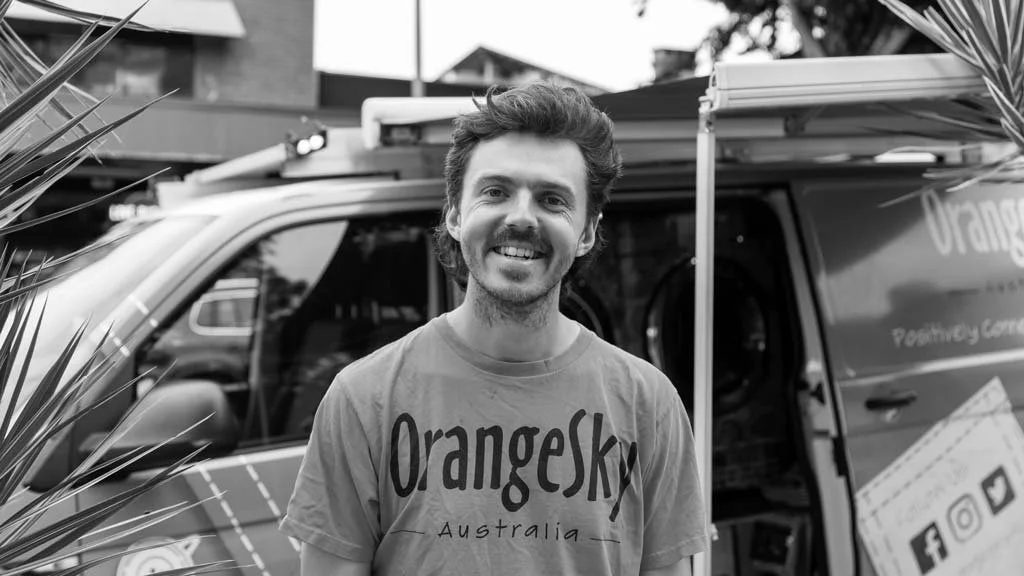
Nic Marchesi is an entrepreneur, innovator and storyteller, best known as the Co-Founder of Orange Sky – the world’s first free mobile laundry and shower service for people experiencing homelessness, hardship, isolation or loneliness.
Driven by a passion for innovation and connection, Nic is dedicated to solving complex social challenges through creative thinking and community-led design. His leadership and impact have been recognised through honours including the 2016 Young Australian of the Year, an Order of Australia Medal in 2020, and his selection as a Global Leader in the 2019 Obama Foundation Leaders Program.
Nicholas discusses the origins and growth of Australia’s first mobile laundry for people experiencing homelessness, the power of community-led solutions in remote regions, and his latest venture A Curious Tractor supporting experimental social innovation initiatives.
Highlights from the interview (listen to the podcast for full details)
[Indio Myles] - To start off, can you please share a bit about your background and what led to your passion in social enterprise, tackling homelessness, and working in community across Australia?
[Nicholas Marchesi OAM] - Since our first interview seven years ago, maybe Lucas and I have finished going through puberty! We’ve certainly learned a lot of things. Lucas and I grew up in Brisbane, and my parents come from migrant backgrounds. I often reflect on how they always supported me and did everything they could to give me a good upbringing.
Thanks to their generosity and hard work, I grew up in a very privileged environment. I went to an all-boys school with Lucas, and that school instilled strong values of giving back to the community. One day, my mum took me out on a school food van, and I met someone in my own backyard who didn’t have a roof over their head. His name was Harry, and Harry reminded me of my uncle or granddad, but he was sleeping in a park.
I remember going to school that day, then sitting with my family that night, and I just couldn’t stop thinking about Harry. Thanks to the opportunities given to us by our parents and school, Lucas and I became selfishly curious about how we could give back to the community.
After leaving high school, I went into the media and production industry, and Lucas studied engineering and commerce. One day we found ourselves sitting in a café, talking about this idea of giving back. That’s when we came up with the crazy idea of putting two washing machines and two dryers in the back of a van and going around washing and drying clothes for free.
Our first mission statement back in 2014 was simple: to improve the hygiene standards of people experiencing homelessness. We convinced a company to donate some washing machines, named our van Sudsy, and set out alongside our old school food van. All we wanted to do was one thing, wash and dry clothes for free.
I woke up to this guy by the name of Jordan. We put his washing in, and there was this awkward moment where we realised we didn’t actually know much about washing and drying clothes. Around that time, we told both our parents, “Mum, Dad, Lucas and I are going to start a free mobile laundry.” Their response was, “How about you start by washing your own clothes?”
We had this broken-down van, and not many people believed in us,but we had a strong desire to help people in the community. We begged and pleaded for some more washing machines and went back out the next morning. For whatever reason, Jordan trusted us with his possessions, but the van blew up again.
What we realised that morning was that Orange Sky had to work, because we had now been added to a long list of people who, throughout Jordan’s life, had let him down.
We kept pushing. We begged for more washing machines, went out on the third morning, stole water from the park, fired up the generator, and Jordan was there with us again. He gave us the only possessions he had in his life. We put his washing in the machine, started it, and everything worked perfectly.
That morning, we realised something profound. What we thought Orange Sky was meant to do (wash and dry clothes) was only part of what it could actually achieve. Because while the laundry was running, there was nothing else to do except sit down and have a chat.
That conversation with Jordan changed my life forever. He was almost a projection of my own life. His best friend and role model was his father. The first night Jordan was homeless was the day after his dad’s funeral. Then, one or two or three tough decisions led him to a place of deep disconnection from his community and the people he loved.
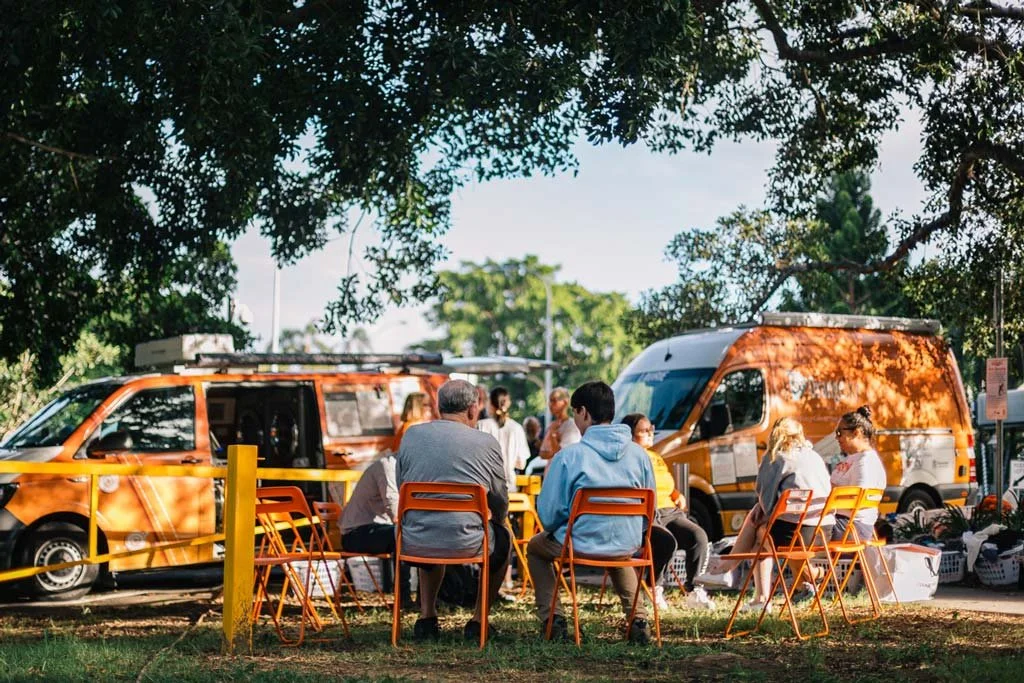
We quickly rewrote our mission at Orange Sky to “positively connecting communities”. That’s really where Orange Sky began back in 2014. The passion behind it wasn’t some grand, deeply defined thing, it was simply built into our family values of giving back and contributing.
For me personally, it was grounded in a selfish desire to make things, to learn, to build, and Orange Sky just happened to be the way we did it.
You’ve come a long way since 2014, so what are you now doing at Orange Sky? You’re also working with another organisation, A Curious Tractor, so tell us about how your work has evolved and your plans for the future?
Orange Sky turned 11 this year, and we’ve now got over 70 services in more than 70 locations around Australia, but we also have services in Aotearoa, New Zealand. We currently have nine assets operating across eight locations, and those assets go out over 450 times each week.
About a third of Orange Sky’s services are in some of the most remote parts of Australia. These include recent services launched in communities like Aurukun, Doomadgee, Mount Isa, across the Queensland Cape, through to the Kimberleys and Central Australia. We also operate in regional centres, and towns like Bendigo, Ballarat, and Bundaberg all now have Orange Sky services.
We’ve also expanded into schools, recognising many young people don’t have access to facilities to wash and dry their clothes, which can be a barrier to attending school. Our first school service launched in Frankston.
Additionally, we’re running pickup and drop-off services for people temporarily housed in motels or refuges. Orange Sky operates in these locations too.
Our mission remains the same as when we started: to positively connect communities. Today, we have over three and a half thousand volunteers who go out each week to run our services. Every year, millions of dollars in donations come to Orange Sky from school groups, corporates, and philanthropists.
What Orange Sky was doing back in 2014 is what we’re still doing, but it is just on a much larger scale. At our core, it’s still about having an idea and doing something about it.
That mindset of showing up in the right place at the right time to help as many people as possible will always be part of Orange Sky. A key part of our growth moving forward is about tailoring our services to maximise impact for our friends.
Like I mentioned with Jordan, the greatest privilege in my life is having someone like him not only trust us with their possessions, but also give us the opportunity to sit down and have a conversation. I don’t exactly know what Orange Sky will look like in 10 years’ time, but I believe the foundational elements will remain, bringing a sense of community, a sense of belonging, and a sense of connection to people who are disconnected.
A couple of years ago, my good friend Ben and I started A Curious Tractor for a few reasons. One is that I love tractors, and Ben is a deeply curious person. But it’s also an acronym that represents the idea of action.
A Curious Tractor is separate from Orange Sky. What we’re trying to do through it is give promising ideas, these little seeds, the nutrients they need to thrive or be discovered. Then, we explore how to safely grow those ideas up so they can be planted in other spaces.
We like to think of ourselves as tool- and medium-agnostic. We work on everything from digital projects to physical ones, across multiple communities in Australia and around the world. We operate in a range of areas, whether that’s in the drug and alcohol space, the justice system, or First Nations communities.
What we’re doing is responding to those “wouldn’t it be great if…” moments. Instead of just talking about them, we try them and learn something from the process.
There are a couple of current projects we’re working on at A Curious Tractor. One of them is called Goods, where we’re trying to build desirable, functional, and fit-for-purpose goods for remote communities in Australia.
The insight for Goods came from what we’ve observed in many of the remote communities Orange Sky works in, where there’s a disproportionate overrepresentation of rheumatic heart disease and scabies due to a lack of appropriate health hardware. We’re trying to design things like a washable mattress, an indestructible washing machine, and a fridge that can generate its own power and water.
It might be the first time a community is genuinely asked: “If you could design a bed from scratch, what would it look like?” Or, “If you had a washing machine you could fix yourself, how would you want it to work?” We also use a lot of art at A Curious Tractor to spark conversations.
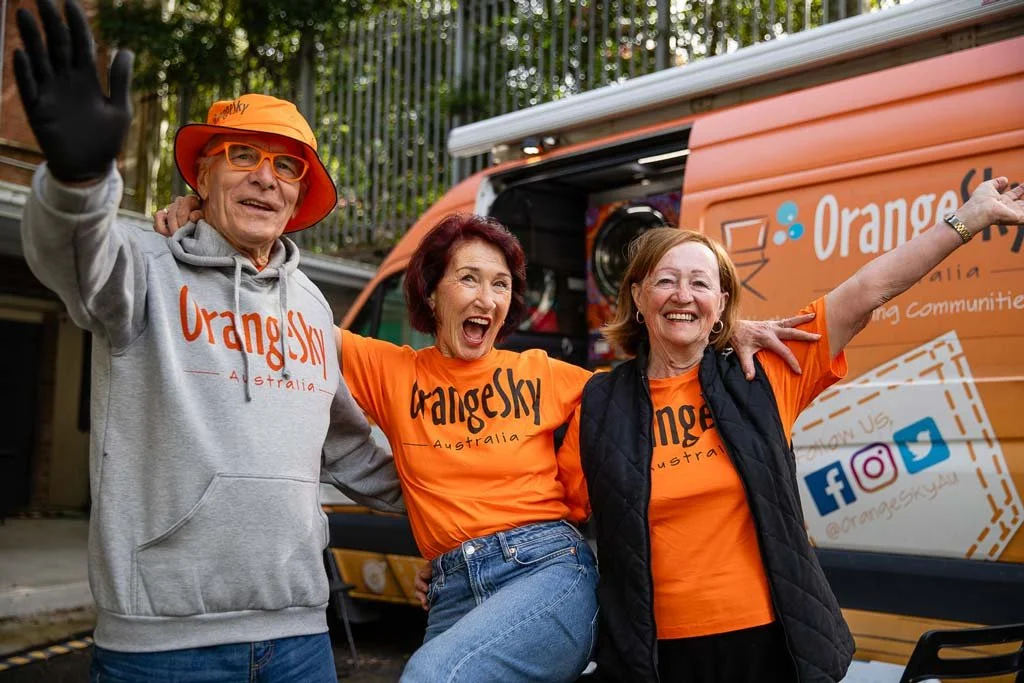
One of the domains we’re deeply interested in is the justice system in Australia. Right now, we’re working on a project called Contained, which shines a light on the ineffective and harmful nature of incarcerating young people. The goal is to start a national conversation around how we can reimagine justice. Across all of our projects, the specifics may differ, but at the heart of each is the same intention, nurturing small ideas that can bring people together and make the world a better place.
For those listening who are starting up or scaling purpose-driven organisations, what tips or reflections would you share?
I think the simplest one is this idea of action. There are so many quotes I love, but one of my favourites is: “The definition of dysfunction is the difference between what you know and what you apply.” In this day and age, it’s so easy to be wise: these days you can use AI to write a business plan or to access information.
But the dysfunction often comes from not trying. My top tip will always be: just start something. You have to do something. Whether that’s telling someone about your idea, building a prototype, taking that prototype out to the people you want to work with, or convening a workshop. Just take a step, whatever it is, it’ll hopefully move you into a better place than if you’d done nothing at all.
I also believe in surrounding yourself with great people. At both Orange Sky and A Curious Tractor, I’ve had the privilege of working alongside extraordinary co-founders with completely different skillsets.
Lucas and I went to school together, he was at the top of the class, and I was at the bottom. Ben and I couldn’t be more different either, but we share similar values.
Surrounding yourself with a strong community, whether that’s through wonderful programs like those run by Impact Boom or just finding your tribe is important. That might be a co-founder or just someone to support you along the way.
This idea of “from little things, big things grow” really rings true. Never in my wildest dreams did I think Orange Sky would turn 11 and have services operating across Australia and New Zealand.
I never imagined I’d be working with remote communities to develop appropriate technology. But it all starts with having an idea and doing something about it.
Are there any other deeply important traits you’ve observed in your co-founders or others you’ve worked alongside?
These words get thrown around a lot, but I’d say courage and resilience. Nothing in life is ever easy, and especially in purpose-driven spaces, we’re often working with deeply nuanced complexity.
At Orange Sky, we say that challenge is part of our DNA. We’re working with people who are potentially in the toughest times of their life. We’re also trying to get washing machines to work in the back of vans, so things aren’t always going to run smoothly.
But if we acknowledge that and have the right mechanisms in place, to deal with rejection from funding or when things don’t go as planned, it becomes really important. You need to be able to take the learning, take a breath, and then do something about it.
We touched earlier on the power of story. I believe stories inspire, connect, and bring people together. When you’re starting a movement or launching a project, the opportunity to tell a story is incredibly valuable.
One thing I’ve noticed is purpose-driven leaders are often so tied to their values that they struggle when other opportunities come up along the way. That’s why I think it’s crucial to be really clear about your values, and to surround yourself with the right people to help you make those decisions.
What do you believe is holding back the business-for-good movement from becoming mainstream, and where you see opportunities to help defragment and unite the different silos across the sector?
It’s a massive question and I wish I knew the answer to it. But I think you touched on it earlier, especially here in Australia, we have the oldest living culture of generosity and community-led solutions.
Business, on the other hand, is a Western colonial construct. I’ll be honest, I can’t even spell half these words like capitalism and these other big constructs.
Often, we’re forced into thinking it’s either business or not-for-profit; it’s good or bad. The world just isn’t that binary. We need to be able to work across both worlds. A lot of the solutions already exist and people are already doing the work, they just haven’t been given the resources, attention, or the amplification they deserve. Maybe they don’t need to become mainstream, maybe they just need to be supported in the right context.
I don’t have a definitive answer. But I do know there are many extraordinary organisations doing incredible work. They’re just not the ones the world currently holds in the highest regard, but I think that’s definitely starting to change.
What inspiring projects or initiatives have you come across recently creating a positive change?
There are so many, but for me, my heroes were never sporting stars or actors, I haven’t watched too many movies! My heroes are people working in this space.
There are just so many people in this country doing extraordinary things. Take Brodie Germaine up in Mount Isa, for example. He’s running BGFit and these amazing “camping on Country” and campfire programs.
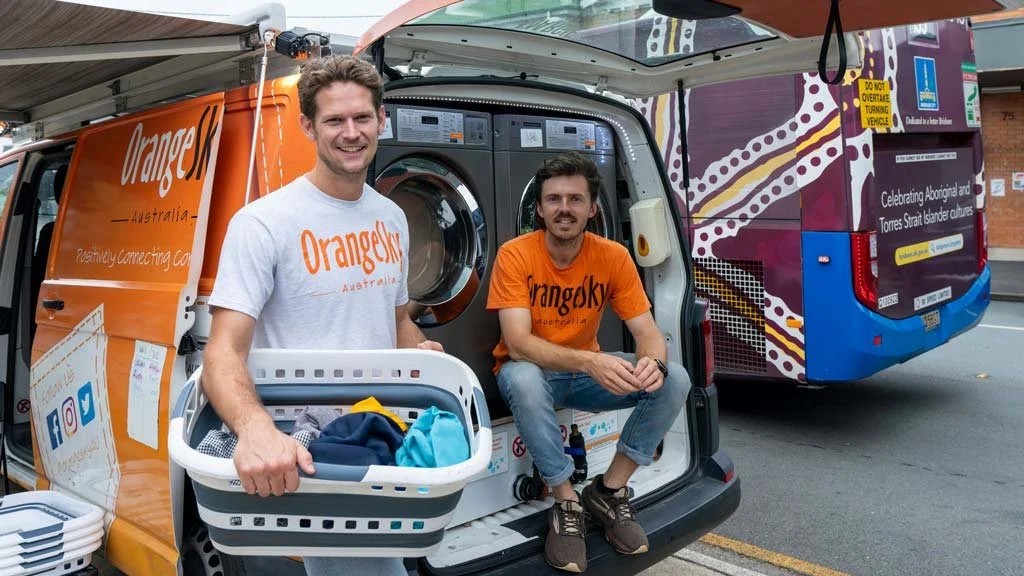
Then there’s Sita from She Shapes History, doing incredible work through tours across the country that focus on women’s history. I remember meeting her for the first time and her telling me that only 3% of statues in Australia are of women. So she’s using tourism and storytelling to literally reshape how we understand women’s history in this country.
Those are just two examples among hundreds of people doing incredible work. It’s people like Sita and Brodie who I look up to.
To finish off, what books or resources would you recommend to our audience?
I’ve never been great at reading, so audiobooks have absolutely changed my life.
A couple of books I really love include The Power of Us, which is an extraordinary read about how to build and innovate in communities. Another one is Partnering by Jean Oelwang, which explores the seven functions of partnering and how to build deep, meaningful collaborations.
I just listened to Gina Chick’s book, and I admire her resilience, bravery, and how honest she is about her values.
As for my favourite TV show, honestly, it’s Bob the Builder. The last podcast I enjoyed was How I Built This by Guy Raz.
Initiatives, Resources and people mentioned on the podcast
Recommended books
The Power of Us: How we connect, act and innovate together by David Price
Partnering: Forge the Deep Connections that Make Great Things Happen by Jean Oelwang
How I Built This (podcast & book) by Guy Raz


On Episode 634 of Impact Boom, Stephanie Say of HoMie discusses building commercially minded social enterprises creating employment pathways for young people affected by homelessness, and how reciprocal corporate partnerships and purpose-led business models can strengthen Australia’s impact ecosystem sustainably.