
Sarah Sheridan On First Nations Businesses And Campaigning For Change With Fashion
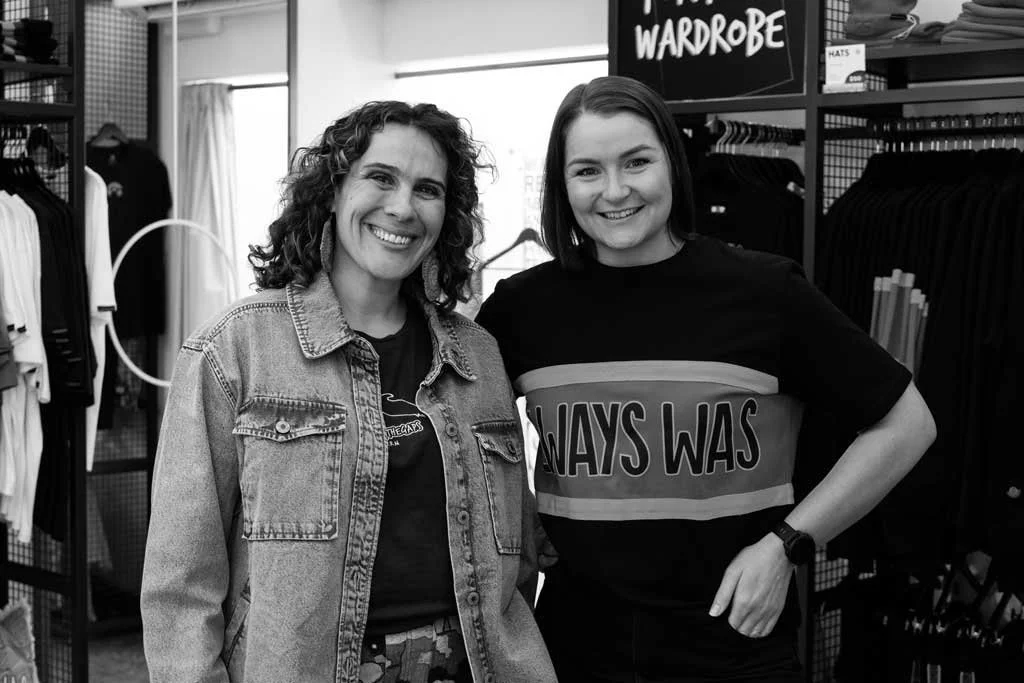
Clothing The Gaps is a certified Aboriginal business, Social Enterprise and B-Corp co-founded by Laura Thompson (Gunditjmara) and Sarah Sheridan (non-Indigenous) that works to unite Indigenous and non-Indigenous people through fashion and cause.
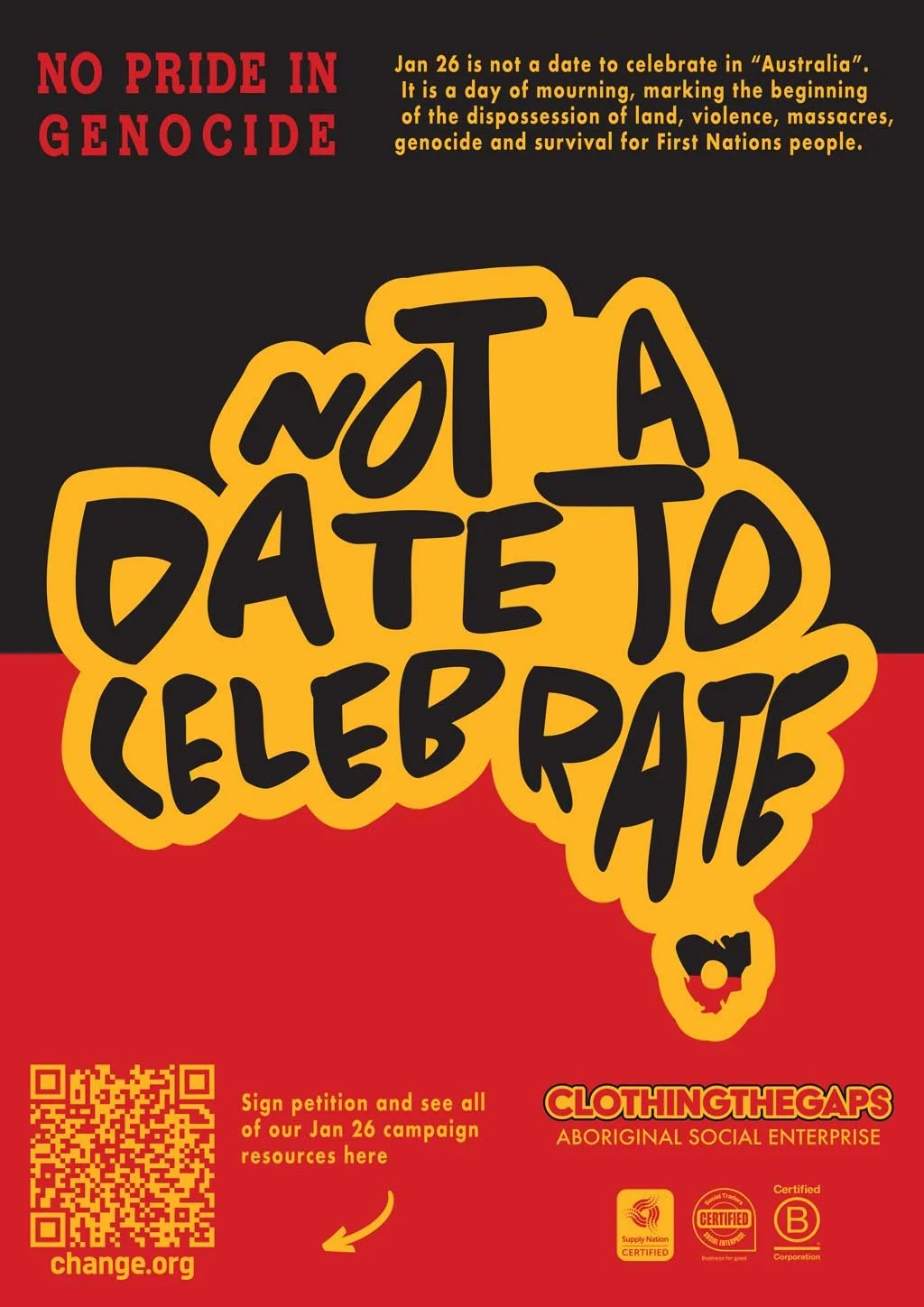
Known for impactful campaigns like Free the Flag and Not a Date to Celebrate, the brand uses clothing as a vehicle for education, conversation and action. Their Not a Date to Celebrate campaign encourages reflection on what January 26 really means and is a movement encouraging people to walk together towards meaningful change.
Sarah discusses building a purpose-driven fashion label grounded in community health and Aboriginal rights, leading powerful national campaigns like Free the Flag and Not a Date to Celebrate, and how business for good can take a stand and contribute to generating sustainable change.
Highlights from the interview (listen to the podcast for full details)
[Tom Allen] - To start off, can you please share a bit about your background and what led to your passion in social enterprise, B Corp, and ultimately using business as a force for good?
[Sarah Sheridan] - It always makes me smile now being back on Wotjobaluk Country. For those who don’t know, Wotjobaluk Country is in the Mallee in regional Victoria. There’s a town called Horsham, but I grew up just down the road in a tiny little country town called Donald.
During my first year of university, I needed to do a local regional placement at somewhere connected to my degree. At the time, I was studying health science and international development, and I ended up working at the local Aboriginal community co-op. It was about an eight weeks internship, and it was incredible. It flipped my entire way of thinking around community development.
If you had asked first-year university Sarah what she would be doing by the time she was 35, I probably would’ve said running the UN! I was outrageously ambitious, and I really thought that as a white girl who cared about the world, I knew what to do, how to solve things, what that looked like and what people needed.
My time working alongside community at Goolum Goolum actually just completely stripped all of that away. It was humbling, and I realised I knew absolutely nothing. I didn’t have the answers, and I had so much to learn.
I learned about the deeply important concept of community control, and I am so incredibly grateful for getting to learn what it means to truly listen and be led by the people who are most impacted by what’s happening and see what the outcomes should look like. Rather than doing impact work through leading, you can do impact work through supporting, listening, learning, and doing the work that’s asked of you.
I’m actually a health promotion practitioner by trade, so it’s hilarious I’m now running a fashion brand! If you had asked any of my girlfriends in high school whether I’d be in the fashion space by this point in my career, they probably all would’ve laughed.
Neither Laura nor I have a business or fashion background. We both love clothes and we’re both avid op-shoppers; that was one of the things we bonded over very early when we first worked together at the Victorian Aboriginal Health Service. Laura was my boss. She was the manager of the Healthy Lifestyle Team at VAHS, and I came into the team as an intern. That was our first time working together, and we worked there for about three and a half years leading that team together.
I’m forever grateful for our health promotion training because what it taught us, particularly when it comes to communications and branding, is invaluable. Health promotion asks you to take complicated, often scientific, and sometimes boring or annoying topics like smoking cessation or eating more fruits and vegetables, and make them fun, engaging, and actionable.
That’s what we did, so that background has seriously been the best training for what we do now. For example, taking a complex issue like a copyright dispute over the Aboriginal flag and turning it into a three-word campaign slogan: Free the Flag. It’s about distilling complex information into something people can digest in the 0.2 seconds of attention span they have these days.
It was an incredible foundation for understanding how to communicate complex ideas to the masses and how to engage people in issues they probably didn’t initially want to engage with.
You mentioned that campaign Free the Flag which was led by First Nations enterprise Clothing The Gaps, can you share more about how it all started, the campaigns you’ve run, the change they’ve created, and what you’re currently focused on?
One of the things that’s important for Laura and I when we talk about the work we’ve done in the campaign space is that when we sat down to write a business plan (which we actually didn’t do), campaigning was never something we would have listed as a key activity of the business. It just wasn’t part of the plan.
It’s one of those things that just happened. We found ourselves in a situation where there was an issue that felt too big to ignore, and we felt like maybe we needed to do something about it.
When we received the cease and desist from WAM Clothing to stop selling clothing with the Aboriginal flag on it, we were mortified. We weren’t the only business or organisation to receive that letter. Some very large businesses received it too, and we were incredibly frustrated that they weren’t saying anything.
We thought, “Fine. If no one else is going to say something, we will.”
It just felt too wrong, and we knew we had to act. Laura led that campaign for over two and a half years, and it ultimately resulted in two of the three licensing agreements on the Aboriginal flag being removed. That meant the flag was returned more fully to the public domain than it had been before.
There’s still one licensing agreement that remains, but that’s a whole other kettle of fish!
Essentially, the Aboriginal flag is now able to be used in the same way the Australian flag can be used, which was the ultimate aim of the campaign. Aboriginal people, businesses, and the broader public shouldn’t have to ask permission or pay to use the Aboriginal flag.
That campaign required a lot of work, and we funded it through the sale of our clothes. It was a great outcome, but after Free the Flag, Laura and I genuinely thought we probably wouldn’t run another campaign like that again. It took a toll, both personally and professionally.
Yet here we are again, leading the Not a Date to Celebrate campaign. That’s actually a campaign we’ve had in motion probably since the same time as Free the Flag, but at the time, there were already people leading really powerful national conversations around January 26th.
More recently, though, we’ve seen those conversations start to lose momentum or stop altogether. It felt like there was a bit of a void and something needed to happen again. We had the experience, we had the momentum, and it felt like we needed to step in.
On the anniversary of the Voice referendum last year, we launched a petition around January 26th. It simply states that January 26th is not a date to celebrate. It’s on change.org, and for anyone who’d like to sign, that would be incredible. We’re at 73,000 signatures today, which is amazing, especially considering it’s only been up for 13 months.
Of all the 365 days we could have chosen to celebrate Australia Day (especially when it was shifted in 1994), January 26th is literally the worst of them. It marks the beginning of colonisation, of invasion in this country.
What’s particularly painful is that the horrific outcomes from that history still aren’t openly and honestly talked about or reflected on here. That’s a huge part of the issue. We believe it’s time for the government to act and to find another day, one where we can reflect and acknowledge all the incredible things about being Australian. But it’s just not January 26th.
That’s what the Not a Date to Celebrate campaign is about. It’s pretty straightforward. It’s not an overcomplicated ask or message. For me, as a non-Aboriginal person, I just think if we could have a bit of empathy, even just a little, we would realise this change actually doesn’t affect us that much. But, what it would do for people who are deeply affected by it is massive.
What do you believe are some of the key ways to shift systems and help accelerate the growth of the impact movement?
You don’t have to look very far (especially at the younger generation) to see that they are buying, investing, and showing up where their values and impact are. They want their dollar to work harder. It’s not enough anymore for something to just be the cheapest or the cutest thing on the shelf.
I couldn’t be more proud of young people today; they’re really pushing the agenda. There are so many ways they’re doing that. Business as a force for good is more important than ever, particularly at a time when trust in traditional media and politicians is at one of its lowest points. People now look to businesses and brands to help them interpret and process what’s happening in the world.
It’s incredibly important businesses don’t sit on the sidelines thinking they can be neutral actors in this space. The Edelman Trust Report has a really great stat on this. Somewhere in the low 50s, I think it’s around 53% of people, see a brand’s silence on an issue and assume it’s negative. They don’t interpret it as neutral; they assume that silence equals complicity or disagreement with the cause.
When businesses say, “We don’t get involved in politics or social change, we’re just a business,” that’s just not a valid stance anymore. There is nothing about being a business in 2025 that allows you to exist in a silo, unaffected by politics, social justice, or what’s happening globally.
Your customer, supporters, and staff, especially when it comes to retention and attracting top talent, all want to know you’re doing more than just selling something. Just selling something isn’t enough anymore, and I’m so glad it’s not.
Businesses do have the opportunity to be impactful, whether through how they spend their money, who they procure goods from, or how they engage their staff in meaningful conversations. The impact space is so exciting right now, especially as businesses begin to realise doing good isn’t just nice to do, it's actually good for business.
Clothing The Gaps is a great example of how you can spend money in a way that creates real impact. I’d also argue founders and organisations working in this space can’t assume that just because they’re generating impact they can “take their eyes” off the quality of products and services. What do you think?
100%, and Good Is The New Cool is an amazing book about this. The crew behind it often say your product or service can’t just be impactful, it has to be the best.
Your supporter group will buy the first thing off you because they’re attached to your impact, branding, or messaging. But if your customer service is too slow, the postage is too expensive or takes too long, or the product breaks after its first use, you might get a little bit of grace, gut that grace wears off quickly. You can’t build and maintain momentum for impact, let alone a business, on a terrible product with terrible service.
Laura and I are ridiculously competitive, Tom. We’re terrible! We don’t want to just be the best B Corp; we want to be the best at what we do. We’re not benchmarking ourselves only against other small businesses or B Corps, we’re thinking, “What’s Mecca doing? What’s the standard here?” How are we travelling compared to the best in the business?
Keeping your eyes on that prize and that level of excellence helps ensure we’re viable and sustainable in the way we deliver impact as a business.
Tell us about the barriers you’ve experienced in getting Clothing The Gaps up and running and where do you see opportunities to better support businesses for good?
My goodness, Laura and I have learned so much over the last five years. When we first started, we felt like we had to (and wanted to) do everything and be everything to everyone. We struggled to say no, mostly because we were genuinely figuring out what this business even was.
It wasn’t necessarily a bad thing, but we definitely stretched ourselves very thin for a while. I’m so proud of the work we’ve done as a team over the last 18 months to refine what we do. With rigour, hard reflection, difficult conversations, and tough work, we’ve made sure we’re doing business in a way that’s going to sustain us for the long term.
There’s this old saying: you can’t pour from an empty cup. We can’t run campaigns if we’re not ensuring we have a strong, viable supply chain, or the right-sized workforce for the demand we’re experiencing or shipping solutions that are actually working. All of those foundational things are essential.
We went through a ridiculous period of growth. It was happening so fast, and honestly, it was terrifying at first. It was incredibly hard to keep up, so what we did was scaffold quickly.
I look after operations in the business, and we were outgrowing every subscription we had, fast. We suddenly found ourselves with overheads that didn’t match the growth anymore, especially the kind of growth we saw during COVID.
I’ll never forget being at an e-commerce summit a couple of years ago, and someone said, “If you are benchmarking today’s performance and growth based on your 2021 financials, you need to stop.” They said, “You’re never going to make that again.” I remember thinking, “Oh, I know, but it’s so hard!”
But it’s also true. That was a unicorn time. So many things happened during that period that were just completely unique. It’s not real life.
Now, in 2025, in this current economic climate (especially in Melbourne retail), it’s tough out there. We’ve had to scale all the way back to a lean startup mindset again and reassess what this looks like going forward.
Most people who start social enterprises do it because they’re incredibly passionate about the impact they want to make, and then they figure out how to fuel that impact. Often, all the resources go into delivering impact, which is, of course, the most important part. But the revenue-generating side that actually funds that impact often gets whatever energy and reflection is left over.
What I’ve learned is that you have to understand and know exactly how your business operates so you can deliver impact in a way that is right for you.
What advice would you give to people running purpose-driven organisations who are seeking to grow?
If something is not your strength, then invest in others, whether that’s external people with incredible insights, different ways of thinking, or a different knowledge base. Always invest in exceptional outsourced support.
We’ve built a fantastic network of outsourced support that’s helped form a strong foundation for Clothing The Gaps. People like our accountant, external CFO, and our bookkeeper who works with us weekly.
We invested in financial planning early on to ensure we had mapped out a structure that was viable, one that supports us to do what we do sustainably. I’ll never forget the moment when we were still working out how to right-size the business for the present day. My accountant rang me at 9:01am, and honestly, if he’d known I was awake earlier, he probably would’ve called me at 6:30! He’d been looking at our books and just wanted to check in because he was that committed and invested in the work we were doing.
We don’t have to solve all the problems ourselves. There are people you can bring in to help guide you through those processes, and sometimes an outside perspective is so valuable. My advice, especially in the early stages, when spending that money on external support can feel really expensive, is that it’s so worth it in the long run. It’s a worthwhile investment.
What inspiring projects, initiatives or campaigns have you come across creating a positive change?
I’m just so obsessed with everything that Lush do. When we talk about advocacy businesses, those that embed impact into every single ounce of what they do, not just as a side outcome, Lush are just fabulous.
We’re actually been excited to work with them recently, because we’re launching the Not a Date to Celebrate campaign in Lush stores right across the country this January, in the lead-up to January 26. We’ve got some exciting things to share throughout the month in Lush windows.
I’m genuinely in awe of the way they go about their work. The authenticity and integrity they have; like when they shut all their stores for a day in support of Palestine. That was such a powerful act.
There are so many businesses that talk internally about what it means to be brave, to be transformative, to be true allies in the business space and for the world. I think Lush walk that talk, with their heads held high and their hearts in the right place.
To finish off, what books or resources would you recommend to our listeners?
A book that I’ve been coming back to , one that I read after the referendum, is Always Was, Always Will Be by Thomas Mayo.
Thomas is such an incredible example of leading with grace, hope and love. He often reminds me that in the social change space, we can get hung up on perfection rather than progress. Rather than thinking about how to further convert the already converted, it’s a great reminder that we need to speak to the masses and bring people along on the journey.
Always Was, Always Will Be is such a gracious offering. Thomas’s reflections post-referendum are filled with generosity, and as we consider how we heal and move forward as a nation, I really recommend his book.
Initiatives, Resources and people mentioned on the podcast
Recommended books
Always Was, Always Will Be by Thomas Mayo
Good Is the New Cool Guide to Conscious Business: How Companies Can Drive Growth Through Positive Impact by Afdhel Aziz & Bobby Jones


On Episode 631 of Impact Boom, Paul Dutton of the Child & Family Wellbeing Hub discusses supporting families through culturally informed and community-led care, why collaboration across agencies is crucial for holistic early childhood support, and how flexible grassroots approaches can strengthen long-term community wellbeing.