
Dr Kiran Kashyap On Collaborative Civic Systems Design For A Regenerative Future
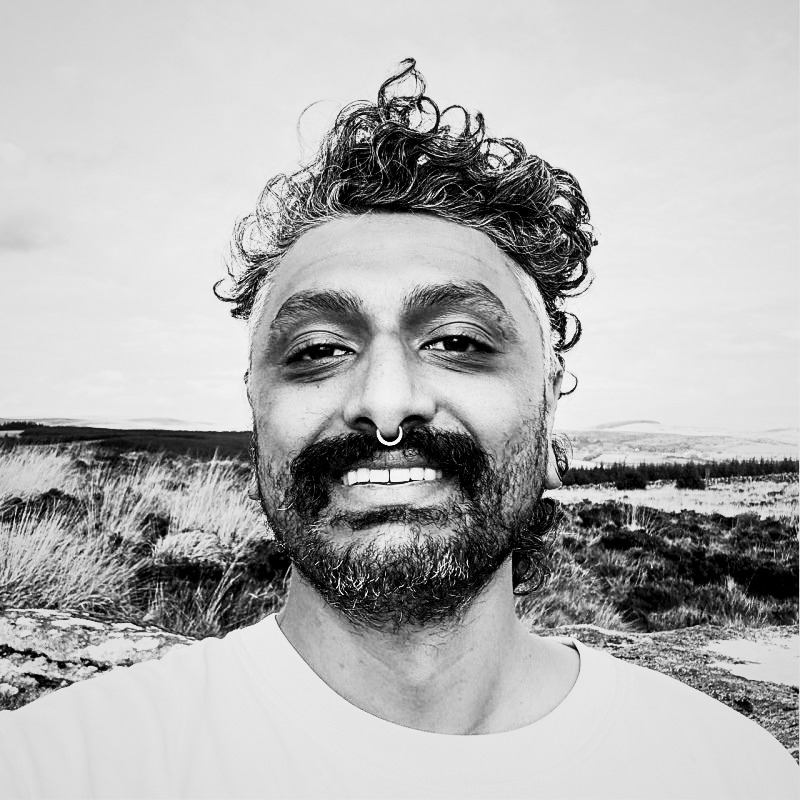
Dr Kiran Kashyap is a systemic designer, researcher and activist with over 15 years of co-design experience on Gadigal Country.
As Executive Director of Regen Sydney, they use design-led approaches to embed relational ontologies, foster cross-sector alliances and foster new civic infrastructures. Kiran’s work is primarily focused on encouraging system-level transitions for the emergence of regenerative economics and bioregional governance.
Dr Kashyap discusses using systems design to build regenerative economies, strengthening civic infrastructure and community agency, and why place-based movements are essential for meaningful systems change.
Highlights from the interview (listen to the podcast for full details)
[Indio Myles] - To start off, can you please share a bit about your background and what led you to work in designing regenerative economies?
[Dr Kiran Kashyap] - There have been a few chops and changes since I came out of school. Different areas of study, time off, working and travelling brought me into the world of design. I saw it as a way that we could face up to some of the challenges that we're facing at the moment.
When I was leaving school, there was still this sense that climate change and the issues people were facing around the world would be able to be addressed through the incumbent institutions that we had. People were really focused on building awareness and the evidence base for action. Since then, what we've seen is that awareness isn't the issue; there are much deeper structural challenges.
For me, I think implicitly (perhaps I wouldn't have been able to explain it at the time), I moved towards the design field as I saw value in being able to bring diverse perspectives together in a vision-led way that was participatory and holistic, integrating different kinds of disciplines.
In a way, you could say that about conventional product or graphic design. For example, if you are designing a tumbler, you would think about what materials you would be using, who's going to use it, in what context and at what temperatures. All these different, traditionally disciplinary considerations would be brought together in an integrative manner.
I think this way of thinking was something that drew me to design. This work involves navigating tensions and concerns in a way that conventional problem-solving or black-and-white thinking would not be able to do, because you're trying to navigate numerous competing tensions and considerations in order to come up with the best outcome possible. I think that kind of thinking is what drew me to design.
For me, that process and way of approaching our systemic challenges at the moment is not an end in itself; it's simply one effective way to bring ourselves together, organise better and face up to the challenges we're facing. Of course, it's also just one role amongst many.
In the end, whilst that was the process, what guided me was a lot of reflection, a few different existential crises and experiences where I came to know myself better and understand what was important to me.
Ultimately, I'm grateful for the ethical foundation my parents helped me develop. That meant I have really put front and centre the values I think are important. Simply, that might be love, justice and fairness, but looking at the situation we're in, you could say that means a socially just world and an ecologically safe world.
Ultimately, those purposes are the things that drew me to explore permaculture, different forms of activism, transition towns and then ways those different design skills could be applied towards these purposes.
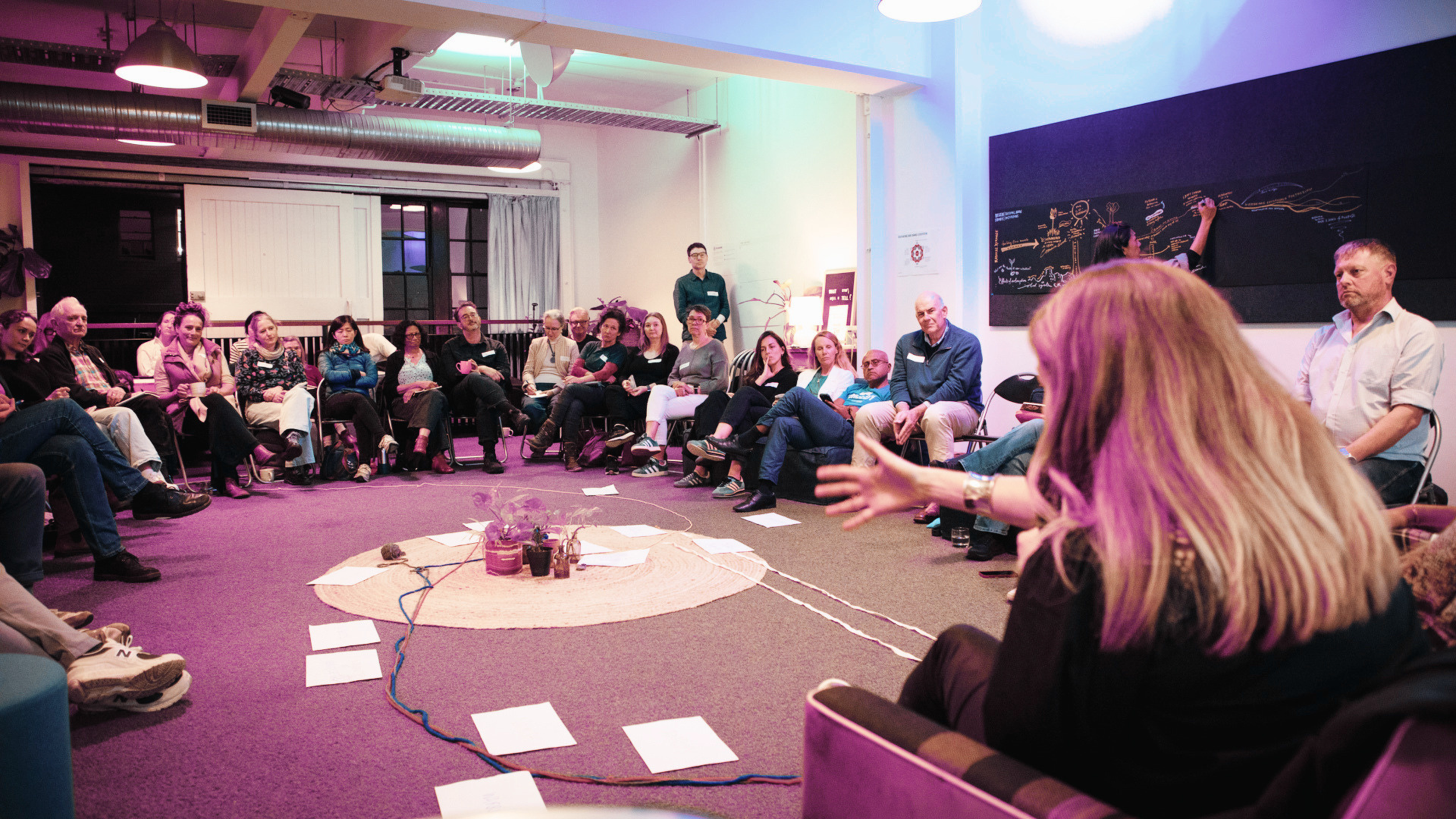
Eventually, I ended up doing a PhD in this area of focus. Regen Sydney, for me, came out of that PhD, as well as all of the amazing people in the network and the field that I've been able to connect with.
As Mission Steward at Regen Sydney, can you share more about the organisation and how you are using systems and design-led approaches to support Sydney's transition towards a regenerative economy?
Regen Sydney has been around for five and a half years now. We started as an organisation during the COVID lockdown, after the Black Summer bushfires had just occurred. Towards the start of our formation, Sydney was also experiencing some very clearly climate-related floods, I think for the first time in the mainstream zeitgeist.
In this moment of human-induced disasters of various forms, there was also an emerging diagnosis in the mainstream media around the cost-of-living crisis and, of course, the housing crisis. All these factors were converging at that time, five and a half years ago.
Regen Sydney came together as a way for us to simply stay sane as a group of people, both organisers and members, and to use this crisis as an opportunity. It was also just to say, "These are the things that matter to us. This is what Sydney could look like, and these are the different ways we're working on that together. How can we amplify them?"
One of the first things we did was get a sense of what regeneration actually means. What does it look like? What could it look like? What's already happening in metropolitan Sydney, the Sydney bioregion, that is pursuing this goal of regeneration? Where are the gaps? How could these initiatives be better connected?
Through our initial mapping and reading of the landscape, we discovered there isn't actually that much of a shared agenda for change or coherence across many of these initiatives operating in different areas of social and ecological wellbeing, whether that's housing, water restoration or education, across all of the social and ecological dimensions of the Doughnut. I guess that's something we can come to as well.
Our motto at Regen Sydney from the get-go has been to help connect the dots across different areas of Sydney, silos and sectors, and scales of intervention. This is Whether it’s community advocacy and grassroots action, or engaging with institutions, academics, government or industry on policy.
At the same time, there's an amazing array of different places doing the same thing in their own contexts, with locally adapted approaches. One of the first was the City of Amsterdam, looking at the City Portrait and, in their case, taking a fairly policy-driven approach to integrating aspects of Doughnut Economics. This involved looking at various social and ecological policy drivers together, as well as the metrics needed to tell the story of where the city is doing well and where it's falling short.
We formed at that time with those conditions, those amazing precedents and an acknowledgement that the city and bioregional scale offers a scale of engagement without the lack of resourcing or scope for impact that smaller neighbourhoods can have. At the same time, it also avoids some of the disconnection and, I suppose, the negative effects felt by top-down approaches at the state and federal scales, where there can be a disconnection from what communities and places really need.
That's why we went for that framing of Regen Sydney at the city and bioregional scale. Since that landscape reading, we've adapted the Doughnut Economics model into a Sydney Doughnut, and our strategy and engagement came from there.
What have you learned about designing collaborative processes that merge diverse perspectives and knowledge to influence meaningful change and decision-making?
My first exposure to collaboration in a very targeted and intentional process was at the Design Innovation Research Centre, where I worked a little while ago. The processes of co-design that we used there for social innovation projects exposed me to the idea of framing issues as wicked problems and the need to get different types of stakeholders into the room when you're considering issues that don't have a single problem owner.
There is great value in being able to unpack the causal dynamics of a wicked problem, but while we’re seeing acknowledgement of the value of collaboration and multi-stakeholder engagements in social innovation, a lot of previous work has been conceived, funded or formed in partnership with incumbent institutions. These sources of funding and support have typically amounted to reformist approaches, not the creation transformational projects.
What that work showed is collaboration is great. In fact, I think it's often framed as a panacea. Because we have been so deeply inculcated over the last centuries with the merits of competition, it actually feels like a breath of fresh air to say that we culturally, as a species, are so deeply bound with one another through our collaboration in small communities and across communities.
More recently, various historical analyses of how scientific breakthroughs were actually made across civilisations over time have shown that deep collaboration underpins a lot of human creativity and innovation.
But what I'd say, in the way that Regen Sydney is developing and conducting its work is that whilst we acknowledge collaboration is fundamental to what we're offering, we must also continue to understand and shape the actual structures within which those collaborative forums can take place. Otherwise, their fullest potential cannot be realised.
I think that's the crux of it all; acknowledging that it's not entirely useful to see collaboration through completely rose-tinted glasses, but instead to understand it within the context of the dynamics we're operating in.
How can movement thinking and principles of co-design help connect initiatives that are currently siloed and build meaningful change towards better futures?
One of the things that we've set for ourselves at Regen Sydney is our long-term vision, which is to help foster Greater Sydney back into the safe and just space of the Doughnut within a generation.
That generational timespan in the vision, I think, is quite important because what it sets for us is a long-term ambition. We're staying with the problem, as Donna Haraway would say, and I think that's quite different from conventional project-based consulting approaches to collaboration.
For example, one project that we finished last year was an engagement with the local council in Sydney, Waverley Council. We engaged with the council in a way where we wanted to explore how we could develop civic engagement in the neighbourhood and foster community resilience.
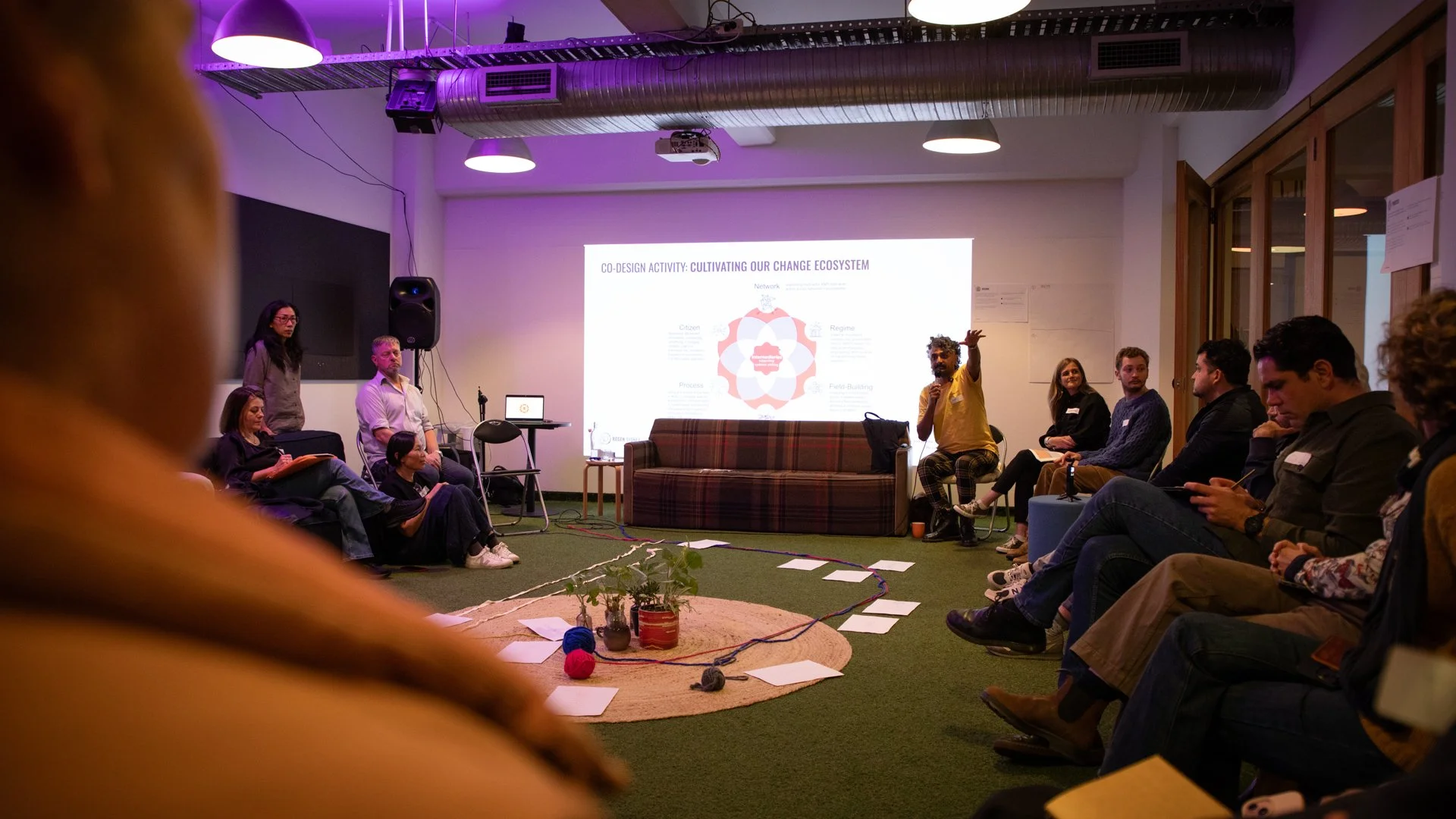
We were doing this knowing full well that not only would this be a first step for that neighbourhood, or one step that would need to continue, be stewarded and evolve over time, but also that there would be learnings from Waverley that could be valuable in other neighbourhoods around Sydney, while recognising there would be distinctions as well.
The view for us was to see this as one project that is part of a longer mission. That particular program is one we call Civic Neighbourhoods. We've got a few other missions as well, but through this particular program, we're looking to foster economic localisation and civic engagement across the neighbourhoods of Sydney.
We have the Waverley project as a first example for us of what that looks like in terms of the type of engagement we do there in the community.
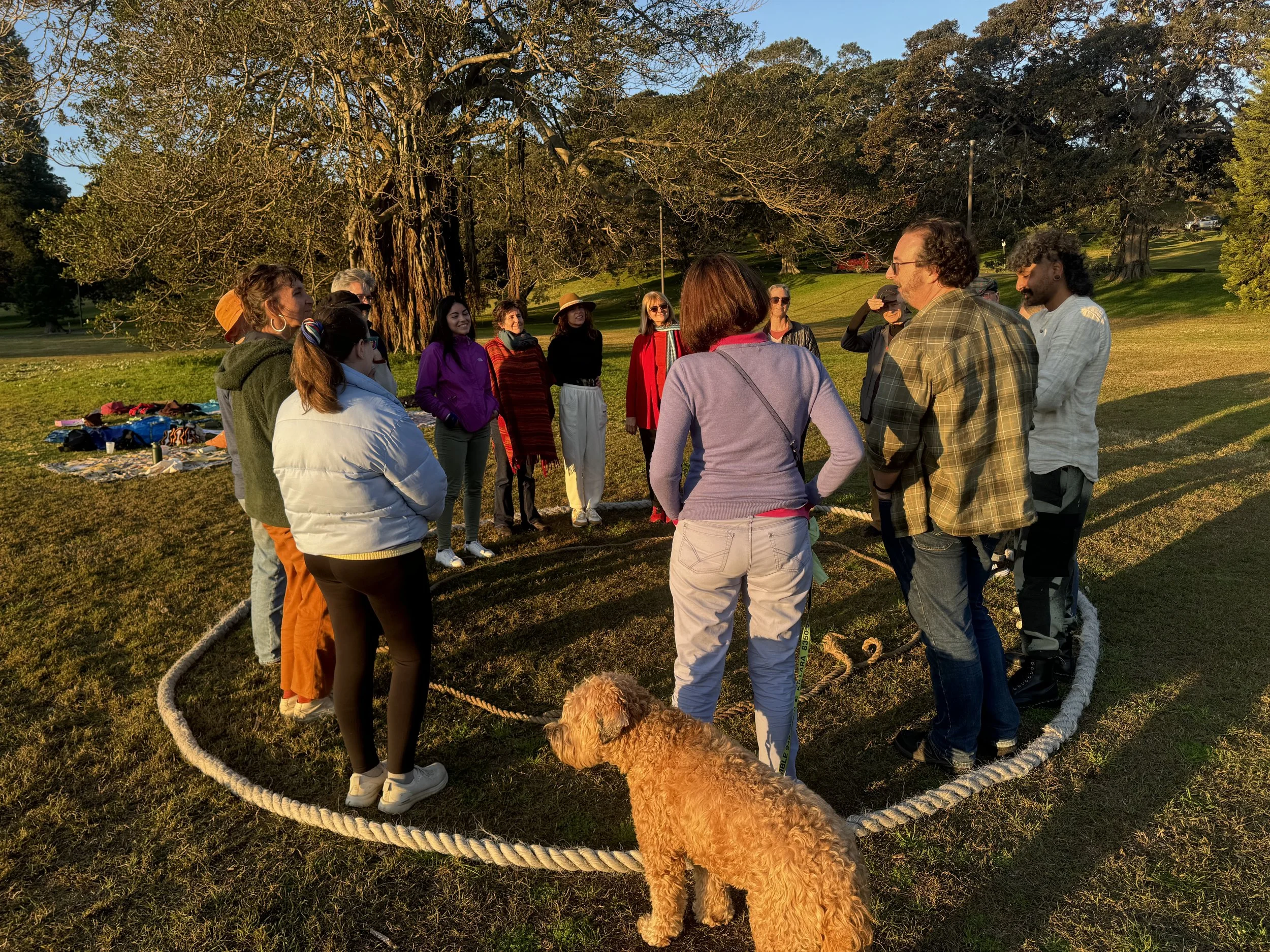
Some of the interesting things that came out of the collaboration there were around the relationship between community members in the neighbourhood and the council.
The community and council had these really disrupted channels of communication. There are different newsletters, websites and forums that people go to, as well as council chambers for council meetings and so on. But there was so much that council was doing that the community didn't know was already happening.
They went through this process of saying, "This is the vision. This is what we'd love to see. This is what regeneration could look and feel like in Waverley, and this is how it's unique to this place." But the council was already doing a lot of those things, and I think that was surprising to a lot of people.
At the same time, a lot of resident citizens in that neighbourhood expressed a desire to more meaningfully shape the actions taken by council.
Mind you, I've only spoken about council and community. Of course, we've got local businesses, industry, academia and other sectors there as well who are part of this process and project.
One of the things that we found through this three-step project was, firstly, reaching a shared idea of what each of those different perspectives sees as a vision, and what's common in their vision for the place.
Secondly, we translated that into a set of holistic indicators. Councils, and perhaps all levels of government, love measurements, indicators and metrics that let them see how well the neighbourhood is performing. In this case, that was one of the deliverables and one of the things we sought to develop.
The Cornerstone Indicators, initially developed by Katherine Trebeck and Dark Matter Labs, were adapted and developed into a version for the Waverley context. They're currently on the Waverley Council website, and ultimately, what they can serve as is a systemic interface. It's an interface through which all the different parts of that neighbourhood can find a shared language and a shared agenda for change, but also find leadership through that, so it's not an opaque set of metrics like conventional metrics held by councils might be.
Lastly, in the third phase, one of the key activities we ran was something called the Live Model Game, which was developed by a group of researchers and artists from the UK as a way to enable these different actors in the neighbourhood to identify what their pathways to action are. How can they better coordinate going forward?
Once Regen Sydney steps out of this particular stewarding role, we would like to see different members of the neighbourhood find leadership in helping that kind of collaboration move forward.
You'll be speaking at the Newkind Social Change Conference from the 30th of September to the 4th of October. What are you most looking forward to, and what will you be speaking about?
I've been watching this conference from the sidelines for a few years now, and I've been really keen to attend, so I'm excited that I'll be able to attend this year. Erfan Daliri reached out and said it'd be great for me to come down.
I'm really looking forward to sharing and learning alongside the network of changemakers who'll be attending the Newkind Social Change Conference. It's a tricky time we're living through at the moment, and any way that we can expand our community of practice, share challenges and work together, the better.
I'll be on a panel and running a workshop. The primary perspective I'll be exploring is civic infrastructure, which I mentioned right at the start. I'll be focusing, of course, on Regen Sydney, as well as other research and exploration I've been doing along the way.
One of the primary challenges we're faced with at the moment is people feel alienated and disconnected from our political mechanisms; there's a huge lack of trust. At the same time, a lot of the power to shape our politics is found in the wealthy corners of our world, whether that's multinational tech organisations or resource-mining billionaires.
What we find ourselves in at the moment, as we see a lot of isolationist policies and politics gaining traction around the world, is a challenge of identity and meaning, but also one of deep wealth inequality and a lack of agency.
Right now, people, as a collective, don't feel like we're able to rely upon our elected officials to vouch for the things that we as individuals and communities would like to see. There are lots of different examples of ways to move through that. We've got examples in citizens' assemblies, civic tech and different kinds of deliberation. We've also got the independent movement that's gaining steam.
Ultimately, the types of civic infrastructure we have right now are not enough. What we need are new civic infrastructures, ones that can let us face up to the increasingly neo-feudal world that we find ourselves in, systems that allow us to come together and forge a path as active citizens and communities, not passive consumers and recipients of our own futures.
What advice would you give to designers, entrepreneurs and changemakers seeking to grow their impact initiatives and contribute to systems change?
I would say drill down into the purpose. People talk about the five whys, and if you've got a business idea, an enterprise idea or a way of working with community, ask, "Why am I doing that?" Then ask four more whys to get down to that layer of what the real, deep purpose is.
The point of doing this is because, in almost any industry or sector, we've got jobs, designs and initiatives that, even when they're well-intentioned, can be destructive to the purposes of what you might be trying to achieve in the first place.
Getting down to your core purpose is important. Some of that can be quite personal as well, because it's about what drives you as a person and what is meaningful to you. I think situating that in an authentic way can be powerful, as it has been for me.
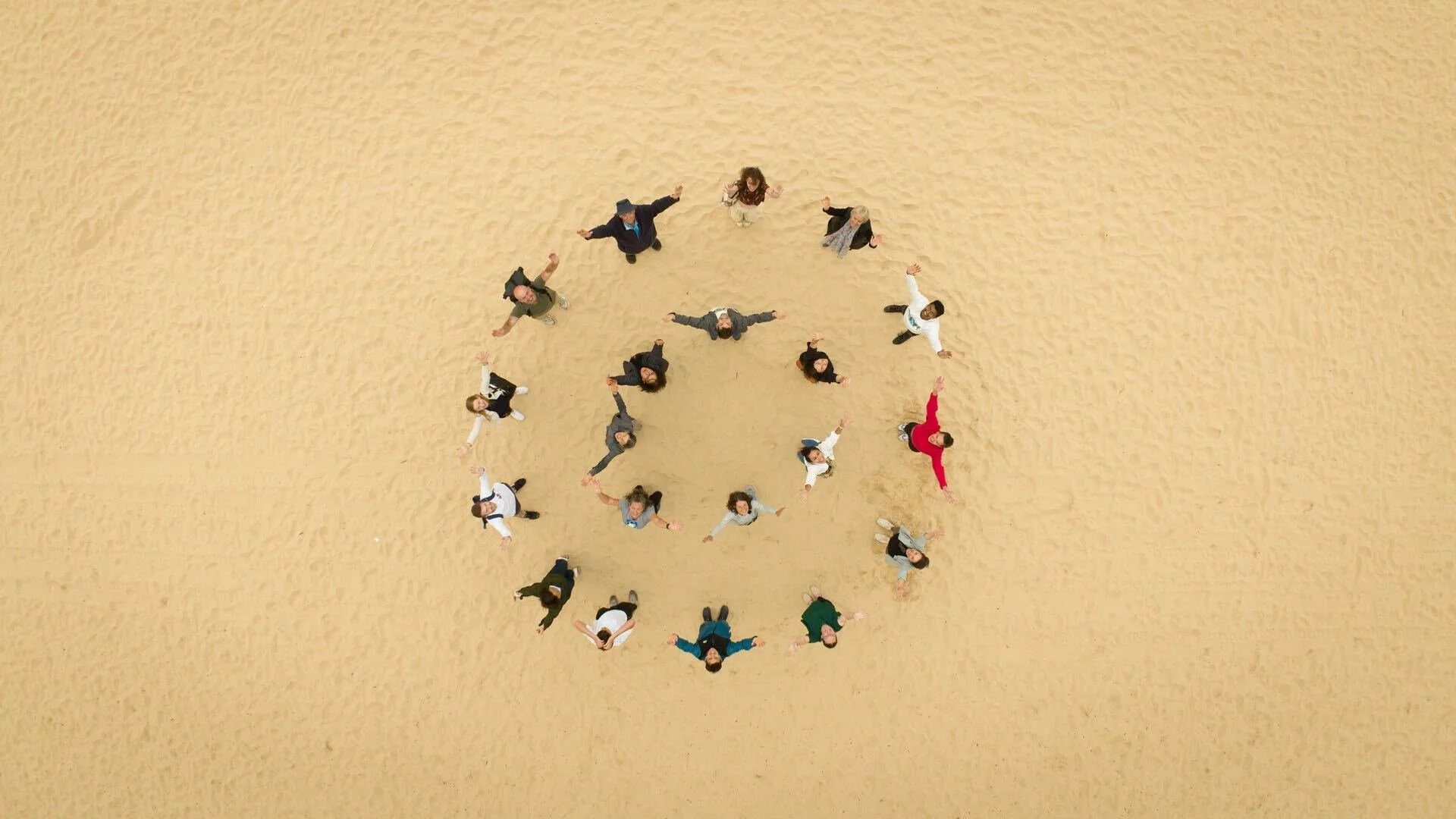
One thing I would suggest is to work in a way where you're not working as an individual, because there are no silver bullets.
You can't solve a system; it's not a problem in that sense. If you're working in any of these complex systems spaces, change requires some sort of network or collaborative effort. Quite simply, find a network, community of practice and people doing similar things you want to do so that you can experiment and see what you might do differently, or how things could evolve or be done better.
Those would be two bits of advice, and two things that really helped me turn ideas and theory into practice. Certainly, when I was a lot younger, I had internalised some of that neoliberal, individualistic thinking, so breaking out of that was important for me.
Similarly, I think it was easy as an idealist to have these convictions about how the world should be or what kind of world I would like to see. This is probably more true for people on the academic side of things. I think it's very easy to get caught up in the theory of things.
Whilst I acknowledge that's important to being able to innovate and develop new paradigms through which we can better serve our intentions, it's also important to do that pragmatically through practice, learn from your mistakes and do it together with people. That way, you're testing, failing, learning and growing together.
What inspiring projects or initiatives have you come across recently creating a positive change?
One thing I think has been really awesome to see is the Transition Towns movement and the permaculture movement over the last few decades. They've been really slow burns, not flash-in-the-pan-type initiatives, putting down roots as movements to nurture, cultivate and fertilise the soil for future action.
It's worth looking back a little bit to that. Also, in the bioregional world, with my recent travels over to England, I think the Bioregional Learning Centre and Isabel Carlisle's work have been inspirational initiatives to learn from.
That's especially relevant considering where we are as an organisation at Regen Sydney. We're at this particular point where we're trying to build legitimacy through some of our projects as case studies, in order to showcase the viability of our approach and the types of projects we're doing.
The reason we need to do that is so we can have more meaningful resourcing, and often that's from philanthropic funders when we're talking about this kind of systemic work, at least through my own research and conversations in this area.
Isabel Carlisle and the Bioregional Learning Centre have been an important connection and precedent for us to connect with and learn from in that regard.
Closer to home, Narara Ecovillage has been a strong partner. It's so close to Sydney itself, while also being able to showcase, in a really local sense, what self-sufficiency in food, energy and water, as well as community resilience, looks like as a long-term project.
We're happy and pleased to be able to collaborate, do projects together and hold events, and to translate some of the learnings they have in that context to this much bigger city that we're in, which they're on the outskirts of.
Last but not least, I'd particularly mention David Beaumont, who has been an absolutely vital advisor and guide to the work that Regen Sydney has been doing over the last five and a half years. He brings his First Nations wisdom to guiding our strategy, but also, in really practical terms, to how our projects are conducted on the ground.
He has brought immense wisdom and perspectives to us around how we, as non-Indigenous people, can walk with First Nations people in an authentic way on this place as well.
To finish off, what books or resources would you recommend to our audience?
One of the really influential books for me from a couple of years ago is Designing Regenerative Cultures by Daniel Christian Weill. I imagine that's been mentioned hundreds of times on this podcast.
Another one that I'm just trying to get my hands on is Wild Hope by Claire Scobie. She's actually launching the book in a couple of days, so it'll be out there. It highlights stories of hope, initiatives and things that other people are doing out there. That's something I'm really looking forward to reading.
Another book is Ecocivilization by Jeremy Lent. He's a systems thinker and has written a bunch of books previously. This one, in particular, charts a broad and nuanced course through all the different threads of regeneration and civilizational disruption, but also the emergence that we're navigating through at the moment.
Initiatives, Resources and people mentioned on the podcast
Recommended books
Designing Regenerative Cultures by Daniel Christian Wahl
Wild Hope: Stories of living and leading in uncertain times by Claire Scobie
Ecocivilization: Making a World That Works for All by Jeremy Lent



On Episode 647 of Impact Boom, Dr Kiran Kashyap of Regen Sydney discusses using systems design to build regenerative economies, strengthening civic infrastructure and community agency, and why place-based movements are essential for meaningful systems change.