
Callum Champagne On Regenerative Farming Empowering Young People and Strengthening Regional Communities
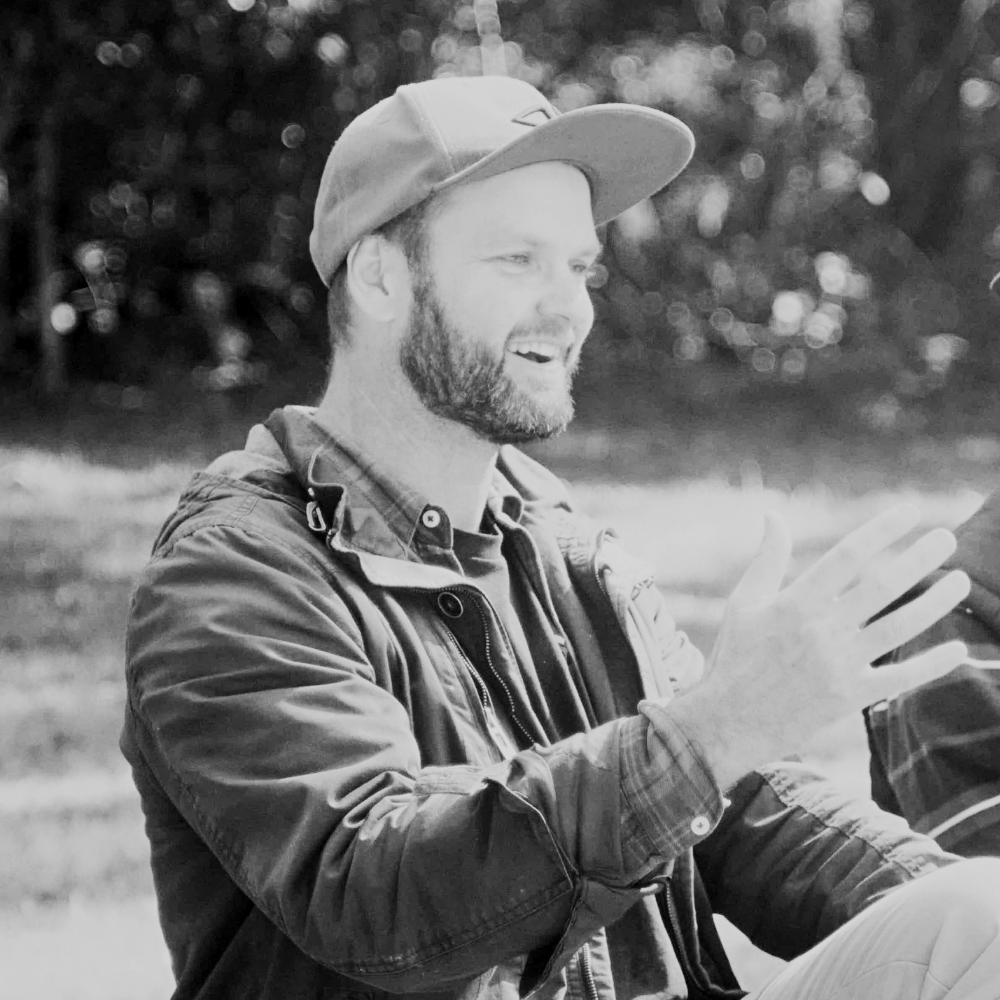
Callum is a social entrepreneur and the Founder and CEO of Grow the Future, a social enterprise supporting young people in the Bega Valley through regenerative farming, food production and hands-on learning.
Raised in the region with a family background in permaculture, Cal studied social sciences, geography and sustainable development before helping establish Green Connect Farm in Wollongong in 2013. He led the social enterprise farm for eight years, creating opportunities for young people and former refugees through sustainable agriculture.
Returning to the Bega Valley in 2021, Cal worked as Youth Resilience Officer at Bega Valley Shire Council, identifying a need for meaningful local pathways for young people facing barriers to education and employment. He founded Grow the Future in 2023 to help address this gap.
Through training, engagement and employment opportunities for 12–24-year-olds, Grow the Future creates a supportive space to build confidence, skills and connection. Cal believes growing plants, producing food and regenerating land can help young people recognise their ability to shape their lives and contribute to their communities.
Callum discusses using regenerative farming to create employment and learning pathways for youth, and why place-based approaches strengthen regional communities and contribute to more prosperous and equitable futures.
Highlights from the interview (listen to the podcast for full details)
[Indio Myles] - To start off, can you please share a bit about your background and what led you to work in social enterprise, regenerative farming and supporting young people?
[Callum Champagne] - I grew up down here in the Bega Valley, and like a lot of young people from regional communities, as soon as I turned 18, I left. Not because it's a terrible place; it's an amazing place, and that's why I moved back here to start a family, but it can be a challenging place for young people. I guess, at best, it can sometimes be an uninspiring place.
Now, through my work with Grow the Future, I see these challenges play out for young people all around me. For me, it was more I just needed to get out there and access some other opportunities.
I grew up on a permaculture demonstration site, so I was surrounded by sustainability and regenerative ideas from an early age, but I didn't have much interest in it. It wasn't until I was 17 or 18 and this thing called climate change became front and centre in the public conversation that I started realising, "This is the stuff I've grown up around and my mum and dad have been banging on about for ages, and now all of a sudden it's the cool, popular thing." I wanted to get on board with it.
I moved away to Wollongong to study environmental stuff, but then I quickly realised that my interest was in the intersection between people and the environment, and how we can solve environmental problems in a way that lifts people up. From there, I started realising food systems are where I could make a difference.
Food is the primary way we all interact with the environment three times a day, and so if we want to have an impact here, I thought looking at the systems we have around food was a good place to start.
I went on to do a master's in sustainability, with a specialisation in food and water security, at the University of Sydney. At the same time, while a lot of my peers were moving towards careers in policy or corporate social responsibility, I knew that my interest was with people and getting my hands dirty.
I stayed locally in Wollongong and did a lot of volunteering in school gardens around the Illawarra. Through the master's I was doing, that was the first time I'd heard the concept of social enterprise, which was relatively new at that stage.
Towards the end of that year, through the school gardening projects I was working on, I met a lady called Jess Moore, who people in social enterprise will now know because she's the CEO of Social Enterprise Australia.
At the time, she'd just taken on this social enterprise called Green Connect in the Illawarra, which was working with former refugees and diverting waste from landfill. They were looking to expand and diversify, and one of the ideas they had was to set up an urban farm.
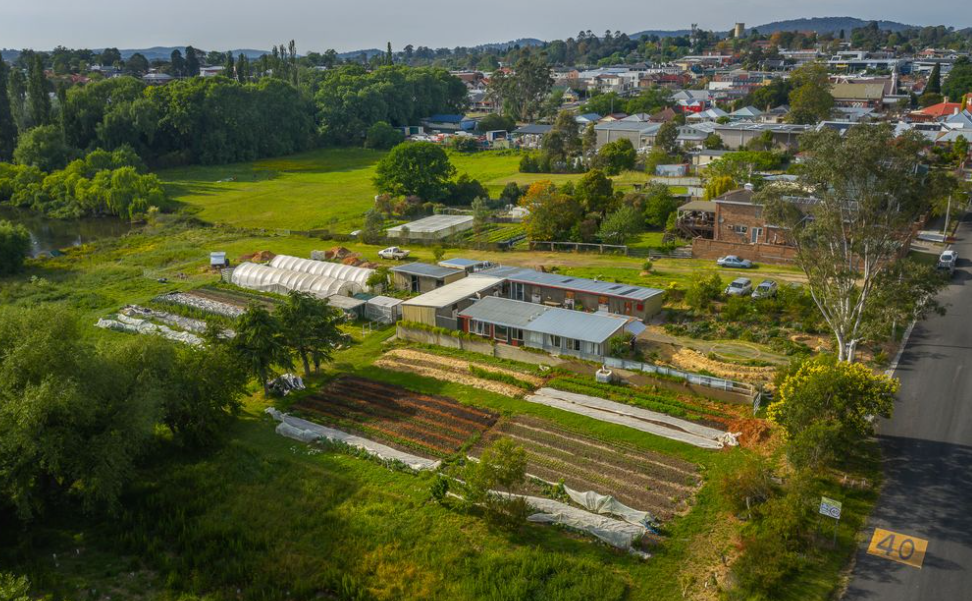
I connected with her at the right time, and with a whole bunch of people, we set up what is now Green Connect Farm in the Illawarra. It's the country's largest urban farm. It's a social enterprise that supports former refugees and young people, and I ran the farm for just about eight years.
Then 2020 came, COVID happened, and my son was born. My wife is from the Bega Valley too, and we both looked at each other and said, "Let's move back home. We've done what we wanted to in the big smoke. Let's move back to the Bega Valley."
That's what we did. Through that work with Green Connect, I'd developed a whole bunch of interests and a pretty diverse skill set, but I wanted to focus on something I drew a lot of energy from and something that I felt was a nut I hadn't quite cracked, which was youth engagement and empowerment.
The young people I worked with often faced challenges that were so complex, and the nature of working with them was so interesting. I really wanted to dive into that space.
When I moved down to Bega, I started working for the local council doing youth development projects. I quickly realised, having never really worked outside of social enterprise, that the idea of engaging with people without an activity to do it around was a bit lame and not super effective.
So I pretty quickly started to develop the idea of what is now Grow the Future.
You're the founder and CEO of Grow the Future. Can you share more about the organisation and how you're using regenerative farming to create opportunities for young people?
Grow the Future is a social enterprise that creates space for young people to grow through growing plants, producing food and regenerating the land. We offer training, engagement and employment opportunities for 12 to 24-year-olds in a hands-on, project-based and supportive setting.
We do the majority of this from our primary site just on the edge of Bega, but we now have another couple of satellite farms around the edge of town, and we're also about to open a nursery.
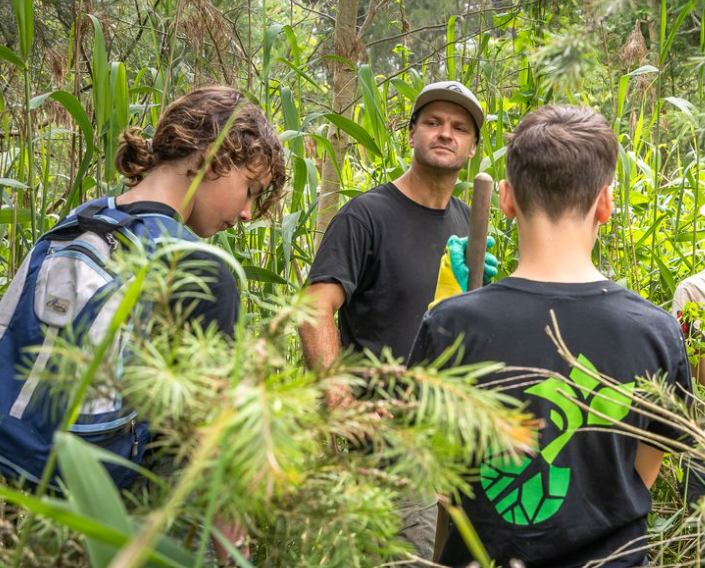
From these sites, we produce and sell fresh vegetables, herbs, eggs and now plants to our community, which helps support the social enterprise model that we run.
The word "grow" has multiple meanings for us. We're obviously growing things, we're growing food and we're growing plants, but just as importantly, we're growing the confidence, capacity and connection among the young people we work with.
Twelve to 24 is a massive spectrum, and it's a pretty diverse cohort with pretty diverse needs. Everyone has different needs, so we offer engagement, training and employment depending on where young people are at and what they need. Sometimes they transition from one to the other, but that's not always the case. Through this, our vision is to create a better future for young people and the Bega Valley.
We're trying to build the skills, capacity and confidence of the next generation.
What barriers are young people in regional communities facing when accessing education and employment, and how can a social enterprise like Grow the Future respond to those challenges?
Young people everywhere are facing a whole bunch of challenges at the moment. A lot of the fundamental promises of previous generations aren't being delivered on for young people in terms of secure housing, a stable economy, job security, and a safe climate and environment for the future.
Then, for regional young people, there are the additional aspects of physical isolation and just a lack of opportunities.
When I moved back to the Bega Valley, a survey of the youth population had just taken place asking, "What are the big challenges that young people are facing?" Sixty per cent of young people listed mental health as the single biggest challenge they were facing, and I think around 42 per cent said they felt negatively or very negatively about their future prospects in the Bega Valley.
I know there's a lot of mysticism around why young people are struggling with mental health, but we often overlook those structural aspects of how the world has changed, particularly the climate change and environmental crisis aspects of it. What we're trying to do at Grow the Future is provide a space where young people can come together around a positive activity that's direct action from an environmental or climate change point of view. It's also about building something that the community is proud of.
In that process, we're building the confidence of young people. We're building their capacity and skills for the future. But just as importantly, and maybe even more so, as I'm learning, we're building their connections to the land, to the other young people they're working with, and to the community that they're a big part of.
How can regenerative approaches extend beyond agriculture to influence how we create communities and economic systems where people and the environment can thrive?
I really love the word regenerative. I did my education in the sustainability paradigm, and the interesting thing about sustainability is that it's about staying in one place. Most of our efforts towards sustainability are about trying to stop bad things from happening. They don't really address trying to create good things for our future, and that's what I think the word regenerative does.
That's what we're trying to focus on at Grow the Future. It's not just that you're saving something, conserving something or trying not to lose something. You're actually creating something. You're contributing something to the world.
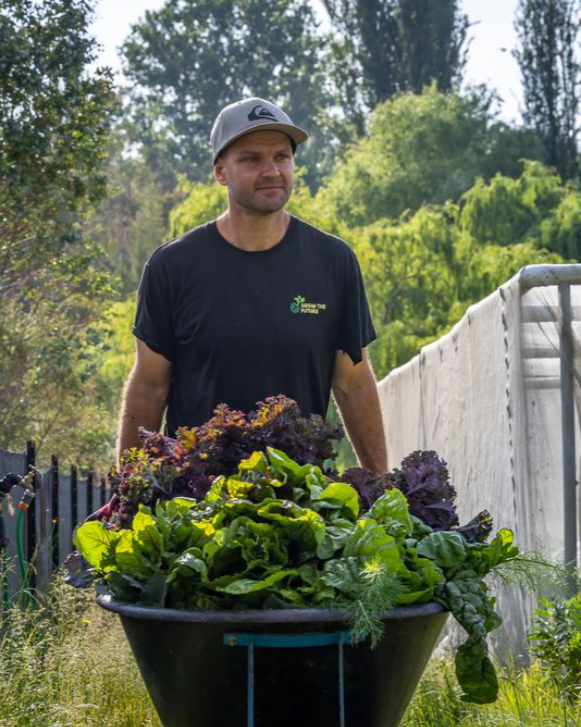
There's an image I use a lot to promote Grow the Future, which for me is Grow the Future in a nutshell. It's one of our core staff members, who's one of my biggest heroes. We've been working with him for three years, he's come through all our programs and is now a huge part of the team. In the image, he's standing there with an armful of carrots.
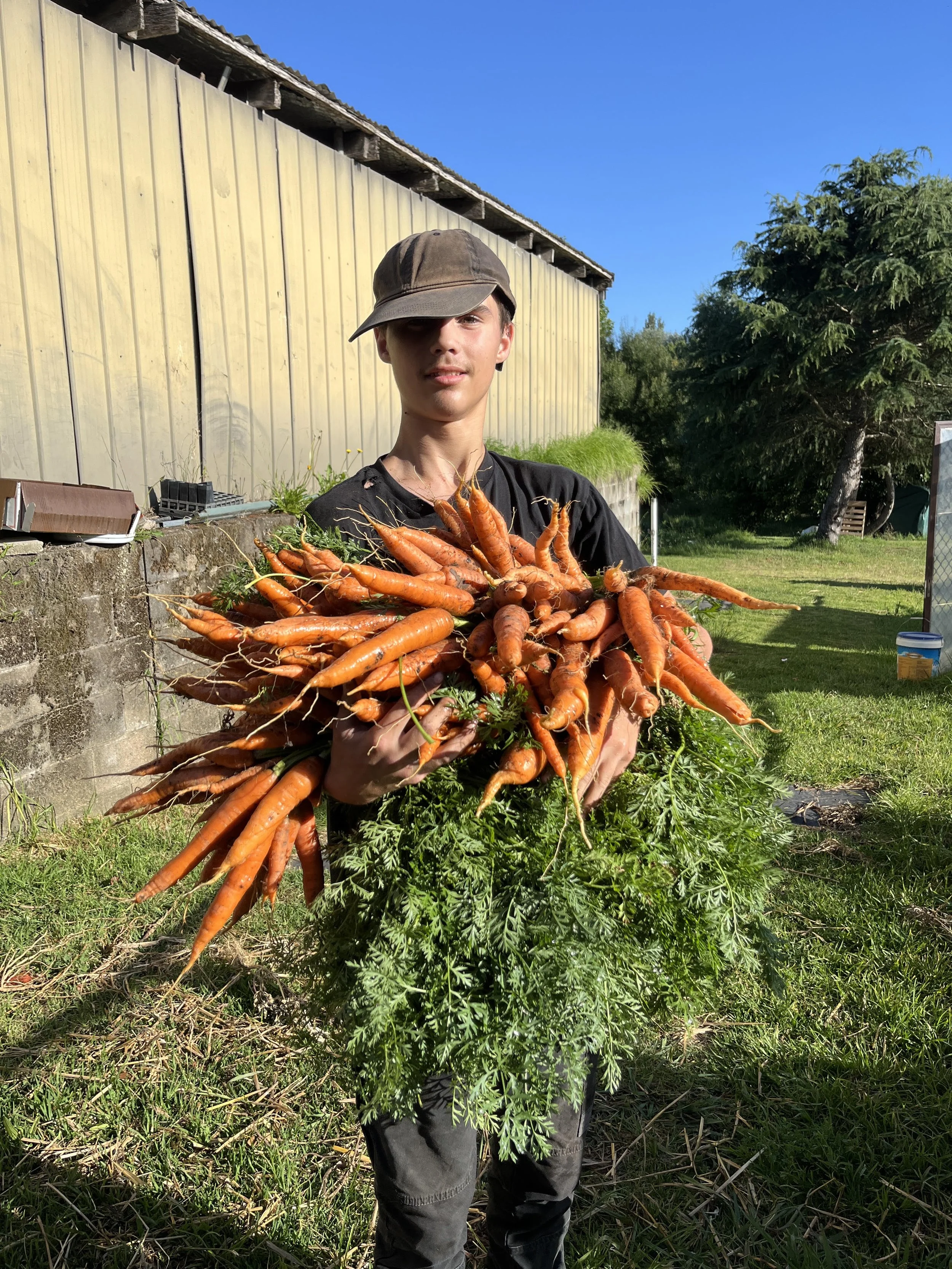
The story behind those carrots is that he worked as part of a team to prepare the soil and do everything needed to get it ready. He seeded the carrots, watered them, netted them, cared for them, kept them away from the birds, fertilised them and irrigated them. Then, five months later, he finally got to pull them, wash them, bunch them and put them on the table at our store as a product for our community.
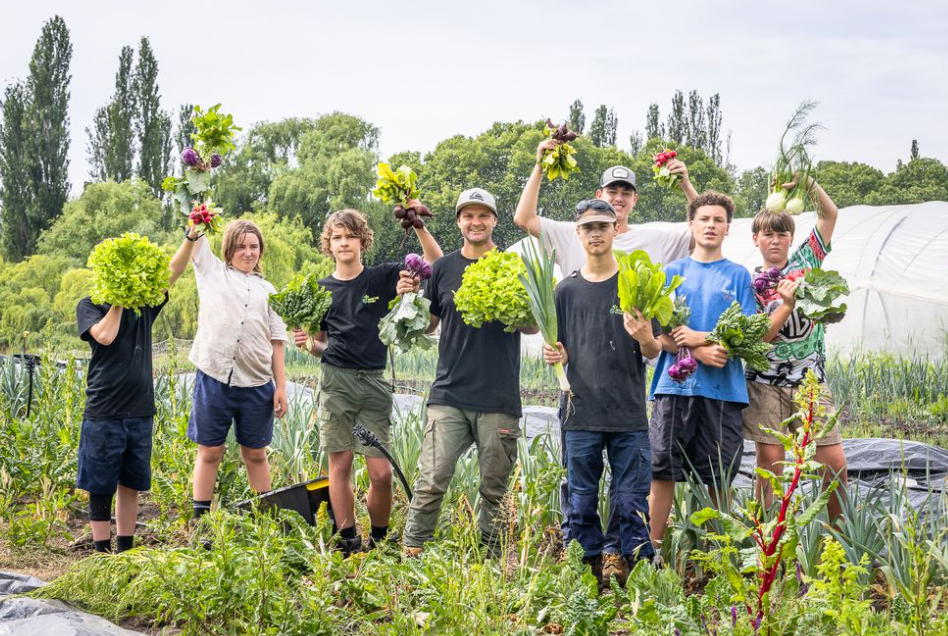
The essence of regenerative work is that planting a seed, caring for it and watching it grow is literally bringing something to life that wouldn't have existed without you. For young people who can often feel like they have a lack of control over their own lives, let alone the impact they have on the wider world, that can be a hugely empowering thing.
You're currently an AMP Foundation Tomorrow Maker, receiving support through the program to expand Grow the Future's impact. What have been some of your key reflections or learnings from the program so far?
I've loved every part of being involved in the IGNITE Tomorrow Makers program through the AMP Foundation.
We're receiving support to expand our impact through establishing our nursery, which is about improving the employment outcomes we achieve for young people and diversifying our enterprise into that space. I've been able to access a whole bunch of support and services to help us get ready to move into that area.
I’ve loved the way the program is structured around building and nurturing leaders. I've been in social enterprise, I guess as a leader or whatever, for 12-13 years, and I've never really taken up opportunities to invest in myself. I know that's a similar story for a lot of people because when resources are tight, investing in yourself is often the first thing to go.
This has been an amazing experience to properly do that, with some amazing mentors and a cohort of amazing people. Even though we're all doing completely different things, at completely different scales and in completely different parts of the country, we're all sort of walking the same road in a way.
I've really enjoyed being part of that group and catching up. It's striking how little we often talk about our work. More than in almost any other meetings I'm in, we often end up talking about our families, our communities or our interests, which is refreshing and important for people who are sinking a lot of energy every day into what we're doing.
You mentioned some of that support is going towards establishing a nursery. Can you share more about the vision for that?
Basically, we work with about 150 young people a year, and at the end of 2024 we did a whole bunch of consultation with young people, asking, "What's good about Grow the Future? What's not good? What do you want to see more of? What do you want to see less of?"
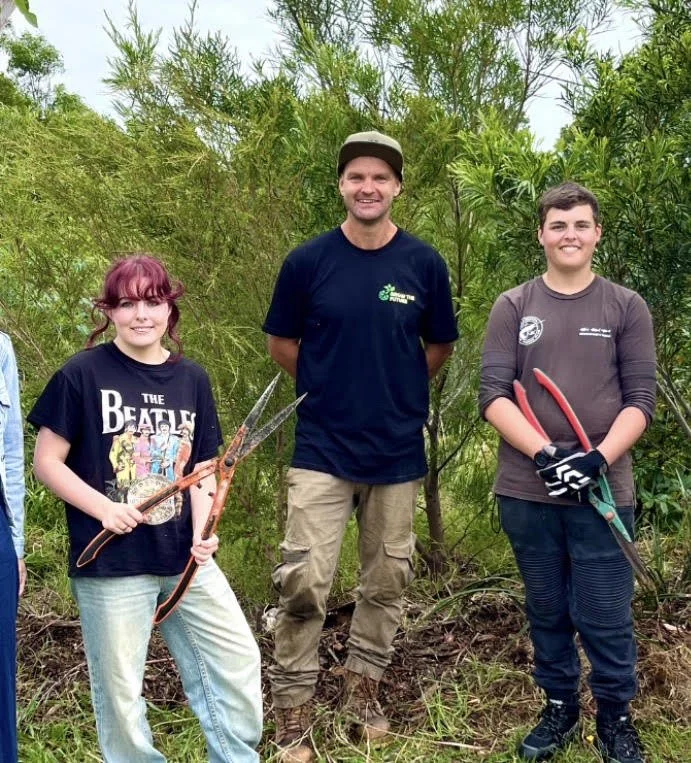
The big thing that came back was that we provide employment for young people, but it's very much stepping-stone employment. We employ a lot of young people one day a week as a transitional pathway. In a regional community, there's often a challenge moving from that transition into an external employer, simply because there's a lack of external employers in the space.
There was a real demand from our young people to deepen that employment experience and create more substantial jobs. That dovetailed with some of the work we'd already been thinking about around building the resilience of Grow the Future and developing more leadership skills in our young people.
From that, we knew we wanted to diversify and expand, and nursery horticulture, growing plants to sell, was the logical place to go for a couple of reasons.
The first is that one of our biggest material expenses is purchasing seedlings from a supplier in Sydney. Especially now, with the price of diesel, we're essentially paying for a truck to bring them down. So we thought, "Let's let our young people have a crack at growing those seedlings ourselves."
The second reason is that there's demand in our community because it's a bit of a nursery desert at the moment in Bega.
The third is that it's an adjacent sector to what we're already doing. All our training is in horticulture, ecosystem management and sustainable business. With market gardening, there aren't a huge number of employers in the region who are going to take market gardeners on. There are quite a few production nurseries around, especially in the native plant space, that would value that skill set.
By moving into that industry, we can create more pathways for young people and build a bit more resilience into what we're doing.
It's been a slow journey getting there, and I've been super grateful for the AMP Foundation's support along the way. We've faced a couple of hurdles. We had a site, then we didn't have a site. Then we had another site, and then we didn't have that site. We've now almost got a site.
But that journey has actually been really good. At a certain point, we bit the bullet and invested in a couple of our young people to take on permanent positions and become our nursery crew. They've started doing a lot of market growing for our farm itself, as well as growing for other producers.
It's actually been a process of slowly walking alongside them as they build their capacity, while we continue working towards that broader vision. We want to have a production nursery supplying our region with seedlings that support food security, as well as a retail presence supplying seedlings, plants and other gardening materials to our local community.
What advice would you give to another social entrepreneur or changemaker who wants to build a place-based solution that responds to the needs of a community?
If I'm approaching this as, "What do I wish someone had shared with me 12 years ago?", I've probably got a few things. Some are general and some are more specific.
Generally, I'd say work out where you can be really flexible and adaptable, and work out what your non-negotiables are.
Flexibility, agility and adaptability are much more important than people give them credit for, because we can never see into the future. You might build this vision of what you want to do, but then the world doesn't allow it to happen and you have to duck and weave and move in other ways.
We need to be prepared to do that and constantly be open to pivoting and moving around, but we should only do that if we're really clear on the essence of what we want to keep, what our non-negotiables are, and what we're not going to be flexible on.
There are parts of Grow the Future that mean it just wouldn't be Grow the Future if we gave them away or pivoted away from them. But there are other parts, such as the physical spaces we use, the types of structures we imagine and the types of funding we access, that we can never completely rely upon. So we need to be as agile as possible.
The other thing is I've learnt so much by finding people who are a lot smarter than me, connecting with them somehow and then hammering them with a whole bunch of questions. People have been so generous with that over the past 12 years.
What I would say, though, is that if we're doing that, we need to be specific about what we're asking.
Now I get it from the other side of the table. I have people asking me for advice, which is kind of weird. I think what's important is being specific with your questions and with the information you're asking people for, rather than being vague and trying to get an hour of someone's time just to tell you their story.
What inspiring projects or initiatives have you come across recently creating a positive change?
I keep my eyes pretty local, and we've got some very cool things happening in our community, especially with Indigenous youth.
There are two programs that have really gained traction over the last year. One is called Indigenous Board Riders, which uses surfing as a vehicle for engaging, supporting and empowering Indigenous youth.
The other is called Yala Girls, which uses language, movement and art as a way of supporting, engaging and empowering Indigenous girls.
I love it when things are really grassroots and grow from the community. Often they're literally someone's baby, someone's idea, which is the case with these two. Then they start to gain traction and have a real impact at a community level.
To finish off, what books or resources would you recommend to our audience?
I'm not a reader. I haven't read a book since 2019! As I always tell my wife, though, I did just finish an audiobook by Ben Vasiliou, who runs The Man Cave, which is a preventative mental health charity for young boys and men. It's called Better Man: Reclaiming Masculinity for Good.
I've got a real interest in that space and in mental health more generally, and I really enjoyed it. I think that space is much more important than people realise.
Adjacent to that, another thing I've done recently is refresh my Mental Health First Aid certificate. I've done that three times now over the last decade. You have to refresh it every three years, and every time I do it, it really hits home how important it is as a resource for anyone who's working directly with people, especially young people.
I always get a lot out of the experience, and I use what I've learnt on almost a daily basis.
Initiatives, Resources and people mentioned on the podcast
Recommended books
Better Man: Reclaiming masculinity for good by Ben Vasiliou
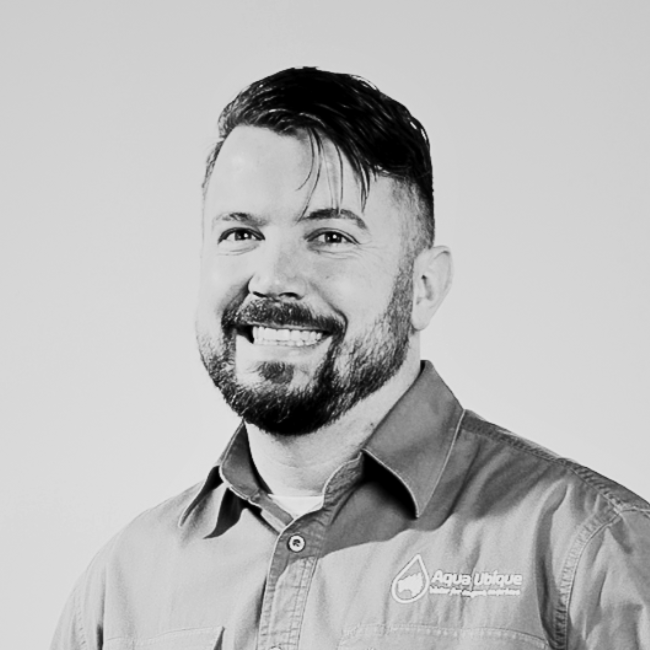

On Episode 648 of Impact Boom, Callum Champagne of Grow the Future discusses using regenerative farming to create employment and learning pathways for youth, and why place-based approaches strengthen regional communities and contribute to more prosperous and equitable futures.