Daniel Joinbee On Forging Pathways For First Nations Talent Into The Australian Aerospace Industry
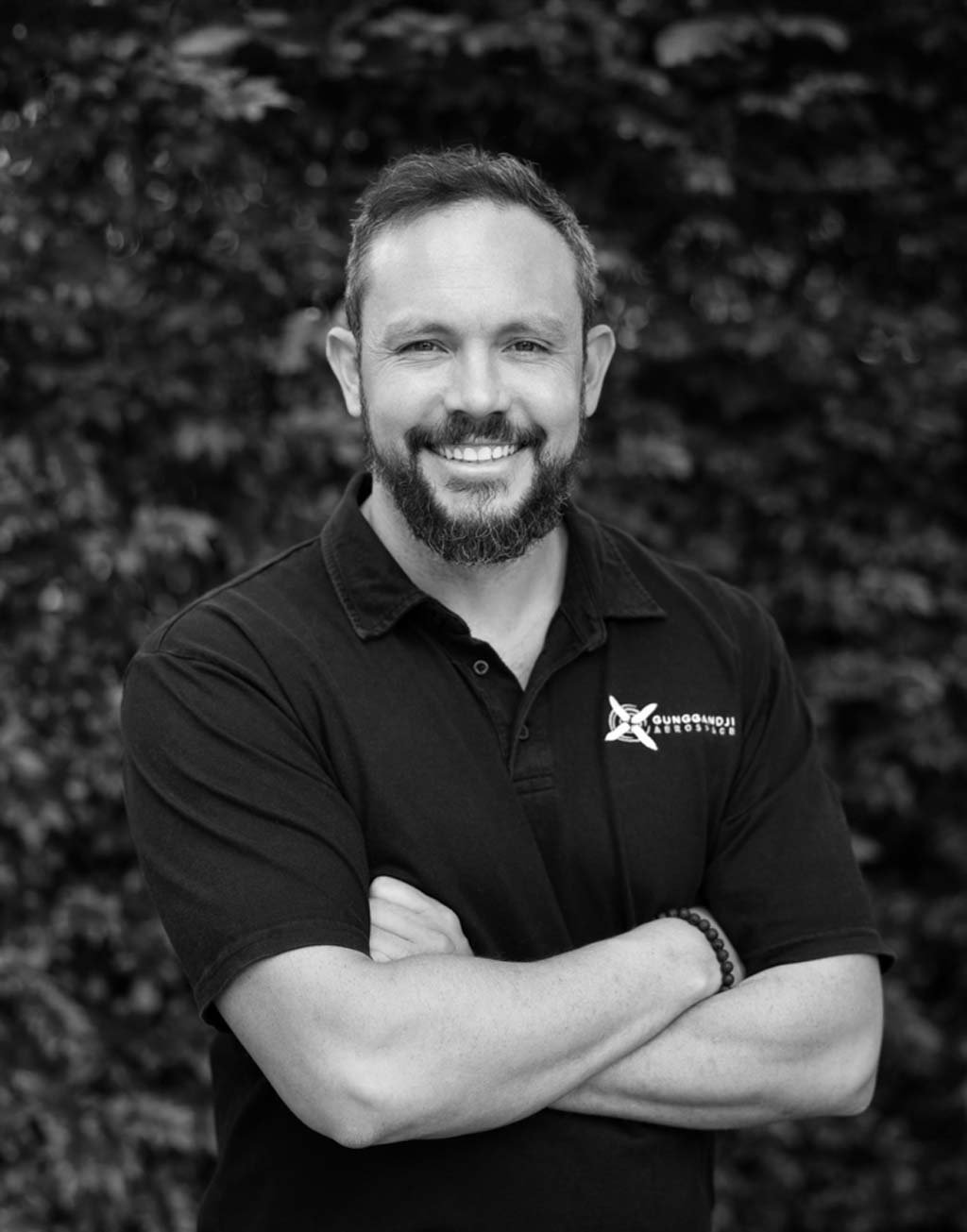
Daniel Joinbee is a proud Gunggandji man, Australian Defence Force veteran, and Founder and Managing Director of Gunggandji Aerospace, a 100% Aboriginal and veteran-owned business delivering sovereign capability across Defence, aviation, aerospace, critical infrastructure, and other complex, regulated, and security sensitive industries.
Daniel’s career spans more than 20 years across operational service in the Royal Australian Air Force, government program leadership with the Department of Foreign Affairs and Trade and Department of Defence, and entrepreneurship. A former Air Traffic Controller, his experience includes military aviation and operations, complex international infrastructure delivery, and nationally significant Defence programs. He holds an Executive MBA from Melbourne Business School and a Bachelor of Science from UNSW Canberra at ADFA.
In 2021, Daniel founded Gunggandji Aerospace with an ambition that went beyond building a successful Indigenous business. He wanted to demonstrate that commercial performance and social impact can go hand in hand, and that Aboriginal businesses can compete and deliver at the highest levels of highly technical industries while creating meaningful pathways for First Nations people.
That philosophy now extends beyond the business itself. Daniel is passionate about changing how industry thinks about talent, opportunity and participation, particularly for Aboriginal and Torres Strait Islander people and young people who may never have imagined themselves in industries such as aviation, Defence or space. Raising Horizons was born from Daniel’s vision to bring industry and opportunity directly to young people in community, building aspiration and self determination through exposure, relationships, and real pathways. The initiative was recognised as Diversity Initiative Program of the Year at the 2025 Australian Space Awards.
Daniel also contributes to a range of industry, community and advisory bodies, including as Australian Co-Chair of the Indigenous Business Sector Group within the Australia New Zealand Leadership Forum, Director of the Aboriginal and Torres Strait Islander Veterans Association, and an advisory committee member for UNSW Alumni and the ARC Centre of Excellence in Plants for Space. His work has been recognised with the Australia Day Medallion, Indigenous Space Leader of the Year, and Indigenous Space Business of the Year.
Daniel discusses expanding aerospace career opportunities for First Nations young people, supporting self-determination through practical industry experiences, and why founder wellbeing and strong support networks are essential for sustaining impact.
Highlights from the interview (listen to the podcast for full details)
[Tom Allen] - To start off, can you please share a bit about your background and what led to your work in social impact?
[Daniel Joinbee] - I was born in Darwin. I grew up in Melbourne, and there’s a little bit more to my history that we probably won’t have time for today. I joined the Royal Australian Air Force because they were giving out a free laptop.
I grew up in a single-parent household for most of my childhood, where my mum and I would deliver junk mail on weekends to make ends meet so that she could afford to pay for me to go to a private school. Through that, she always would say to me words to the effect of, “I don’t care what job it is that you choose, as long as you have the freedom to choose what it is that you want to do.” I think that, as a theme, has always come through some of the work we are doing.
I chose Air Force for a free laptop because it was a pretty good marketing campaign from them at the time. Remember, this is back in 2007, so this is Nokia 3310 territory. This is before laptops were mainstream in schools, before the iPhone was released, and so it was a pretty big deal to get a laptop. I ended up becoming an Air Force air traffic controller.
As founder and managing director of Gunggandji Aerospace, can you please share more about how you’re supporting First Nations young people?
Gunggandji Aerospace is something I’m really proud of. It’s 100% owned by me and it’s been bootstrapped by me. We’ve had our ups and downs along the journey, as most startups do. But as you said in the introduction, it is about showcasing that Aboriginal businesses have a place in all aspects of industry in Australia, and we’re trying to pioneer our active participation and role in some really exciting spaces.
You asked before what led to the social impact, and I think it extends from where Gunggandji Aerospace came from. I was personally involved in writing an Australian Industry Capability plan for one of the defence primes about a sovereign satellite program, and identified that there were no Aboriginal businesses in Australia that could meaningfully contribute to this program of works.
As a former Air Force air traffic controller who understands the aviation industry, I also spent a lot of time in the Air and Space Operations Centre within the Australian Defence Force. Having a technical understanding of space is what brought Gunggandji Aerospace together.
The underpinning idea behind Gunggandji Aerospace was that yes, I can create a successful business, but how do I create a bigger impact outside of just me? How can we create more opportunities for mob to come in and participate in what I think is one of the most exciting industries in Australia?
Aerospace, when you’re combining aviation, you’re combining drones, you’re combining space, whether it’s SpaceX or Varda, who’s currently making pharmaceuticals in space and landing them in South Australia. It’s a really exciting time to be involved in this industry.
What barriers do First Nations young people face when transitioning into education and employment, and how can Raising Horizons and social enterprises respond?
Everyone talks about, “You can’t be what you can’t see.” You can’t be what you can’t see, and I added something to that. We throw it around in Gunggandji Aerospace, and it’s not polished because nothing I do is polished. It’s this idea that you can’t see if you don’t know, or you haven’t been exposed to it, you haven’t been shown it.
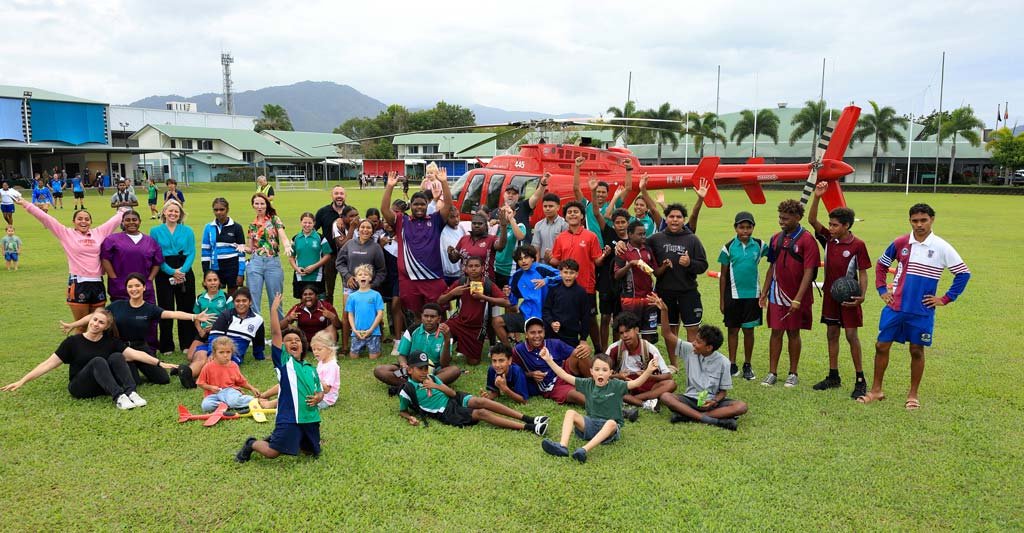
You can’t be what you can’t see, and you can’t see if you don’t know. That’s what Raising Horizons is, it’s an aspiration-raising program; a tactile, tangible experience that we bring to North Queensland. We work collaboratively with AFL Cape York House, which is in Cairns, and NRL Cowboys House, based in Townsville. We take their students out into industry to show them all of the different careers that are possible.
Right now, this is specifically in the aviation domain with plans to expand it, but we make it all practical. We go and talk to aviation firefighters one day and play with the fire truck. I say “play” because they’re kids. We need to make it fun. It needs to not be classroom textbook. It can’t be a PowerPoint show. We need to go out and look at how big a tyre is, lift up the jaws of life for the kids and go, “Wow, this is really heavy,” but watch it cut into a car and go, “I understand the purpose of this job and what’s there.”
The next activity, we’d go up to air traffic control and watch aeroplanes take off. I, as a former air traffic controller, say, “Just make sure you don’t press that red button, because the red button is going to trigger the firefighters to go out onto the aerodrome and do their thing.”
We take them onto the airfield and watch aeroplanes take off in front of their eyes. They’re the aeroplanes that they sit in all the time, but now they’re seeing it from a different perspective and going, “These are all of the jobs that are at your disposal in your region.”
Whether that’s in regional North Queensland, Townsville or Cairns, or remote North Queensland, whether it’s in Weipa, they’ve all got airports because that’s how a lot of these communities get people up there. There are jobs in those regions for you if you choose to pursue them, but you have to know that they’re there.
That’s a little bit of Raising Horizons. To give you an example of what it’s like this year, everyone’s familiar with the Business Model Canvas, I hope. If you haven’t, get around it. We took that up, and we’re working with some of the students about the value proposition of Raising Horizons in an effort to co-design. We said, “What is it that you want to do? Why would you sell the Raising Horizons program to another kid to do? What is the best thing that you get out of it? What would you improve? What would you change if you had to run it?”
We had this young student who we were talking to, and he goes, “Raising Horizons is real deadly because it gives us opportunities, or we get to see that there are different jobs out there.”
“Why?”
“So we can get a good job.”
We said, “Okay, cool.” That’s not a bad validation point. Then he finished the sentence and he said, “So I can pay rent.”
In that one sentence, he articulated the barriers, the self-limiting barriers that young people in North Queensland are putting on themselves to date. That is this year. That is mere months ago that this story, in real life, happened.
To which I say, that young student hasn’t finished high school. That young student hasn’t had his first job. He hasn’t done many things, and yet his own self-belief, his own barrier to what he is able to achieve in his life, is he is going to get a good job so that he can pay rent.
I look at that conversation and think there is something we need to do, and Gunggandji Aerospace is going to be a part of raising that aspiration for these young kids to go and be deadly, to go and be the CEO of airlines that own their own jets, or do whatever it is that they want to do.
It’s that theme from my mum, that they have the choice and that they choose what they are going to go and do.
What have been your reflections and learnings from the support you’ve received as an AMP Foundation Tomorrow Maker to grow Gunggandji Aerospace’s Raising Horizons program?
I’m grateful for the support for Gunggandji Aerospace and our Raising Horizons program. I thought about going into the Tomorrow Makers program because building this can be lonely, as a founder, as someone in a startup, or as someone in impact where the story isn’t always received well.
Everyone loves to give you a pat on the head and a rub on the back, but to see beyond or to support beyond the pats on the head and the rubs on the back is essential. What I mean by that is there has been sustained mentoring that I’ve received through the Tomorrow Makers program that has helped create a more sustainable version of me as a founder.
I would say that I had been running at 150% for about five years now, keeping this business alive. I have sold a house. Not a house, I sold the house that my wife and my child lived in because of some commercial outcomes that didn’t happen. We had to sell our house to keep the business alive and keep going. There have been things along this journey that I’ve been through by myself.
The Tomorrow Makers program has given me a network of other people who care and are going through a similar experience. But also, from a personal sustainability perspective, the program has taught me as a founder to say, “It’s okay if I finish work at 4:30 today and to prioritise my health and wellbeing.” Otherwise, I won’t have an ongoing impact, because I will burn out in the next two years.
That, for me, has been so profoundly impactful on my relationships with my wife and my kids, as well as my personal health and wellbeing.
What advice would you give to social entrepreneurs seeking to build solutions that respond to community needs?
Something I heard from another social entrepreneur a few years ago (I hope I don’t get in trouble for this opinion!) that has always resonated with me and that we don’t often talk about is how hard small business is, but that it’s also okay that it’s hard.
Hailey Brown, who’s the CEO and founder of Vacayit, which is a social enterprise all about tourism for visually impaired people, said that we go to these conferences and it’s all, “Here’s the social enterprise, and it’s wonderful,” and small business. But there are some days that you can have some real lows.
That advice is not to scare anyone away. It’s to get the support around you that you are going to need, not for the highs, because everyone loves to give you pats on the back and rubs on the head. It’s the support around you for the days that aren’t the positive ones.
To take a little bit of Simon Sinek’s work, it’s about finding your why.
I know my why, and I’ve been asked many times about this before. “What’s your drive? What gets you up in the morning when it’s hard? What makes you sell your house and choose to continue pursuing what you’re doing?” It’s because of those students in North Queensland. It’s because of young Aboriginal people, some of our most vulnerable people in our regional and remote communities, who deserve to have an opportunity, who deserve to know.
Maybe not many people want to be an investment banker, but they should have the choice that that’s not what they want to do, or to not be a lawyer, or to know that law extends beyond native title, or that there are other things. They could be a pilot. They could be ground crew. They could be an aerodrome reporting officer. They could be an astronaut.
All of those things are at their disposal if they choose to pursue them, and it’s up to them. That is, to me, self-determination, and it’s a really big why.
That advice, coming full circle, is to make sure your why is certain, strong, purposeful, and clear in your mind, so that after the first few nos or the first few knockdowns, you are still standing up again to fight for that purpose.
What inspiring projects or initiatives have you come across recently creating a positive change?
There are so many exciting social impact organisations in Australia that are really getting after some of those community-led issues. To highlight three that I’ve interacted with really closely, there is an organisation called Defence Kidz, which is all about supporting families.
As a veteran and someone who looks around at the ecosystem, particularly around the Royal Commission into Defence and Veteran Suicide and other initiatives like that, it’s about supporting the families that are behind our veterans, the families of people who are in service who routinely travel away from their families, and giving resources to the kids so that they can be proud of who they are.
I’m an absolute advocate and believer in this work. I’ve got babies who watch me get on aeroplanes almost weekly still. To give them resources or an understanding of who their mum was when she was in the Navy and stuff like that, I think is important and inspiring.
Through AMP Foundation Tomorrow Makers, I’ve met so many in my cohort, and I think it’d be almost rude to start calling them out individually. But to give you an example of the power of Tomorrow Makers, I’ve met a guy named Shannon Lemanski from Aqua Ubique. There are these little accountability things that we are tasked to do together, and so I have an accountability to him for making sure he gets his website up and going.
He happens to live no more than 20 minutes away from where I live, and so he’s lent me resources that have helped him on his journey.
It just so happens that his business (Aqua Ubique) also is putting clean drinking water into Aboriginal communities. I’ve seen firsthand that there are communities in Australia today that do not have access to clean drinking water, despite the federal funding that’s going into paying for it. The water, the pipe never gets to it, and there are babies walking to get water today. I look at organisations like that, that are solving tangible problems in communities, and I can see that there will be a really meaningful impact.
I think that Tomorrow Makers brings all of these people together to share some of this exciting work. I didn’t know what Shannon was doing before this, and it’s awesome that I get to be a part of it now.
To finish off, what books or resources would you recommend to our audience?
If I was to challenge people to listen to a podcast they may not traditionally listen to, if they’re often listening to business podcasts, I would say get around a podcast by someone named Rich Roll.
Rich is a plant-based ultra-endurance athlete who was an alcoholic, who couldn’t walk up his own stairs at home when he was 36 or 38 years old. He has now gone on to do multiple feats of ultra-distance running, and he always has the most interesting people on his podcast to talk about not only the fitness sides of what they’re doing, but also the mental clarity. He always talks quite openly about his addiction and the journey that he’s on of sobriety, and I think it’s always really empowering from a health and mindset perspective.
He’s got such a way with words and bringing out the best on podcasts. It’s such a vibe.
In terms of books, there’s a book that I really resonate with. I’ve got three that I want to recommend. The first one’s called Slow Productivity: The Lost Art of Accomplishment Without Burnout. by Cal Newport, and it’s all about being deliberate in doing a little less.
I try to explain in some of my consulting work, particularly to some federal government clients, that sitting me or other creative, entrepreneurial people in a cubicle and directing me to do output for two hours a day isn’t the best way to get work out of me.
Planting a seed, I’m obsessed with whiteboards. I’ll write on whiteboards all day. I love it. I’m doing this podcast while I’m walking around in my office, and I’ll take phone calls as I walk around the streets. My ideas come to me when I’m out running.
It’s this idea of letting your mind slow down as part of the process, and that you may not have an outcome straight away. I think it’s an important book, particularly in this age of AI when you are receiving so much information every day. Taking some time to not have the answer immediately is, I think, important.
The second one is probably a little bit more of a strategy book for the budding entrepreneurs out there, Playing to Win: How Strategy Really Works by Roger Martin. I’ve got this book tabbed out and highlighted. I think it’s a sensational book, and you probably only need to read the reviews online to get after that one.
The third one is going to be really left field for anyone who likes an autobiography. I think this is one of the most beautiful autobiographies I’ve ever read, and it’s Of Life and of Leadership by Brendan Nelson.
Brendan was a doctor, then he became the Defence Minister under the Howard Liberal Government, became the shadow minister. He delivered the response to Kevin Rudd’s apology, which I always think is undertold, that his speech was also quite impactful in Parliament that day. He went on to be the chair of the War Memorial, but in his book, he talks about a life of success that would be built on four things.
The four Cs are something that I resonate with when I talk to people and kids. I’ll read a brief excerpt, and it’s commitment: you must consistently commit yourself to the people and causes to which you commit. Don’t give up.
Conscience: every decision that you make in life has a question beneath it. What is the right thing to do? In relation to decision-making, there is no such thing as big or small decisions. Every decision you make has a consequence for you and others.
Compassion: to share in another person’s pain. In leadership, it also has the essential meaning of relevance. Knowing what another person thinks is important, but far more, it is to know how another person thinks.
Courage: nothing of value in life is ever achieved without risk. Not cavalier, reckless courage, but an audacity motivated by the best interests of others, a spirit that challenges doubt and enables us to break through fear.
Those four Cs, commitment, conscience, compassion and courage, are something that, ever since I read that autobiography and I looked at the way that Brendan conducted himself as chair of the War Memorial and as a person who had a public life, has been quite grounding.
Initiatives, Resources and people mentioned on the podcast
Recommended books
The Rich Roll Podcast by Rich Roll.
Slow Productivity: The Lost Art of Accomplishment Without Burnout by Cal Newport.
Playing to Win: How Strategy Really Works by A.G. Lafley and Roger L. Martin.
Of Life and of Leadership by Brendan Nelson.
Business Model Canvas from Strategyzer, referenced in Daniel’s discussion of co-design.
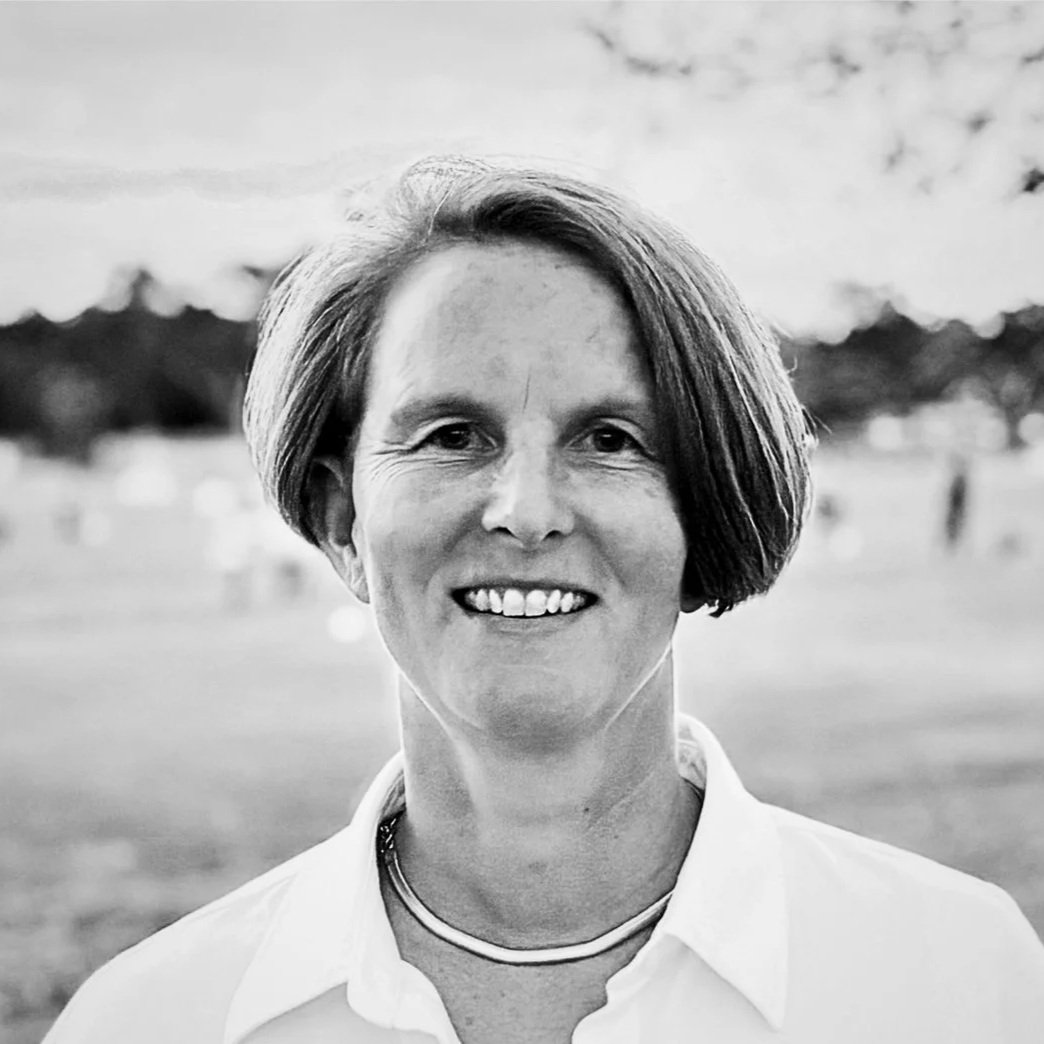
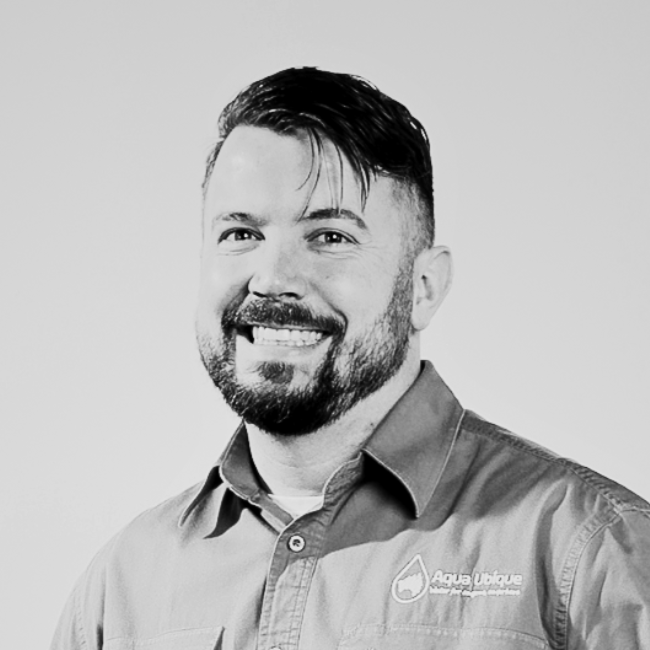
On Episode 653 of Impact Boom, Daniel Joinbee of Gunggandji Aerospace discusses expanding aerospace career opportunities for First Nations young people, supporting self-determination through practical industry experiences, and why founder wellbeing and strong support networks are essential for sustaining impact.