David Gaines On Conscious Consumption And How Everyday Purchases Create Collective Impact
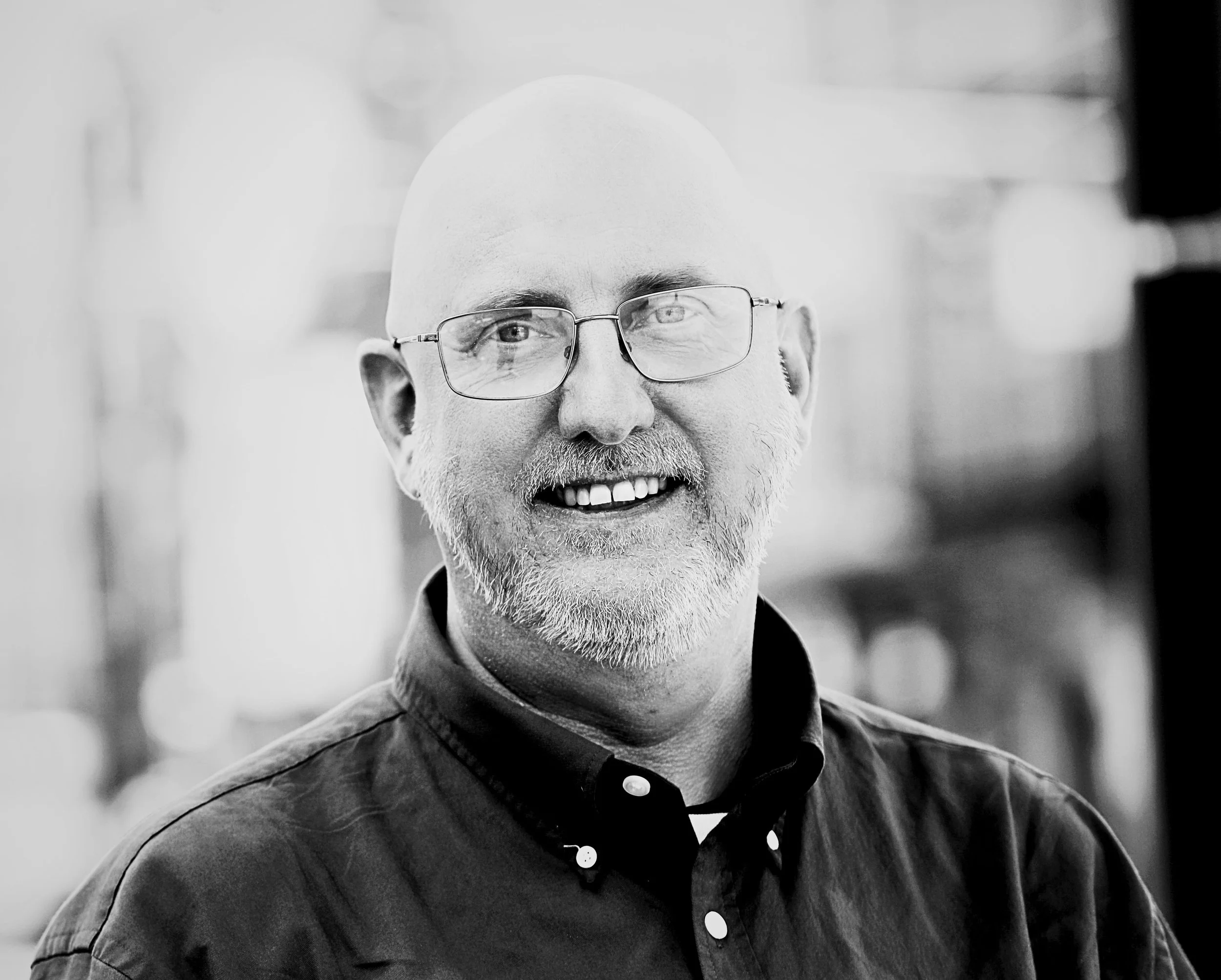
David Gaines has spent over two decades exploring the intersection of business, ethics, and consumer choice. As owner and Chief Visionary of La Terza Coffee, a specialty roaster serving Southwest Ohio, he's built a company rooted in sustainable sourcing, ethical practices, and community connection.
His work extends beyond the coffee industry. As a conscious business coach, David helps entrepreneurs align profit with purpose and challenge the traditional business status quo.
David's passion for social enterprise led him to serve as National Chairperson of Social Enterprise Alliance, where he worked to foster connections and provide resources for mission-driven businesses across the country. He's also led educational trips to coffee plantations in Honduras and Belize, giving participants firsthand insight into global economics and the real-world impact of fair trade practices.
His first book, Radical Business, challenged readers to rethink how companies can operate as forces for good. In his new book, Why We Buy and Why It Matters, David Gaines, a small-business owner and socially conscious entrepreneur, explores historical precedent, contemporary research, and inspiring examples of mission-driven businesses to show how simple changes in habit can lead to a groundswell of conscious consumerism. With his unique perspective, he offers accessible steps and encourages readers to use the power we already have—the money we're already spending—to vote for a more equitable economy where everyone thrives.
David discusses embedding purpose into everyday business decisions, recognising the people behind our purchases, and how small, collective actions can build a more equitable economy.
Highlights from the interview (listen to the podcast for full details)
[Indio Myles] - To start off, can you please share a bit about your background and what led to your career in impact and social entrepreneurship?
[David Gaines] - When I was in college, I started a small business, and the motivating factor was so that I could volunteer for different non-profit organisations however I wanted to. Could I start a small business and create some freedom to do that? I did that, quickly realising, though, that the small business needed more of my energy and effort, so it actually capped how much impact I wanted to have.
That drew me into this world of coffee. A friend of mine started La Terza Coffee, and he needed some business support. I was there to step in, and eventually, long story short, I purchased the company. For me, the reason why that all materialised so well is that here was this for-profit business model, but the more that we grew the for-profit entity, the more social impact we could have.
That was my introduction to social enterprise and social impact, and really the start of a lot of, I think, good and challenging questions like, “What does it mean to have social impact? What does it mean to be good as a business?”
Honestly, the heart behind those questions was more from a consumer lens: “Here’s a business that’s good. We’re making an impact. I’m setting the foundation of how much impact we could have, but as a consumer, how do I find other good businesses?” That question led me to a lot of different areas of social enterprise.
As chief visionary of La Terza Coffee and an author, how have you encouraged businesses and consumers to rethink the relationship between purchasing, purpose and impact?
La Terza is Italian, so that’s our way to give homage to Italy and say, “Hey, thank you for this espresso. We love the culture that you’ve created.” But the direct translation is “the third”, and so our company DNA is: how do we empower the third place? It’s a place where people can connect, a place where people can have dialogue, all that kind of thing. There’s a social mission connected to the name and the brand.
We were one of the first in this space to operate that way, but a lot of coffee roasters today work closely and directly with the farmer and producer. But for me, the extra layer of that was: how do I really use this business? How do I push the impact that we can have? Again, what does good even mean? What does it mean for us?
So La Terza, in some ways, allows me to case study a lot of different ideas. As new concepts come around, different ways that we could have impact, it gives me a chance to explore those and put them into action, really put them to the test and see if it’s good for business or not.
For me, La Terza has a dual meaning. I really think that the world needs more safe spaces where people can come together and really dialogue with each other, but also it gives me a chance to explore how much impact a business can really have.
What have you learned about designing businesses where purpose is embedded into everyday decisions and treated as core to the business?
That was the heart of the question as I was getting involved: what does good even mean? Getting involved with organisations in the US like Social Enterprise Alliance, Conscious Capitalism or American Sustainable Business Network, everyone had their own definition of what good meant or what kind of impact it was. I’m wrestling with all those kinds of things and figuring out what I can be putting into place.
I’m friends with a lot of people who work in corporate America and people who run other small businesses. There was all kinds of exploration, too, of different potential business models, like giving back, and all these different conversations I was having around this root question of what it means to be good.
I was quickly realising that that was a difficult question to answer, that good wasn’t necessarily black and white. Having impact, in many ways, was measurable. But with the give-back model specifically, I was exploring that, and it was very popular when I got involved with coffee about 15 years ago. Some of the organisations that I was finding were considered social enterprises because they were giving back 10%. A handful were giving back 10% to environmental causes, but then causing environmental harm with their products and services.
I’m like, “Wait a minute, what if you just don’t do the harm and don’t worry about the give-back? Just do the right thing from the beginning.”
That’s one example of a very layered reason why defining good and defining social impact was more challenging than just a black-and-white answer. I’m wrestling with this question, and I had this pivotal moment. It was the first time that I went to a coffee plantation.
We have a direct trade relationship with a woman-owned farm in Honduras, so for me, it was the first time to see the impact that we could have. Schools were being built. People had living wages, not just a fair wage, but a living wage for the community that they lived in.
I’m walking up to this table of women, three women who are all sorting the different coffee cherries. I didn’t actually realise that that job existed. What they were doing was separating specialty coffee, that’s the coffee I’m buying, commodity grade, which is what the majority of the world consumes, and then the stuff that really had a lot of insect damage or whatever. That was still used, but roasted very dark to be used as instant coffee. Someone’s job was to sort all of that out.
Walking up to the table, this one woman in particular just radiated joy. So I’m walking away from that table with two clear key ideas. One is that the reason why we are trying to pursue excellence as a business is that the way I can most honour this woman’s work is to be the best that we can be. Find that perfect roast profile, work on all the processes and systems for ordering, et cetera.
The second key idea, which helped shape this idea of what it even means to be good, was that I got to see a sneak peek into my supply chain, a key person in our supply chain who was critical to everything that we did. I recognised that to be human is to make. Maybe this idea of what it means to be good or have social impact is to look at all the people that our organisations touch and see the humanity behind it all.
It’s almost like a rhetorical question: “Is that thing that we all learned in elementary school, treat other people the way you want to be treated, maybe the foundation of what it means to have social impact?”
If that’s true, that led me to realise and just take apart who all the people are that we interact with as a business. I identified that there are seven key stakeholders, supply chain being one of them. What does it look like to treat our supply chain the way I want to be treated?
Our story began with the supply chain and working closely with these producers, but it’s recognising, “we’re bringing in tea, we’re bringing in shirts, we’re bringing in office supplies. How do we keep pushing that idea, even in that one stakeholder category, to treat them the way we’d want to be treated?” That’s how we can start to measure our social impact.
What common blind spots or mistakes have you observed among responsible business owners or aspiring social entrepreneurs?
Honestly, the biggest thing is: how do we be as clear and transparent as possible about all the things that we’re doing? We’re trying to sell a great story. I mean, being an entrepreneur is hard, period. Then, as a social entrepreneur, it’s like we’re self-imposing a lot of rules, and so it makes the job even that much more difficult. It’s very tempting to oversell our impact.
One of the key perspective shifts for me is recognising that it is a journey. With all my stakeholders, it’s my supply chain, team members, customers, community, competition, environment and self-care. Profit is a part of self-care, so I want to be profitable.
So here are these seven different stakeholders, and as I’m wrestling with each one, I start to identify these. Then I start to ask the question, “What am I currently doing in each one?” Even if it’s super small, let me write that down. Then, what’s the next thing I can do?
These are the questions that I’m wrestling with. I was in the environmental category, and I was like, “Oh man, I really wish we could have a LEED-certified building. I really wish that we could have a compost package available to us,” all these things.
I remember someone coming in and saying, “We can replace all your lights with LED lights, and that’ll have a really good environmental impact.”
Unfortunately, it was just a budget that was outside of my scope. I couldn’t do it. I was pretty bummed out about it, honestly, but I recognised that while we were doing a couple of things, we did not have any kind of recycling program. So I thought, “Wait a minute, I can’t afford this, but could I afford, at the time, $50 a month to have a recycling dumpster at our facility? Yes, I can do that.” That’s what we did.
Over time, I recognised that the key to the whole thing is to take the next step. I think where we can get tripped up as social entrepreneurs is we’d say, “Hey, look at this work. Here are all the things that we’re doing really well.” But in doing that, we can make a mistake by not sharing the idea that it’s a journey.
I’m still nowhere near the end of where I want to go in terms of the impact that I want to have. But because I continued to take the next step, now we compost everything that we produce, and we have this recycling program. All these other things are happening because we took one step at a time.
I’m trying to be a little bit more transparent, and that would be the answer to the question: how do we be more transparent? Saying it’s a journey, saying that we’re all doing this together, but the next thing that we can do as a company is X. Share the journey too: the thing after X is Y, and if you want to help us get to Y faster, here’s how you can do it. Involve the consumer in that process, but just be transparent with wherever you’re at.
On the consumer side, too, we have to give a little bit of grace when we’re finding companies that are having some version of social impact. Let’s celebrate that and also use our dollars and our voice to encourage the next steps to continue to happen.
What inspired you to write your upcoming book, Why We Buy and Why It Matters, and what key insights emerged from writing it?
As I was starting to get involved with the company and we were keyed in on social impact, I still had that consumer mindset. I wrestled with: what does it mean to be good? Here are these seven stakeholders. Treat other people the way you want to be treated. A core idea of that was, again, this pivotal moment to see the humanity and see that to be human is to make things.
These ideas led to my first book called Radical Business, but I still wrestled with this question: how do I find these businesses as a consumer? What tools do I have? As people were reading my first book, they were also asking that question: “This is great, Dave, but I’m not really a business owner. I’m not a manager. I’ve found your work. How, as a consumer, can I find the businesses that you’re describing?”
That question lingered, and honestly, over the last several years, as it continued to play out, I have to say I wrote this book mostly out of anger. I just don’t see the world being a place that I like. I just keep asking, “What are we doing?” We have climate change that is here. I don’t know, it’s crazy. The whole thing is just crazy.
There are so many challenges knocking on our door.
The root of it all, the common theme that I see, is the opposite of this idea that to be human is to make. It’s like we keep running away from our humanity rather than running towards our humanity. I think even with this question of AI, what do we use this tool for, and is it going to destroy humanity? I think the hard question behind it is: how do we keep our humanity while we have this new tool? There is a way to do that.
If the first book was written with this idea that to be human is to make, then it felt like the continuation is to recognise that consumption is actually a sacred space. To be human is to make is a sacred kind of question. We definitely have an overconsumption problem we have to address, and we have a lot of things that we need to do as consumers. It’s not just about the things that we spend our money on, but also the things that we spend our time on, like social media.
How do we spend our time and spend our resources on things that usher us back to humanity? If to be human is to make, then that means to consume, in its purest form, is a celebration of humanity’s interdependence. We need each other. We need everybody’s businesses. We need everybody’s talents. We go to schools with teachers. We drive on public roads. We have phones and cars, and everyone is contributing in some way, shape or form to the things that we buy.
I feel like we’re way off track, and I don’t think many people would disagree with me on that. We’ve got to rein in consumption. We’ve got to reset on what that even means. But I think the way to do that is to first see consumption in a pure definition, which is a true definition: if to be human is to make, then to be human is to buy, sell and trade. If that’s true, how do we honour all the humans behind everything that we buy?
That’s the fundamental idea behind the book. It was fuelled by anger that I don’t really like the world that we live in. But if we can reclaim our humanity and just reclaim the human stories behind everything we purchase, I think that’s the first step in shifting our perspective.
What advice would you give changemakers working to shift consumer behaviours and create lasting impact?
The reason why I chose the word “radical” for Radical Business is that radical, in Latin, means root or origin, and I kept coming back to this definition. I think, again, the root of all of it is to be human. In both books, I use this framework called “plant, water, grow”.
Plant is this idea of: what are we really wrestling with? Is there a perspective change that could influence our decisions, both as the business owner or leader, or as the consumer? Water would then be: what’s the one action that we can take? Then grow is: how do we start to look at this in community, and who else is doing this, and how do we have better conversations? Again, whether you’re a leader or a consumer, I think this framework is a really useful tool.
One of the key ideas of my second book, Why We Buy and Why It Matters, is that we have to recognise that these small things, these small actions, are still very important. Sometimes we associate small things with “not important” and big things with “important”. The reality is small things are important, and big things are important.
So when you look at this framework of plant, water, grow, what’s the perspective shift? One is to say, “Hey, this idea of a small thing, let’s change our perspective and say it’s really important.”
I get the opportunity to speak in front of people on a regular basis. Recently, I’ve been holding up a piece of paper at the end of the talk, and I’ll just ask the question, “Does it matter whether we recycle one piece of paper or not? Does it matter?”
I think the answer is a little bit of no, because it is so small that it’s easy just to dismiss it. But I think the answer is yes for two reasons.
One, it is the small habit that tends to lead to the big habit. I’m trying to maximise my impact, maximise my life, pass on a better world for my kids, all that kind of thing, so the small thing does influence the next thing. But I think we’ve lost the scale of it all.
In the US, there are 330 million people who live here. If we were all able to either recycle one piece of paper or not use a piece of paper, like by using a tablet instead, per day, which I think is an achievable objective, I think we could all rally around that. That would save 40,000 trees per day, or 14 million trees per year, and one of the best ways to combat climate change is to plant trees. Imagine tree-planting initiatives and limiting how much we use trees as a resource.
So that’s an example of this perspective shift: the small thing is important. What’s one thing I could do? I could recycle one piece of paper per day. I could wrap my mind around that. That’s the water section. Then the grow is: what does it look like if we all did this together? If we did all this together, 14 million trees per year.
So that advice, I think, is what fits. If you’re a small business, what’s the perspective shift? What does it mean to have impact, or whatever it is that you’re wrestling with? What’s the one thing that you can do that is achievable and leads towards your end goals? Then how do you collaborate and do it with your team members or even your competition? What are the things that you can do in community to see it to fruition?
What inspiring projects or initiatives have you come across recently creating a positive change?
The biggest thing that I’m seeing right now is this awareness that the consumer is recognising that they have a lot of ability to make change. I don’t see an organisation tapping into that yet, but I do see, on the consumer side, a lot more people are like, “What are we doing? What are we doing? What are we doing?”
The consumer is asking new questions, and they’re recognising the role they play in empowering social enterprises or conscious businesses. I would give that as a challenge to our listeners and the people we’re all networked with. As conscious business leaders, we need to be keyed in on telling these stories so that the consumer is aware that there are hundreds of thousands of leaders across the world who are doing something to bring change.
There’s a different version of capitalism that exists that is more equitable. So I do think that there’s this movement towards stakeholder capitalism and a movement away from shareholder capitalism, especially in the United States. I don’t see any organised leader with that yet, and maybe that’s a good thing.
But I do see this awareness of the consumer saying, “Enough is enough. What do we do?” So they’re starting to ask the right questions. I think the more that we can do as conscious business leaders is to say, “Hey, there are many of us. Come check us out,” that’s a good thing.
To finish off, what books or resources would you recommend to our audience?
Kate Adams, who was with Conscious Capitalism, wrote a book called Accountability Under Fire. That’s a fantastic book, I think, really for the emergent leader. One foundational book for me was this book called Give Work by Leila Janah.
A book that really helped me change perspective and see historical perspectives is called The Fourth Turning Is Here, which talks about the different generations and how they play a role in the current moment. Right now, we see a lot of political tension, and people aren’t listening to each other, and all kinds of economic craziness. We’ve been here before. This is what the book would call a winter season, and this book was in part written because they wanted to say, “Spring is coming too,” so there should be a lot of reason for hope.
It’s a fascinating book about the past generations that lived through a winter season and what role each one played in ushering in the spring season. So I think that’s a very relevant one.
But the curveball I’m going to give you is these two children’s books. One is called What Do You Do with an Idea? The other is called What Do You Do with a Problem? They’re both written by Kobi Yamada, and they have fantastic illustrations.
I have young boys who are seven and nine, and these books are foundational to everything that we’ve talked about. What do you do with an idea of how we change the world and make it a better place through the tools of business? You wrestle with that, and you sit with it. Is it a good idea? Is it a dumb idea? All the things, but ultimately, how do you encourage that idea to grow?
Really, the same idea is: what do we do with a problem, and how do we wrestle with that in a good way and bring a lot of our problem-solving skills to that? The wrestling with it is just such good work.
The ideas we need as changemakers can be best shared if we can distil them down to children’s book level. I think that’s when it really resonates with us the most. I’m just a big kid at heart. Those two books, I would love everyone to read to their team, and I bet you there are some tears that will happen if you do that.
Initiatives, Resources and people mentioned on the podcast
Recommended books
Radical Business: The Root of Your Work and How It Can Change the World by David Gaines
Why We Buy and Why It Matters by David Gaines
Accountability Under Fire: How society is demanding more from business and what great leaders are doing about it by Kate Adams
Give Work: Reversing Poverty One Job at a Time by Leila Janah
The Fourth Turning Is Here: What the Seasons of History Tell Us about How and When This Crisis Will End by Neil Howe
What Do You Do with an Idea? by Kobi Yamada
What Do You Do with a Problem? by Kobi Yamada
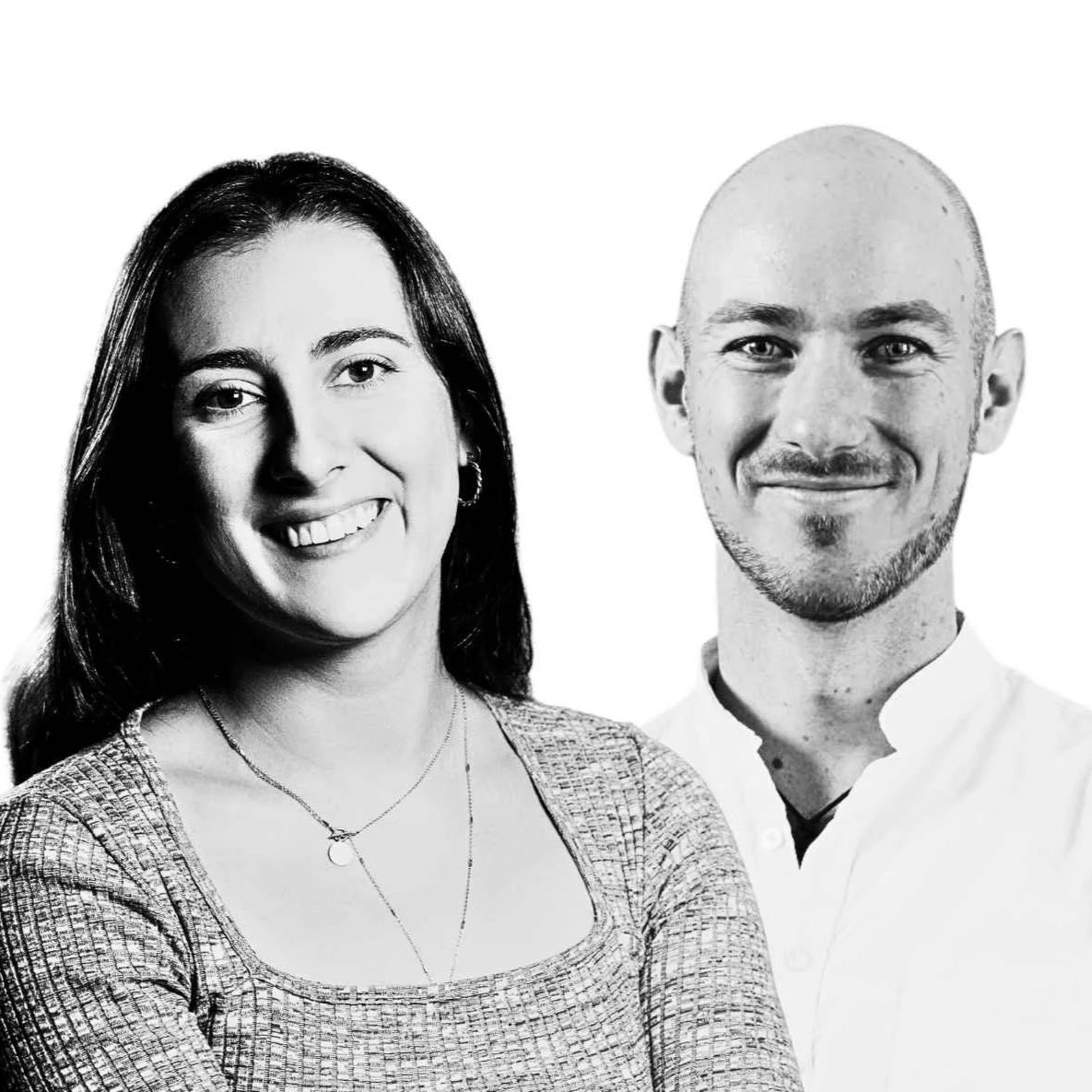

On Episode 649 of Impact Boom, Aaron Reid of Ventia discusses harnessing procurement to create social value, embedding meaningful measurement into business decisions, and why collaboration across sectors is essential for improving community outcomes and making sustainable business practices mainstream.