
Jacob Adams On Reimagining Education Through Youth Co-Design And Adaptive School Systems
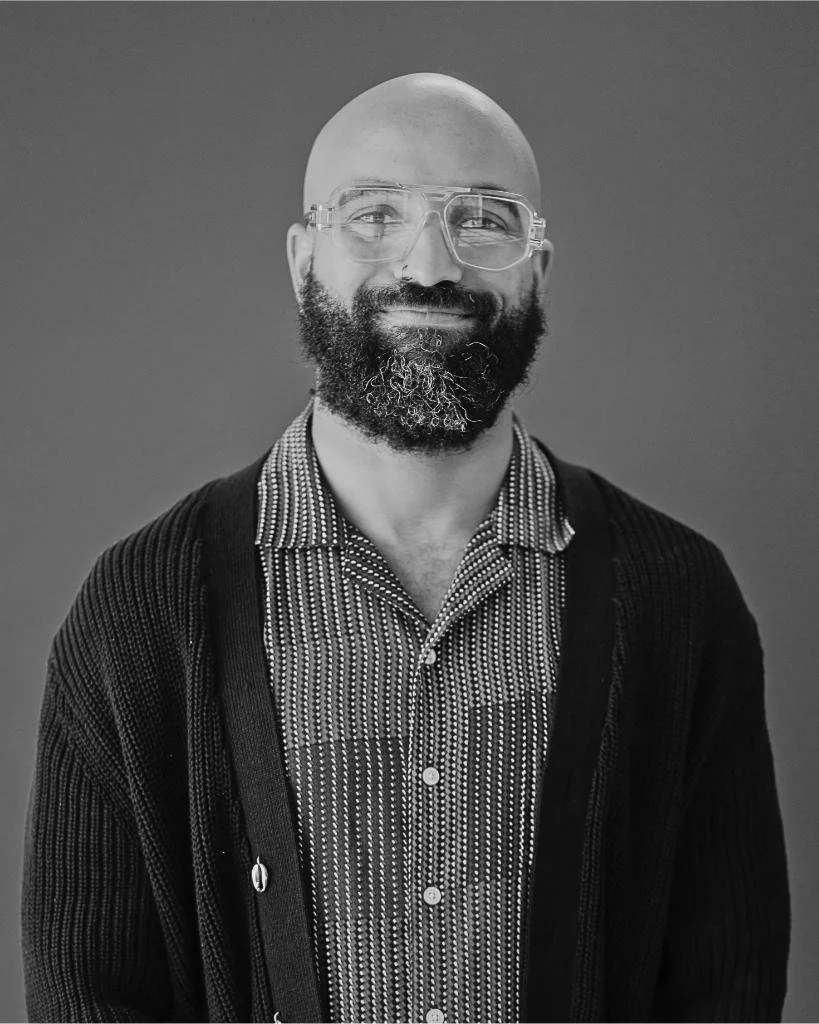
Jacob Adams is an education leader committed to transforming schools into places of joy, belonging, and critical thinking for Black and Brown youth.
He coined the term “disconnection crisis” to describe how traditional education separates young people from their purpose, community, and creativity. In 2017, he founded STEM to the Future, now Inner Spark Learning Lab, which has reached over 40,000 young people and generated insights shaping the broader education field.
Jacob began his career as a Teach For America corps member, teaching 1st and 2nd grade before serving as an instructional coach for three years. He holds a B.A. from Birmingham-Southern College and a master’s from Relay Graduate School of Education. He is also an alum of fellowships including the Simons Foundation’s inaugural Science Sandbox Fellowship, 4.0 Schools, LA Leads, and the Black Equity Collective Build Fellowship.
Jacob discusses building student-led change initiatives, centring youth voices through authentic co-design processes, and crafting financially viable impact models to transform schools from rigid institutions into adaptive, community-centred learning spaces.
Highlights from the interview (listen to the podcast for full details)
[Indio Myles] - To start off, can you please share a bit about your background and what led you to working in social enterprise, education and impact?
[Jacob Adams] - It’s funny because pretty much my whole career I’ve worked in education, but growing up I hated school! I got into this magnet school back home in fourth grade. You had to get on the list and wait. I think I was on the list for three years, and I finally got there in fourth grade.
At the end of the year, they gave awards for A honour roll, AB honour roll, and different things like that. I remember in fifth grade my principal saying, “For this award, we have AB honour roll with the exception of conduct.” Then she said, “Jacob Adams.” I was like, “What? I’ve never heard of anything like this.”
I went up there, shook her hand, walked off the stage, and then they moved on to the next award. I was at a kindergarten through eighth grade school, so I stayed there through eighth grade, and they never had that award again.
Even then, I think that stuck with me. They made up this award, and it was cool. I liked it a lot because I was like, “I got good grades and I’m having fun. That’s something nobody else in this whole school is doing.”
Then fast forward to me being grown, I joined Teach For America. I always wanted to teach and then go be a lawyer. I was supposed to teach in Atlanta, but eventually I ended up transferring. The following year, I worked at a law firm in Atlanta and I didn’t like that either.
Then I went to New York, and they placed me at this super high-performing charter school with some of the highest grades in New York City and New York State in terms of test scores. But, it was super rigid. It was in Brownsville, Brooklyn, and it was highly under-resourced. All of the students were Black kids, with pretty much everybody on free or reduced lunch. The school was run more like a prison than anything else.
Kids had to sit with their hands together all day. They had no recess. I was teaching first grade kids who had no time to go outside and play, no time for critical thinking or creativity. Everything was controlled. Some days there would be 50 people coming to the school to see what we were doing so they could take it back to their school.
Again, having not liked school or education, and not having studied it in college or had any interest in it, I remember getting there and thinking, is this what school is like? I was never taught like this. I know for a fact they don’t teach the rich kids on the Upper East Side or Upper West Side like this.
Long story short, I left that school and went to a school in Harlem. They were doing professional development to train the teachers, and they put on a tape. It was the school I had just come from. I thought, wow, I can’t get away from this.
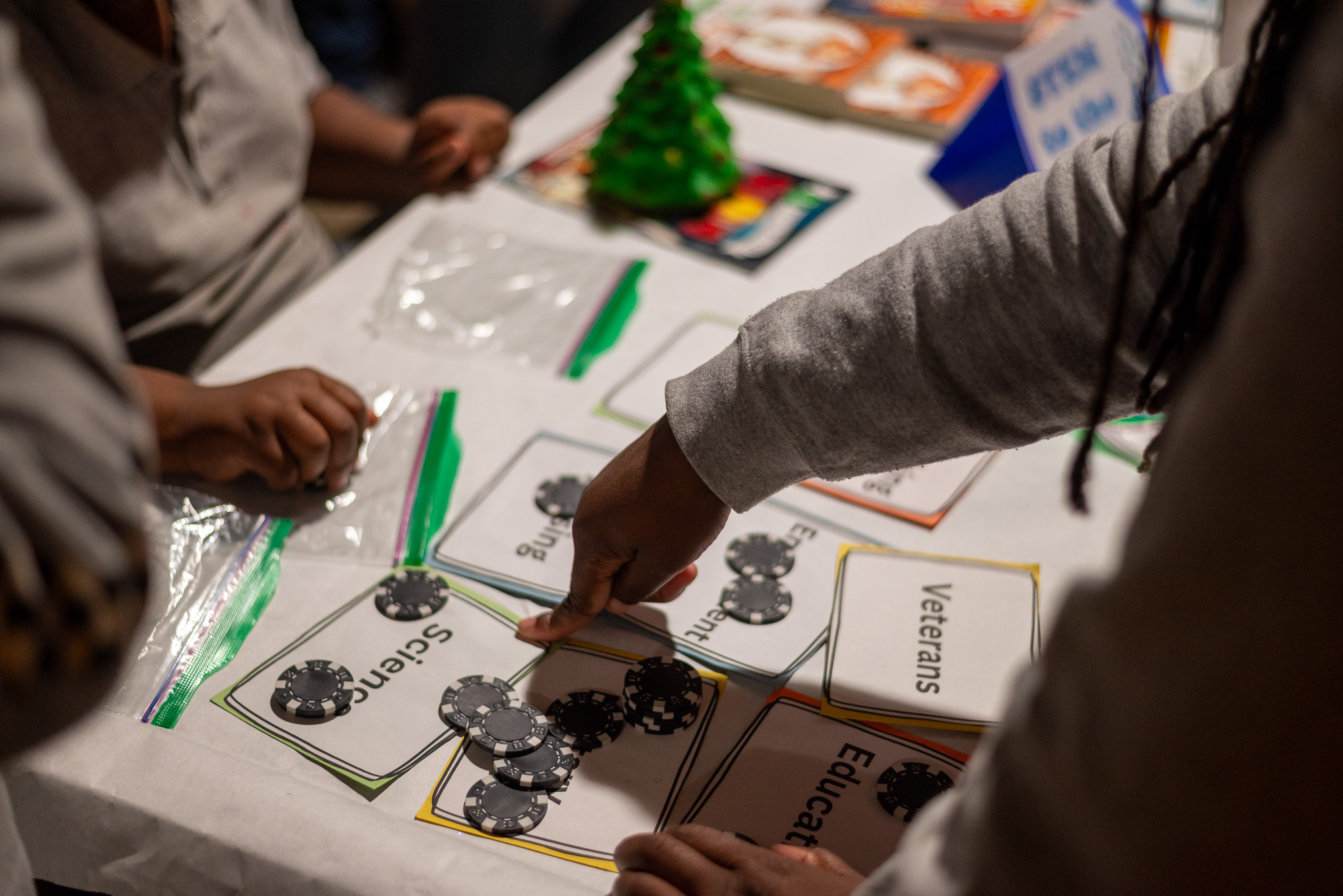
I was seeing repeatedly how this model, based on “Broken Windows” theory, what they called a “no excuses” model of education, was how they believed Black kids, Brown kids and poor kids had to be taught if they wanted to be, quote unquote, “smart”.
This put me on the path to want to make something that could recognise the brilliance in our kids and in our community but do it in a way that allows kids to have control over their lives, as opposed to us trying to control their lives.
As Founder and Executive Director of Inner Spark Learning Lab, can you share more about the organisation and how you are instilling creativity, critical thinking and transforming schools for young people?
At Inner Spark Learning Lab, we like to say we’re transforming education from the inside out. We want to make schools places that kids actually want to be.
In the States right now, there are big problems with chronic absenteeism. I think eighth grade illiteracy is the highest it’s ever been, and kids are struggling with mental health issues at rates we haven’t seen before. Within those challenges, there are a lot of people working on different interventions.
Author and pyschologist Peter Gray often talks about how out of all the places kids spend a substantial amount of time, they’re the most dissatisfied with school.
How can children learn how to read, write, do maths and communicate effectively if they’re supposed to do it in a place they don’t even want to be in to start with? Inner Spark Learning Lab is about developing a model that helps schools become places that can adapt to kids and families, instead of trying to force kids and families to adapt to the school.
We do this by embedding deeply within a school. I think there’s a lot of pressure to scale and be in all these different places, but teaching and education are so relational. We’ve stopped trying to spread ourselves thin, and instead, we partner deeply in schools through what we call our Learning Lab model.
Within that model, we have a Dream Weaver who gets to know the kids and families. We have a weekly class called Igniting the Spark that all the kids attend once a week throughout the whole school year. Then we have what we call Theory and Practice, which is a student-led youth participatory action research program.
Within those programs, the Dream Weaver gets to know what the kids are interested in and what they want in the school. Let’s say they want more play. Even the kids at Inglewood, where the Lab is based, have recess, so it’s not like where I was in New York, but it’s short. It’s 30 minutes, so of course they want more.
One of the things they often tell us is that they want more time to play and move. So the Dream Weaver will hear this and say, “Okay, for the next two months, we’re going to run an experiment in the fifth grade Igniting the Spark class. We’ll put our curriculum to the side and focus even more on play and movement.”
Then we’ll research that over the next eight weeks, looking at what happens in terms of the kids’ connection to the school, their engagement, attendance, and joy. There are also other metrics the kids say they want to learn about throughout the experiment, because they’re part of it as well.
We’ll run this experiment and then share the data with the principal. Whether the results are good, bad, or somewhere in the middle, as long as we’re learning, that’s the goal. We’ll say, “Obviously, the easy answer is to make recess longer.” Usually they’ll respond that they can’t make recess longer for various reasons.
Then we can say, “Here’s what we have learned, here’s what we tried, here’s the effect it has had on the kids, and here are ways the school could adopt some of these approaches.”
To round it all out, the student-led after-school program has access to the same information. They then create their own interventions. That could be something like a family movement day or, on a bigger scale, bringing in an engineer to help redesign the playground or explore other ways to include play within the school.
The kids lead those initiatives so they can create the change they want to see in the school, more or less on their own, rather than having adults step in to carry it through for them.
You’ve spoken about this disconnection crisis. How have you seen traditional education separate young people from their purpose, and what does this crisis look like? What’s needed to address it?
One question I like to ask people, and even now listeners can think about it, is, “What’s one of the most valuable lessons you’ve learned, and where did you learn it?”
I’ve asked that question maybe four or five times now to groups of adults, and not once has someone responded with something that was part of the school curriculum. Usually, the answer isn’t even related to school. If it is related to school, it’s about an adult who cared for them, or something like treating people the way you want to be treated. It’s more human lessons. It’s not something that was on a worksheet or in a textbook.
If we think school is the place we’re supposed to go to learn, but as adults we reflect on the most valuable things we’ve learned and they didn’t happen in school, then what is school doing, and why?
It’s doing a lot of things, but one of the main things I see is that it keeps kids from learning is who they are and what they care about. It prevents them from being able to go on the journey of learning and actually enjoying it.
Learning is messy. It’s not linear. But when you look at the way our school system is set up, learning appears very linear. You learn this standard, then you master that group of standards, and then you move on to the next set.
Learning doesn’t happen that way. Not for me, and really not for anybody. Scientifically, learning isn’t that linear of a process. But we’ve designed our schools to make it seem like it’s A, B, C, D.
What that ends up looking like is kids being taught to read books they couldn’t care less about. Kids having to learn maths, whether it’s fractions, number sense, decimals or equations, in ways that have no relevance to their lives. We’ve got kids writing, but they’re not writing about anything they care about, to anyone they care about, or about anything that feels relevant to them.
I think that makes learning feel like a drag. It becomes something you have to endure, not something you enjoy.
From the charter school I taught at in New York, which had some of the highest test scores, to schools where I was training teachers that aren’t even open anymore because their scores were so low, across the entire spectrum leaves little room for kids to have control over their own learning experience.
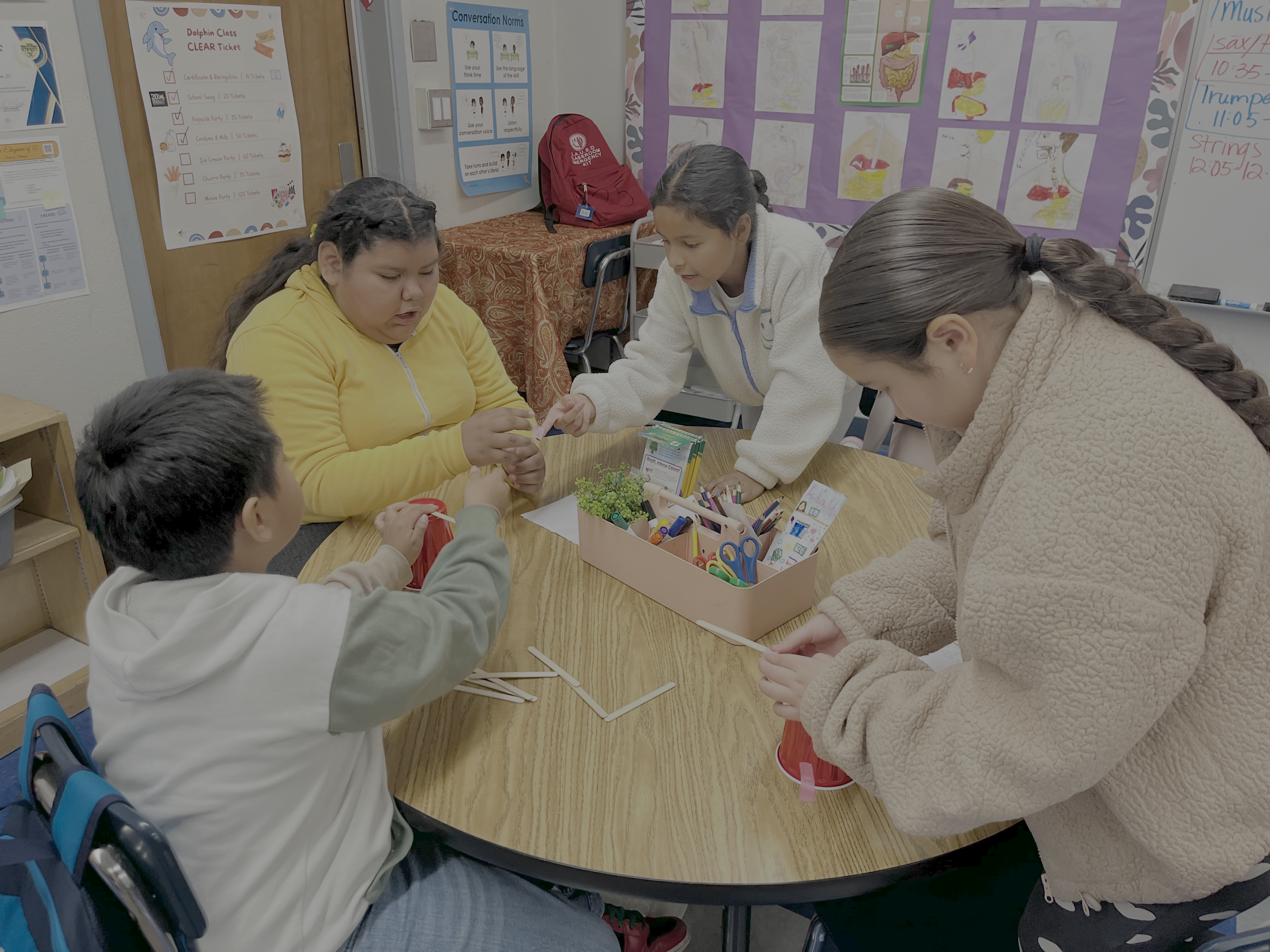
One of the main things we’ve seen at Inner Spark is that the more autonomy kids have over this experience, the more engaged they are, the more likely they are to show up to school, the more open they are, and the more willing they are to make mistakes. It’s because they’re learning around things they care about, but traditional schools make little to no room for that relevance.
How have you designed this model to balance financial sustainability with impact? Can you share how you’re navigating those pragmatic costs while staying true to your mission?
I started the organisation in 2017, and from 2017 until 2020, pretty much all of our funding was fee-for-service. Those were contracts with schools, whether for programs we ran in schools or for professional development.
I didn’t mention this earlier, but it really fits this question about funding. From 2020 onwards, we started receiving more philanthropic investment, mostly institutional philanthropy. There’s a little bit of corporate support, but it’s primarily private foundations. That funding has allowed us to get to where we are now while continuing some fee-for-service work.
As time has gone on, though, many of the school contracts haven’t provided the level of depth needed to truly learn about the kids, understand the families, and put the systems in place that allow the Learning Lab model to operate in a way where the school can genuinely evolve and adapt to students.
One-off, six-week or eight-week programs aren’t enough time to do this. They do generate revenue, and we don’t want to charge families or kids anything. Schools have budgets to pay for programs, so they can fund those shorter engagements. However, that model pulls us away from the deeper work we actually want to do.
Over the next three years, we’re phasing out those one-off programs and focusing exclusively on the Learning Lab model, which includes the Dream Weaver, the weekly Igniting the Spark class, and the after-school program.
This year we’ll have one Learning Lab. For the next two years, we’ll continue with one. Then in the third year, we’ll take what we’ve learned from that Lab and identify a second partner school where we can implement the model again.
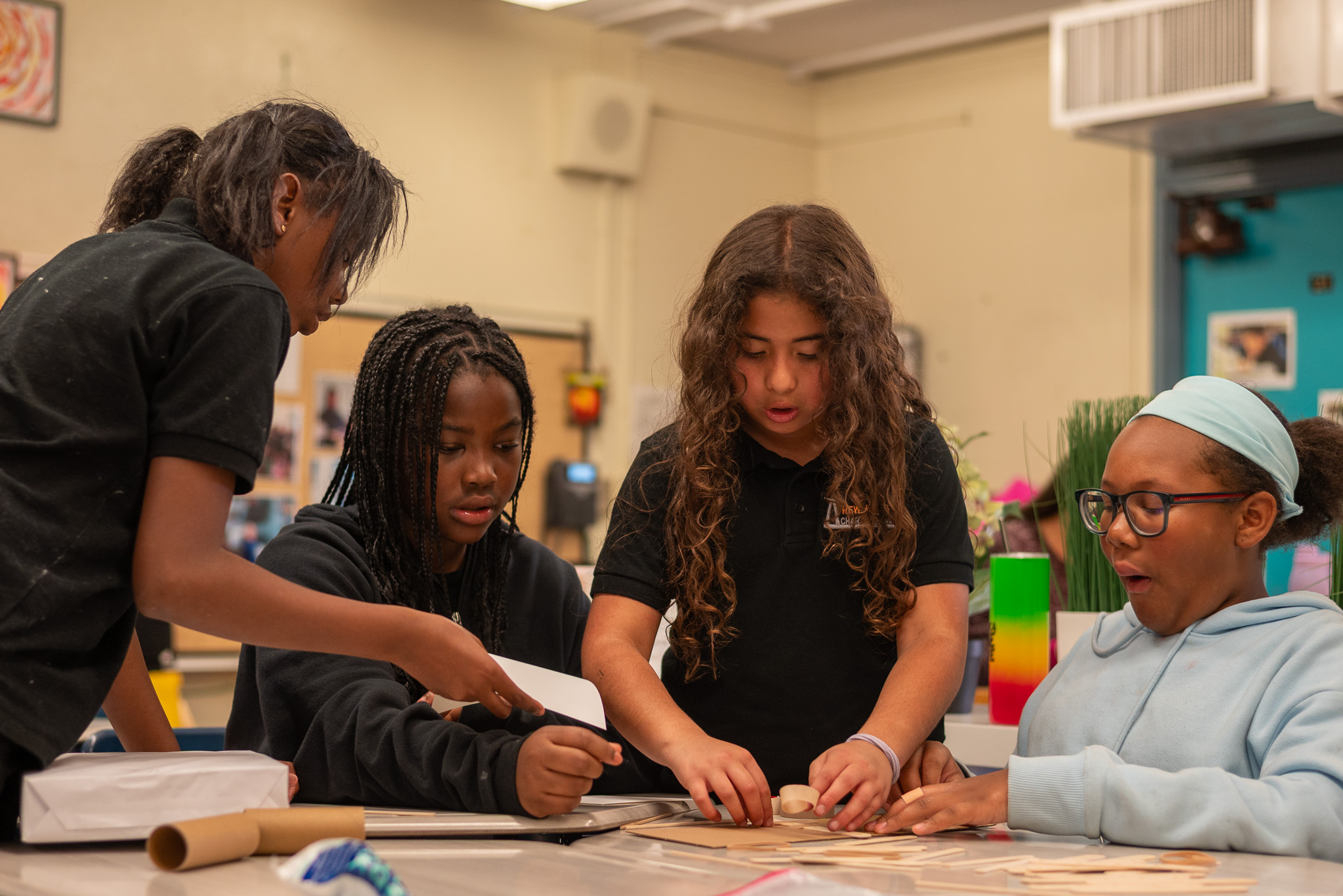
The schools pay for a portion of the Lab model, but it includes three full-time staff, plus research and materials, so they can’t cover the full cost.
For now, most of the costs are offset by philanthropy and donors. That’s how we scale deep. I think this is the part that’s really important, and something I like to share with nonprofit leaders and funders as well.
Our process allows us to scale deep and truly understand the thing we do well, which is creating learning loops and building systems of feedback. From there, we take what we’ve learned and run professional development in partnership with Loyola Marymount University. Through that partnership, we train three schools, from administrators all the way to educators, on how they can implement these systems within their own schools.
This allows us to use what we’re learning in the Labs and what we’re learning through professional development to create a clear model and playbook that schools can adopt and implement themselves. That’s the piece we scale.
We use that to secure school-wide and district-wide contracts that can fund this level of professional development. Over time, that reduces our reliance on philanthropy because we’ve developed our own model of what education can be, and we can productise that through professional development. School budgets for that type of work are much larger than what’s available for smaller one-off programs.
For us, it’s about identifying the thing we do best, which is training and refining the model, and then asking how we can package and share that model. That’s different from trying to pop up programs all over the country, which we can’t do well at scale. I don’t think anyone can truly do this work at scale without deep community knowledge. You have to know the community, and if we’re not there, we don’t know them.
What does authentic co-design with young people look like for you in practice? How can nonprofit leaders, changemakers and social entrepreneurs avoid being tokenistic when engaging young people?
Co-design requires this mindset shift of seeing kids as just smaller humans. They have ideas, they have thoughts, and they see the world in a way we never could. We might remember what it was like to be 10, but we don’t know what it’s like to be 10 in 2026. That’s completely different from when we were that age.
From there, it’s about creating real processes to listen. In our case, that includes surveys, observations and focus groups that the Dream Weaver runs with students. The goal is to learn about their wants, their needs, and what they’re already doing to try to make the school the place they want it to be.
Using the play example again, once we gather everything we’ve learned, we share it back with the kids. We’ll say, “What we think we’re hearing you say is that you want more time to play and more time to move. Is that correct?”
This step is critical. It ensures we’re not imposing our own ideas or biases onto what the kids have told us. If they say no, then we ask, “Okay, what are you telling us?” and we go through that process again. If they say yes, we move forward.
Then we ask, “What are the ways you’d like to move or play?” They’ve usually already shared ideas. From there, we’re transparent about the school’s constraints. We explain, “Here are the limitations we’re working with.” Just because they’re young doesn’t mean they don’t deserve to understand why certain things can or cannot happen.
It’s about saying, “Hey, we can’t make recess longer because of A, B and C, but what we can do is change the curriculum to include more play, and we can host movement nights. How does that sound to you?” They might say, “Okay, that works.”
Then we’ll say, “Over the next eight months, here’s what we’re thinking in terms of testing what happens when we increase play and movement. Is that okay with you?” It’s about bringing them along for the experiment, not just waiting until the end. Sometimes people can be part of research and never even know it. With us, we’re going through it with them the entire way.
In our Participatory Action Research program, the kids are also doing their own research within the school to understand what it has and what it needs. There are three streams within that, including a health justice program and an engineering program.
We invite people with expertise in those areas to submit proposals for projects they’d like to run. The themes are broad, so within something like art, you might have a photographer, a filmmaker or a podcaster submit proposals. The kids then choose what they want to do. For example, they might say, “We actually want to do podcasting.”
Over the next year, one day a week they work with the podcaster, and another day they conduct their own research. They explore how they can take what they’re learning about their school and combine it with what they’re learning from the podcaster to create something they believe the school needs.
We’re not here to tell our students, “Yes, that’s right,” or “No, that’s wrong.” Our goal is for them to go through the process of creating change themselves. If we want young people who feel connected to society and are prepared to participate democratically, we can’t deny them democracy until they’re 18 and then expect them to suddenly engage! They need to practise now.
These are elementary school kids, so if we want them to be engaged citizens later, they need to be practising those skills now.
What qualities do you see as essential for aspiring leaders or changemakers to drive systemic change and persist through the challenges of entrepreneurship?
We call it Inner Spark in large part because we believe the work we’re doing helps kids find their own inner spark. Who are they? What do they care about? What’s the world they want to see?
The same is true for non-profit leaders. You can start an organisation with the intention of doing one thing, and then because of funding, contracts or outside pressure, you slowly drift into doing something completely different. Sometimes the work might still look aligned on the surface, but the way you run the organisation can become counter to how you originally wanted to operate.
A big part of leadership for me has been being clear on who you are, what you care about, and what your values are, and then staying loyal to those. You have to be comfortable with the possibility that the organisation might become a $20 million non-profit or it might not make it after a few years. As long as I know I’ve been true to myself and we’ve been doing what the kids, community and families have told us they want to see, that’s enough for me.
The organisation doesn’t need to become anything in particular. As long as we stay true to who we are and what we stand for, whatever happens is okay, because we’re learning and we’re aligned with our values.
Other qualities I think are important are resilience and emotional steadiness. Don’t take things personally. Stay calm. There are going to be lows that feel extremely low and highs that feel extremely high. If you let yourself swing too far in either direction, the drop can be painful.
I think part of it is this: if you get denied a grant, and you can get feedback, then use it and do it differently next time. If you can’t get feedback, just keep it moving. More often than not, it has nothing to do with you. Maybe you didn’t fit their portfolio. Maybe you were too far beyond what they typically fund. There could be so many different reasons.
If they’re not going to tell you, there’s no reason to get down about it.
On the flip side, if you receive a $200,000 cheque or a million-dollar grant, that’s great. Celebrate it. But I see those moments as temporary. It’s exciting, but it’s also time to start thinking about how you’re going to replace that funding when it eventually runs out.
Another quality I’d highlight is trusting your gut. It’s not super sophisticated advice, but trust your instincts and live with the consequences.
The last thing I’ll say is you don’t have to do everything. If you’re starting out on your own, you probably are doing everything at first. But the goal is to gradually take things off your plate so you can focus on what you do best. Build a team of people you trust so you don’t feel the need to handhold or micromanage. Let them do what they’re great at, and you focus on what you’re great at.
It takes time to get there, but your team will always be stronger than what you could accomplish alone.
What inspiring projects or initiatives have you come across recently creating positive change?
One is Dr. Kimberlin Butler. She’s done research around a model she created called Youth-Possible Philanthropy. It’s a process that enables young people to participate directly in philanthropy, from setting priorities all the way through to funding decisions.
I’ve never seen anything like that before. It centres young people as the experts in their own experiences within philanthropy. I really love her work.
Another organisation I really like is 4.0 Schools. I wouldn’t be here if it wasn’t for them. I was part of a fellowship in 2018, and that’s where I was introduced to design thinking. That experience had a juge impact on me.
To finish off, what books or resources would you recommend to our audience?
One resource that has really changed my life is called Human Learning Systems. It was created by Toby Lowe. It moves away from the idea that nonprofits can neatly produce outcomes and draw a straight line from what they did to a specific change in someone’s life. It acknowledges that life is too complex for that.
Instead, it shifts the focus towards learning rather than performing. I think a lot of nonprofits end up performing instead of learning, and that framework has really influenced how I think about our work.
In terms of books, Envisioning Real Utopias is one that changed how I see the world. It challenged my thinking in a big way.
For anyone who wants to stay connected, you can visit innersparklab.org/podcast and subscribe to our weekly newsletter. I promise it’s not one of those boring programmatic update newsletters; we don’t do that! It’s more in-depth. It’s like this podcast, but in newsletter form, and it comes out weekly.
We’re also hosting our first virtual Inside Out Summit on March 19th from 9:00 am to 1:00 pm Pacific Standard Time. It’s a virtual conference for people who want to approach education differently and create lifelong learners who actually enjoy school.
We’ll be hosting a debate on AI and education, an “Ask Me Anything” session with students, and you’ll hear from funders who previously worked in education nonprofits and now work in philanthropy. You’ll also hear from funders who have centred communities as experts in their own experiences.
Initiatives and people mentioned on the podcast
Recommended books & Resources
Human Learning Systems by Toby Lowe
Envisioning Real Utopias by Erik Olin Wright
On Episode 642 of Impact Boom, Margaret O'Brien of Telstra Foundation discusses how youth-led innovation and entrepreneurial education can drive systems-level change, and the value of cross-sector partnerships, purpose-driven leadership and collaboration in shaping the future of impact.