
Debra Cerasa On Backing Purpose-Driven Leaders With Clarity, Courage And Sustainability
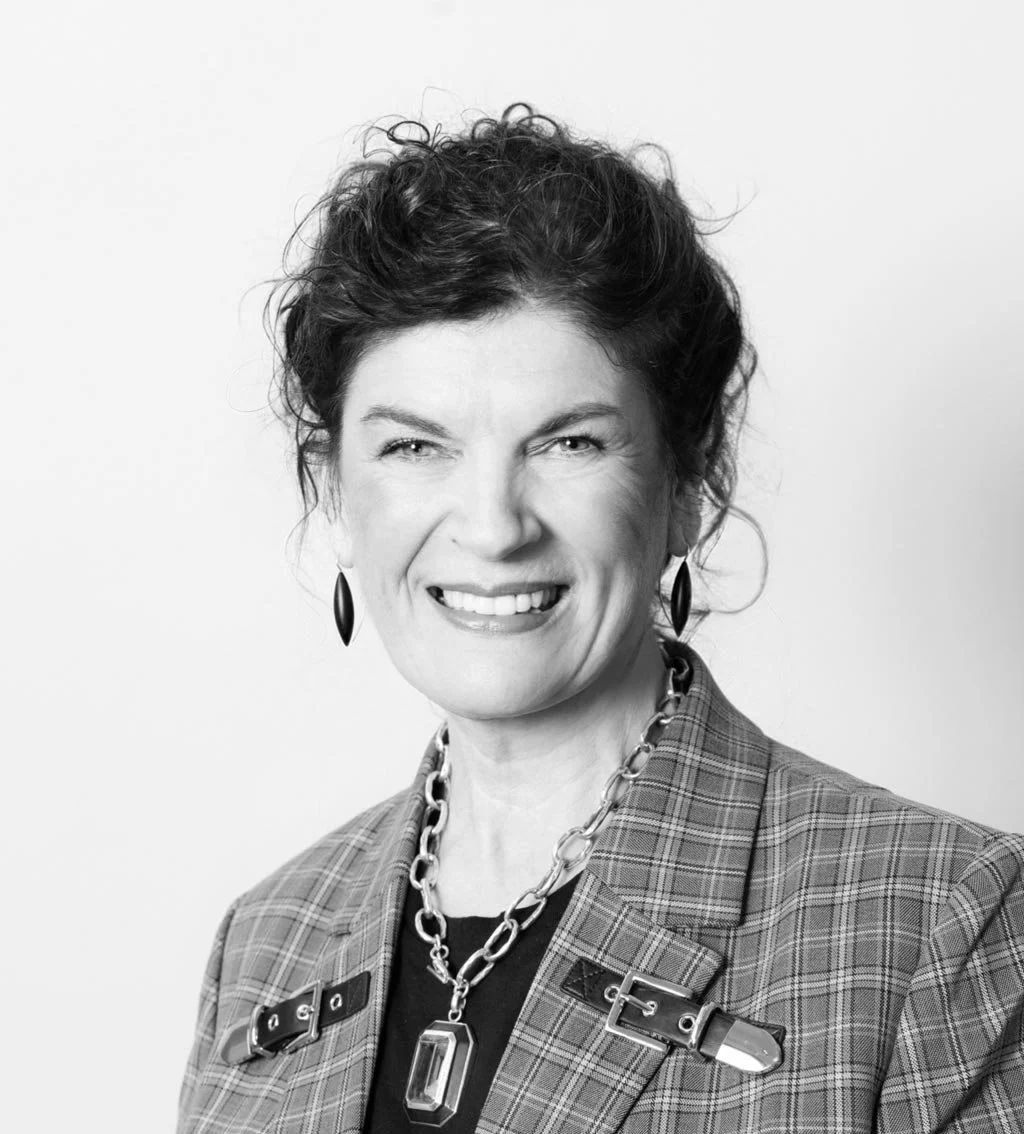
Debra Cerasa is an experienced Chief Executive, Board Director and sector advocate with more than four decades of leadership across human, health and social services.
She is recognised for her warm, people-centred leadership style and her ability to translate complex systems into meaningful, collective action. As CEO of Amplify Alliance Australia, Debra champions community-led change, social enterprise, workforce sustainability and inclusive economic participation.
She is deeply motivated by the belief that a good, safe and meaningful life is a right — not a privilege — not only for Australians, but all people.
Debra discusses why the not-for-profit, social enterprise, and business for good sector deserves recognition for its crucial role in Australian society, and the importance of business acumen and financial sustainability in enabling purpose-driven organisations to change lives.
Highlights from the interview (listen to the podcast for full details)
[Tom Allen] - To start off, can you please share a bit about your background and what led to your passion for supporting leaders in social enterprise and the not-for-profit sector?
[Debra Cerasa] - I’ve been around for a long time, so it might be a long career highlight! To shorten it for listeners, my principles are deeply rooted in nursing and midwifery. I started out as a 17-year-old when I went into nursing, and so began a lifelong interest in working with and for people.
My career in nursing and midwifery led me through all sorts of different chapters of that sector and profession. I studied along the way and received qualifications in various other areas that all contributed to a health professional career.
I still see myself very much as a nurse and a midwife. You might be able to take me out of the hospital, but you can’t take the nurse or midwife out of me! This really explains a little bit about my interest in social, human and wellbeing perspectives.
I eventually moved into management and executive roles probably halfway through my career, but it was all still grounded in that health, wellbeing and people-focused foundation.
I then moved into the world of not-for-profit organisations, and I developed a strong interest and deep-rooted passion for the not-for-profit sector. I don’t see us as a third sector or an alternative sector, but us as the most important sector that is absolutely the backbone of Australian society. I feel passionate about not-for-profit, impact, and for-purpose work, however we want to describe it.
You’re now CEO of Amplify Alliance Australia, doing work that really cares for leaders as well. Can you share more about the work you’re doing there and your plans for the future of the organisation?
Amplify Alliance Australia (which many people may have known by its previous name, Jobs Australia) is a member-led peak body representing over a thousand not-for-profit organisations delivering human and social services.
Our members range in size from one to over a thousand EFT, so our membership base is very diverse. The human and social services our members deliver span what we determine as the determinants of wellbeing, which we see as jobs, home, learning, health, social connection and social justice.
Our purpose is to empower our members to change lives. Many of our members work within the ecosystem of social enterprise, which has led to a growing interest, both on behalf of and for our members, in social enterprise modelling and its economic contribution.
In working alongside many members running not-for-profits and social enterprises, what are your top tips for purpose-driven leaders who are either starting up or looking to sustain their organisation (perhaps by diversifying revenue streams)?
That’s a good question, Tom, and I like it because I think it both allows and challenges people in the for-purpose sector to give themselves permission not to undersell or under-represent themselves.
For a start, anybody moving into not-for-profit, social enterprise or impact work needs to have absolute clarity of purpose. You need to be 100% committed and 100% clear on what that purpose is. I think you have to have a business model structure that continually increases its sustainability.
One of the most common concerns I hear from organisations and the people within them is whether they’re going to survive the challenges they face with funding and the business models they operate under. It’s almost as if they don’t give themselves permission to develop strong business acumen, and I think that’s a shift we need to help people make.
What traits have you observed in impact-led leaders and entrepreneurs that are crucial to the success of their organisations?
The one thing you see in everybody you’ve just described, absolutely, without a doubt, is passion. That’s the trait that stands out. They have to have passion for what they’re doing because it can be a tough road, and that passion needs to be coupled with resilience.
I come back to thinking about everything as a business and having strong business acumen. Even if we may be a “not for profit”, we still need to be a “not for deficit". We need to develop for sustainability and long-term success. Sometimes I think we don’t allow ourselves to think bigger, harder and stronger.
When we look at the broader business for good ecosystem, from charities and social enterprises through to B Corps and ESG-led corporations, what do you think is preventing it from becoming mainstream or “business as usual”?
My response isn’t based on research, academia or science. It’s purely a gut response.
One of the things that happens is there’s a perception that the not-for-profit sector, social enterprises and impact organisations are somehow less worthy than other businesses. Whether that’s objectively true or not, I do think that perception exists.
I believe we need to stride ahead and demonstrate that we’re not a third sector. We are front and centre, and we need to be recognised for what we contribute to Australian society. We need to recognise and celebrate the soul of what exists within not-for-profit and social enterprises.
Some organisations deliberately choose not to brand themselves as not-for-profit or even social enterprise; so you might land on their website or engage with them and have no idea they fit within those categories. What are your thoughts on this?
I think that this reinforces exactly what I am saying.
When you say to somebody, “I work in the not-for-profit sector,” you can almost see a physical deflation in their posture. It’s like a subtle, “Oh.” There can be this sense of diminished status attached to this work, and we need to challenge this. We should be shouting about it from the rooftops. We should be loud and proud about working in not-for-profit and social enterprise. There is enormous value in what we do, and we shouldn’t shy away from naming it.
What inspiring projects or initiatives have you come across recently creating a positive change?
When I thought about this question, I kept thinking it’s like picking your favourite child, it’s so hard you can’t really do it publicly on a podcast! You need to be careful, so I took a slightly different approach and reflected on the first cohorts or groups that came to mind.
The three communities that immediately stood out for me were youth, Indigenous, and migrants and refugees. I asked myself why those groups surfaced in my mind, and I’ve realised it’s the strong sense of community I consistently observe across organisations working within those spaces. There’s this real village approach and collaborative mindset to supporting and nurturing one another in these communities.
I think back to the first World Forum I had the privilege to attend. We had lunch at a facility run by a group of Afghan women who were operating a food centre. They generously provided us with lunch, and what struck me most was the strength of their community and how closely they worked together.
They weren’t just feeding and nurturing others, they were feeding and nurturing each other. They were holding each other up, providing meaningful work and purpose in their day.
I’ve seen that same spirit across Indigenous communities and youth-focused organisations. Like-minded people come together, support one another and genuinely nurture each other. That sense of shared purpose and collective strength is often what leaves the deepest impression on me.
What’s interesting is one of the hurtful narratives you sometimes hear in the media or on social media is criticism of people gathering within their own communities, particularly if they’re not speaking English. You’ll hear comments like, “Why are they here if they’re not going to learn the language?” or criticism about people maintaining their own cultural practices and food.
I actually think that’s something to celebrate. Look at the richness that diversity brings to our society and culture. From my own Italian background, I know someone who has lived in Australia since she was 20. She’s now 87 or 88, and next weekend I’ll be making passato with her. That’s the richness she still contributes to Australia; I don’t mind that she doesn’t speak English fluently and we still communicate perfectly well.
I find those negative attitudes difficult to understand, especially when we can clearly see the strength, care and support people provide to each other within their communities.
To finish off, what books or resources would you recommend to our audience?
At the moment, I’m reading lots of kids’ books because some of the favourite children in my life (great-nieces, nephews and grandchildren) are telling me about the books they’re currently reading. I like to know what they’re reading, so I read the books they recommend.
One of my favourite little great-nieces recommended The Diary of a Wimpy Kid, and I have to say I’m loving it!
My favourite book, though, is one called The Coat Route. I’d describe it as a bit of a “bookumentary”. It follows the journey that begins when a designer creates an overcoat. The process of making a bespoke designer coat involves understanding how the design is created, how that becomes a pattern, and how the materials are sourced.
If it’s alpaca wool, for example, how is that produced? How is the silk grown to create the lining? Where does the horn material come from to make the buttons, all culminating in a beautiful bespoke overcoat on Savile Row in London?
It’s one of the most enthralling books I’ve ever read, and I’ve gifted it to many people because it tells such a fantastic story about a journey that isn’t centred on people, but on the creation of something. I know it’s fairly exclusive to be able to buy an overcoat on Savile Row, but the premise and philosophy of the story are what I found so compelling.
The other book I picked up two days ago, and I’ve only read a couple of pages so far, is called 365 Days of Curiosity. It contains 365 short chapters of curious things about the world.
Initiatives, Resources and people mentioned on the podcast
Recommended books
The Diary of a Wimpy Kid series by Jeff Kinney
The Coat Route: Craft, Luxury, and Obsession on the Trail of a $50,000 Coat by Meg Lukens Noonan
A Year of Living Curiously: 365 Things Really Worth Knowing by Beth Coates & Elizabeth Foley

On Episode 646 of Impact Boom, Gill Whelan of Gill Whelan Projects discusses building authentic relationships between funders and social impact organisations, embracing risk and resilience, and shifting power dynamics to unlock stronger partnerships and greater philanthropic impact.