
A/Prof Andreana Drencheva On Hidden Wellbeing Costs And Rethinking Resilience In Social Entrepreneurship
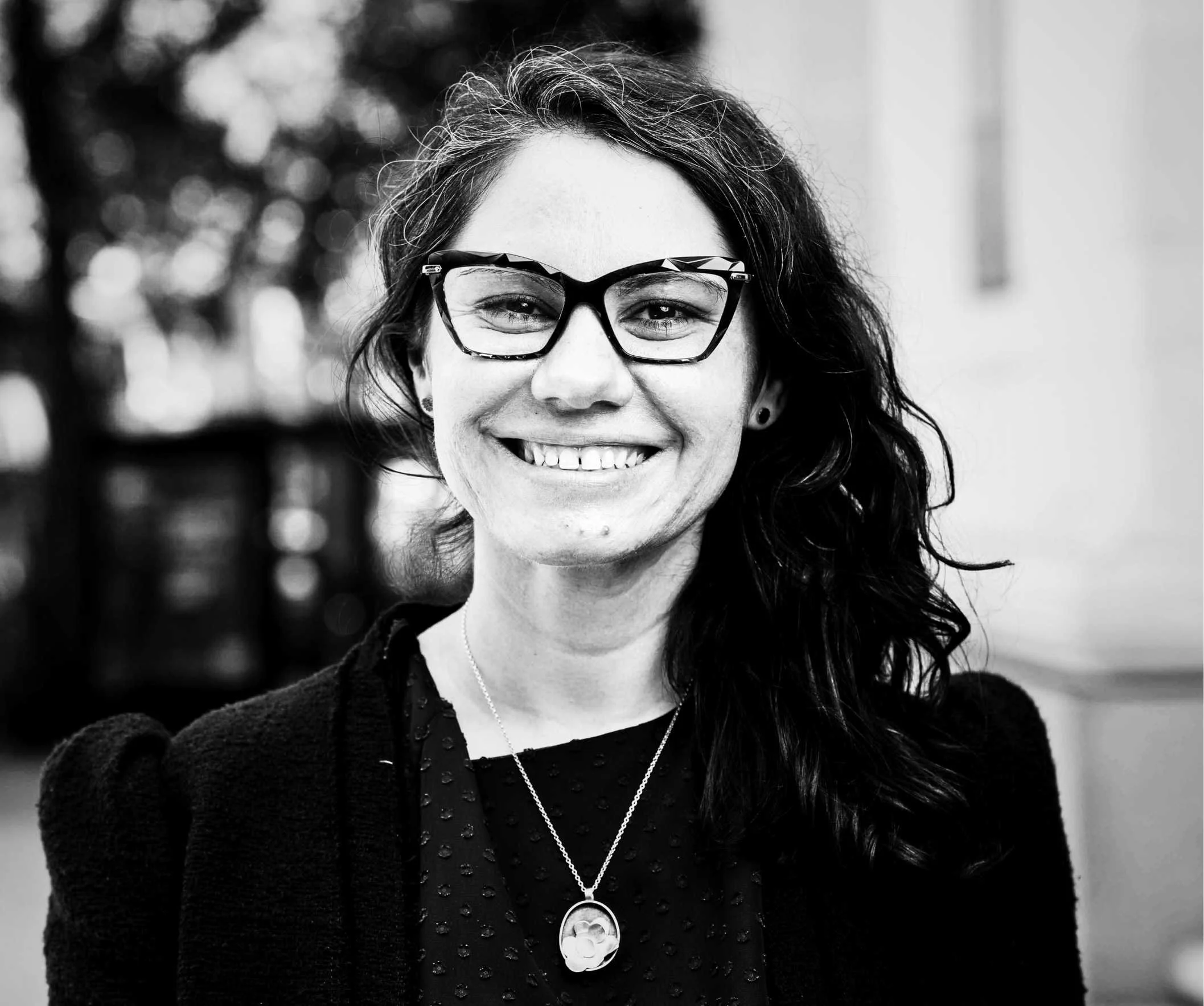
Dr Andreana “Addy” Drencheva is a researcher, speaker, and Senior Lecturer (Associate Professor) at King’s College London, where she holds a Leverhulme Research Fellowship.
She studies the cost of caring in social entrepreneurship — what purpose-driven work takes from the people doing it, and how they can keep going without it costing them everything.
Her research examines who social entrepreneurs are and how that shapes their work, the relationship between founders and their ventures and its impact on other areas of their lives, and how social entrepreneurs maintain — or don’t — meaning and wellbeing. This work challenges the “lone hero” narratives that leave social entrepreneurs vulnerable to burnout and mission drift.
Through partnerships with social entrepreneurs and support organisations, Addy co-creates evidence-based practical resources, including the Doing Good / Staying Well Toolkit and the Power in Partnerships Companion. Her work has been featured on BBC Radio, The Conversation, Pioneers Post, and NextBillion.
Andreana discusses the emotional and systemic pressures facing social entrepreneurs, why current support ecosystems often overlook founder sustainability, and how compassionate partnerships, rest, and structural change can help purpose driven leaders thrive long term.
Highlights from the interview (listen to the podcast for full details)
[Indio Myles] - To start off, can you please share a bit about your background and what led you to working in social entrepreneurship?
[A/Prof Andreana Drencheva] - That’s such an interesting question and a good opportunity for me to reflect on my journey, because it wasn’t part of my original career plan.
It first started with frustration. I used to work in advertising, and some of our clients were social ventures. I kept noticing the same thing: we weren’t serving them very well because we didn’t understand them. We treated them as charities, and obviously they aren’t charities, so our approach wasn’t effective.
I remember sitting in a meeting where we were pitching a campaign to a social venture, and the founder just went blank because we were talking about their work as if it was a charity appeal, something people had to buy into at Christmas or Thanksgiving, when we traditionally think about charity campaigns. That’s not what they were asking for. They didn’t want sympathy. They were running a business that was also changing the world with a good product.
That’s where my journey into social entrepreneurship started, at the gap between what social ventures do, how we understand them, and how we respond to them. That’s what prompted me to do a PhD, because when else do you get the chance to spend three or four years researching a specific topic?
I’ve now been working on this topic for about the past 15 years, and over time my question has shifted. It started with, “How do social ventures work and how do we make sense of that work?” Now I’m asking, “What does it cost to run a social venture?”
You’re a Senior Lecturer and Leverhulme Research Fellow at King’s College London. You shared a bit about the summary of your work earlier, but can you dive deeper into this intersection of social entrepreneurship and wellbeing and share some of your observations?
I think my research starts from a paradox.
Social entrepreneurship is one of the most powerful vehicles we have for improving wellbeing. There are thousands of social ventures addressing mental health, loneliness, community health, isolation, and specific health conditions, yet we almost never talk about the health of the people running these ventures.
Image Credit: Olu Osinoiki
We talk candidly about sustainable ventures, sustainable business models, sustainable impact, and sustainable growth, but what about sustainable founders? We want these organisations to last, but we seem surprisingly unconcerned about the people behind them and whether they themselves can last.
At the end of the day, a social venture that burns through its founders isn’t sustainable, it just hasn’t collapsed yet. We’ve built an entire sector around improving other people’s wellbeing, while somehow deciding the wellbeing of the people doing the work doesn’t count.
That’s not an oversight; it’s really part of the system. The system assumes that if you care deeply about a social or ecological challenge, you absorb the cost because that’s the price you pay for doing this work. Most social entrepreneurs do absorb that cost until they reach a point where they are no longer able to do so.
My work really asks, “What does it cost to be a social entrepreneur?” I don’t mean just financially or in terms of time, although both of those costs are significant. I’m also thinking about what it costs emotionally, relationally, and in terms of identity and personhood.
I research this qualitatively. I sit with social entrepreneurs, listen to their stories, get to know, and often help them reflect on their journeys.
What I have found is that the challenges social entrepreneurs face don’t simply come from working long hours, they come from the nature of the job itself. If you’re a social entrepreneur listening today, it’s not you. It’s the job. It’s a job that’s almost impossible.
Social entrepreneurship comes with complexity, limited resources, competing stakeholder demands, mission obligations that never switch off, exposure to suffering, and a constant need to justify what you do and why you do it. There are also power imbalances when collaborating with organisations that are larger, more established, and better resourced. What all of this means in practice is that social entrepreneurs don’t just work long hours, they find it almost impossible to switch off emotionally and mentally.
The mission follows you home, follows you to bed, reshapes your relationships, and impacts your sense of identity. This is all challenging, especially because we tend to look at social entrepreneurship through a positive lens. Not only does it help people change the world, but it also comes with purpose, autonomy, flexibility, and a sense of meaning that can genuinely support wellbeing when the conditions are right.
In social entrepreneurship, though, those same elements can also become dangerous. Purpose gives you energy, but it also makes it very difficult to set boundaries. How do you say no to something that feels like part of who you are as a person?
Autonomy gives you freedom, but it also means there isn’t anyone telling you when to stop working. You don’t have a line manager saying, “You should go home now,” or, “You should take annual leave.” You have flexibility, but for most social entrepreneurs that translates into working everywhere, all the time, because that’s how flexibility functions within the conditions of this job.
We celebrate these aspects of social entrepreneurship, but they are also the very things that can make the work dangerous for the people doing it. They become part of the cost people pay to create positive social change around a mission or ecological challenge they deeply care about.
That’s the reality. People don’t become social entrepreneurs because they want to become rich. They do it because they care about something.
In your experience, have you seen any approaches to collaboration that have proven effective in helping founders sustain their wellbeing and continue their mission and organisational impact?
You’re so right to say that both community and collaboration are important in this space, especially collaboration. Let’s be honest, social enterprises are often smaller, newer, and not well resourced, so scaling impact usually means collaborating with organisations that are bigger, better resourced, more established, and often seen as more legitimate.
Partnerships can be incredibly effective for impact, but they can also be terrible for wellbeing because the power imbalances are often heavily tilted in one direction. The larger or wealthier organisation usually sets the agenda, decides the goals, controls the resources, defines what success looks like, and determines which templates and reporting structures need to be followed.
Image Credit: Olu Osinoiki
Social enterprises and entrepreneurs often have to accommodate, absorb, adapt, and change many of their fundamental ways of working to fit what the partnership dictates. That comes with both an emotional and relational cost, and it accumulates over time because most social enterprises are managing multiple partnerships simultaneously, often over many years.
The question then becomes, what actually makes partnerships equitable?
My research shows that the most equitable partnerships are not necessarily the ones with the most detailed memorandums of understanding or the most carefully negotiated terms. They are the ones where the more powerful partner feels comfortable being uncomfortable, asking for feedback, and genuinely taking that feedback on board when a social venture says, “This doesn’t work for us.”
A lot of partnership frameworks assume all partners need to adapt equally, but that simply doesn’t work when there are significant power imbalances. What my research shows is that the most powerful partner actually needs to do the most adaptation. They need to do the most work to ensure the partnership operates in ways that support the social enterprise.
That’s rare, but it’s the reality of what equity in partnerships looks like. The bigger, better resourced partner does more of the work around adaptation and creating the conditions for everyone to achieve their goals in line with their mission.
It also raises important questions. Who gets to make decisions? Who controls the resources? Is it a partnership where one organisation consults while the other simply delivers the work, or is it genuinely co-created, where the social enterprise helps define the goals in alignment with its own mission, rather than constantly shape shifting to fit the needs of the larger partner?
If we shift lenses a little and look at the pressures social entrepreneurs face, particularly burnout and the depletion of personal resources, how can organisations and support ecosystems better mitigate these challenges and support purpose driven leaders?
I appreciate the focus of your question around organisations and the ecosystem.
I would gently push back on the use of the word “resilience”, because I think resilience is part of the problem. What I mean by this is you cannot resilience your way out of systemic and structural challenges. When we tell social entrepreneurs to be resilient, what we’re really saying is, “The system is broken, but can you fix it while personally absorbing the costs of that brokenness?” That’s not a wellbeing strategy. That’s a coping mechanism dressed up as empowerment.
Image Credit: Olu Osinoiki
What would actually help, particularly when we think about ecosystems, infrastructure, and support organisations, is first making social entrepreneurship mainstream. We’ve been talking about this for decades and there has been a lot of effort invested into it, but if we’re honest, there still isn’t an ecosystem anywhere in the world where social entrepreneurship is truly mainstream.
Making it mainstream would have tangible wellbeing benefits. When everyone in a city or community understands social enterprises and buys their products and services, founders don’t have to exhaust themselves constantly writing proposals, reporting on impact, and repeatedly explaining or justifying what they do.
They gain access to the same resources, networks, and infrastructure traditional businesses often take for granted. By removing some of that friction, we are already creating meaningful wellbeing benefits.
Second, and I’m probably repeating something every social entrepreneur says, we need more resources, but also better resources.
It’s not just about funding, it’s about understanding how funding can actually support work that is sustainable and done well. This means funding that accounts for every part of the work, rather than one tiny project here and another tiny project there. Funding that doesn’t require social entrepreneurs to perform impact metrics that are completely divorced from what’s actually happening on the ground.
Third, and this is where I’d like to spend a little more time, is compassion. I don’t mean being nice. I mean compassion as part of the infrastructure and embedded within systems themselves.
If you’re a grant making organisation looking at your impact reporting requirements, are you asking, “Does this actually help social entrepreneurs learn and improve their work, or does it simply make it easier for us to collect data?” Would it actually be more useful for founders if they could report on impact in ways that genuinely reflected their work, while we as funders adapted to make sense of that information?
Similarly, if you’re running an accelerator program, are you designing it around the real needs of founders, or around what conveniently fits your own funding cycle?
Compassion is about asking where within the system we can intervene to make things easier for social entrepreneurs, because right now the system largely works in ways that are convenient for everyone else, and social entrepreneurs are expected to adapt around it.
In many ways, the system is extremely effective at extracting labour, energy, and emotional investment from social entrepreneurs, while giving very little back in return.
One of the key things we need to rethink is that the current system supports ventures, but not people. We fund organisations, measure organisations, and celebrate organisations, but the human beings behind those organisations remain invisible until they break down. By that point, it’s already too late, because the person behind the venture has often reached a crisis point that is incredibly difficult to recover from.
Looking more at the business for good movement, what key opportunities do you see for helping social entrepreneurs and enterprises truly thrive moving forward?
From my perspective of thinking about the bigger picture rather than social enterprises specifically, the first major opportunity is social procurement. I’m going to bring this back to wellbeing because that’s the focus of my work.
When public institutions and large organisations commit to buying from social enterprises, it obviously creates social and economic value, particularly for local communities. However, it also creates significant wellbeing benefits because the revenue stability it generates gives social entrepreneurs a little more breathing space and certainty in their work.
It means they are not exhausting themselves spending half their lives writing proposals and the other half reporting on various initiatives. In many ways, the single biggest wellbeing intervention for social entrepreneurs is social procurement, because it creates more stable and predictable income streams. That would make far more difference than any mindfulness workshop ever could.
Of course, social procurement also brings broader social and economic benefits for communities as well.
The second area I find exciting is social intrapreneurship, people working inside organisations who are driving social and environmental change from within.

Image Credit: Olu Osinoiki
We’ve focused so heavily on independent social enterprises and building ventures from scratch that we’ve overlooked the potential of people creating change inside commercial organisations, where there is significant scope for scaling initiatives that make a tangible difference.
There is enormous potential in collaboration between social intrapreneurs and independent social enterprises. Social entrepreneurs bring agility, lived experience, community trust, and the ability to move quickly. At the same time, social intrapreneurs often bring access to greater resources, infrastructure, and legitimacy.
When you bring those two groups together, there is real potential to scale social and environmental change in ways that neither could achieve alone.
What is your advice for changemakers operating in resource constrained environments who are trying to maintain their wellbeing while continuing their mission and avoiding burnout?
The first is rest. Rest is not a reward for hard work. Rest is not a sign of weakness.
Rest is a requirement. It’s non-negotiable. I say this knowing how impossible that can feel when you’re operating in a resource constrained environment while trying to build something that genuinely matters. But rest makes an enormous difference in your ability to continue doing this work sustainably over the long term.
For rest to matter, it has to involve mentally detaching from the work, and that’s what we know from the research is incredibly difficult. How do you switch off when the mission feels like part of who you are?
Practically, that means taking sleep seriously. Sleep is not a luxury, it’s a necessity. It means protecting quality time with people who knew you before you became a social entrepreneur, people who know your interests and identity outside of your venture.
It also means being honest with yourself about your capacity and your needs and being willing to ask for help.
The second thing I would highlight is maintaining an identity that is bigger than your venture. Remember that you are still a person who had interests, hobbies, and relationships before you started this organisation.
That’s incredibly protective during crisis points, and it also gives you opportunities to emotionally and mentally detach from the work, which is essential for meaningful rest.
The last thing I would say is that if you’re in the early stages of your journey and you already feel exhausted or close to burnout, start as you mean to go on. If you’re already operating beyond sustainable capacity, things are unlikely to improve over time without change.
Pay attention to your exhaustion because it’s information. It can help you reflect on how to do this work sustainably over the long term. If this work is a marathon, then the question becomes, “How do I pace myself?”
What inspiring projects or initiatives have you come across recently creating a positive change?
To keep this brief, I’ll give just three examples.
My first suggestion is Civic Square here in the UK. They are building civic infrastructure at the neighbourhood level to respond to what we might call the “polycrisis”, social, ecological, economic, and climate related challenges all intersecting at once. What I find especially powerful is that this work is deeply rooted within one place and one community.
Another is Huddlecraft, also based in the UK. They are focused on building communities of people learning and creating social change together, which connects closely to the earlier point you raised around the importance of community and collective support.
My third recommendation is Biji-biji in Malaysia. They are building an ecosystem for sustainable development, and what I find particularly inspiring is their focus on strengthening the broader conditions social ventures operate within, rather than only supporting individual enterprises in isolation.
To finish off, what books or resources would you recommend to our audience?
The first is Hospicing Modernity by Vanessa Machado de Oliveira. I think it gives language to people who feel like they are placing sticking plasters on a house that’s falling down. It’s an incredible book.
The second is Accidental Gods by Manda Scott, a podcast that combines big thinking with practical and hopeful conversations about how we can live and work more regeneratively.
Image Credit: Olu Osinoiki
The third is Onboarding Nature by the Earth Law Center, which provides valuable insights into how organisations can govern themselves in alignment with nature.
If I can include a small plug, I would also recommend the two toolkits we mentioned earlier in the episode: the Doing Good / Staying Well Toolkit, which supports social entrepreneurs to maintain their wellbeing, and the Power in Partnerships Companion, which focuses on creating more equitable partnerships.
Initiatives and people mentioned on the podcast
Recommended books and Resources
Hospicing Modernity: Parting with Harmful Ways of Living by Vanessa Machado De Oliveira
Accidental Gods (podcast) by Manda Scott
Onboarding Nature by Earth Law Center



On Episode 635 of Impact Boom, Dr. Chris Davis of Clean Slate Clinic discusses breaking stigma around addiction, improving access to alcohol detox services through innovative telehealth models, and why accessible, evidence-based healthcare is essential for supporting long-term recovery and wellbeing across diverse Australian communities.