
Stephanie Say On Creating Employment Pathways For Homeless Youth With Purpose Driven Social Enterprise Models
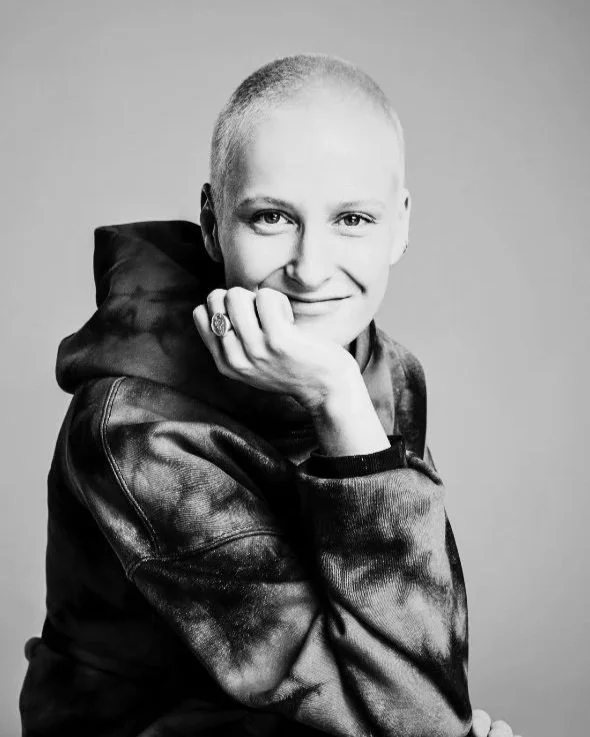
Stephanie Say is the CEO of HoMie, one of Australia’s leading social enterprise streetwear brands and youth homelessness organisations.
Based in Melbourne, she leads the organisation’s commercial growth and national expansion while staying deeply grounded in HoMie’s mission to support young people affected by homelessness and hardship through employment, education and community. Under Steph’s leadership, HoMie has expanded its Pathway Alliance program, which partners with brands including Nike, Bunnings and Sportsgirl to create supported pathways into work for young people experiencing disadvantage.
Steph’s career spans media, communications, sport and social enterprise, with previous roles at The Reach Foundation and The Big Issue Australia. Passionate about purpose-led business and systems change, she is particularly focused on building stronger connections between corporate Australia and young people locked out of opportunity, proving commercial success and social impact can co-exist.
Stephanie discusses building commercially minded social enterprises creating employment pathways for young people affected by homelessness, and how reciprocal corporate partnerships and purpose-led business models can strengthen Australia’s impact ecosystem sustainably.
Highlights from the interview (listen to the podcast for full details)
[Indio Myles] - To start off, can you please share a bit about your background and what led you to working in social entrepreneurship?
[Stephanie Say] - It’s not been a linear path for me, to be honest. I’ve had quite a different journey into social entrepreneurship compared to what perhaps the typical journey might look like.
I’m originally from Adelaide, born and bred, so I;m a South Australian gal. I was really passionate about journalism, English and writing when I finished high school, so my first foray after university was heading to Port Augusta, a country town in South Australia, where I worked as a journalist for a local newspaper and cut my teeth in the industry.
I learned very quickly that I didn’t enjoy writing under pressure! That wasn’t something that really sparked joy for me, so I ended up moving into a digital marketing role at the Port Adelaide Football Club, in AFL, of all places.
I spent five years there, and one thing that really stood out to me and interested me about the role at the footy club was the ability for sport to bring people and communities together from different walks of life that might not otherwise be crossing paths. That sense of community and the ability to give back was really what led me into a career in the non-profit and social entrepreneurship world, because there’s so much to be gained from communities coming together for the greater good to achieve something collectively.
That led me to take on roles at The Big Issue in Melbourne and then, of course, at the Reach Foundation. Now, here we are at HoMie about 12 years later.
As CEO of HoMie, can you share more about the organisation and how it’s creating pathways for young people affected by homelessness?
I could talk about HoMie all day!
HoMie is a streetwear label, a social enterprise, and also, a registered charity. Our mission is to support young people affected by homelessness or hardship to become more work ready and better prepared for their futures.
What that actually looks like is that we are, first and foremost, a retail brand. We design and manufacture streetwear, and we sell it across three different storefronts. We’ve got our Fitzroy store in Melbourne, we’ve opened our second physical store in Melbourne CBD at the Emporium Shopping Centre, and we’ve also got a really thriving online store.
All of the profits from the sale of the streetwear across those three storefronts go back towards our mission to support young people affected by homelessness.
We’ve got three social impact programs that we run in-house to deliver on our mission. The first one is probably our most well-known program. It’s done the rounds on TikTok for a number of years, as I understand, and it’s called our VIP program.
Our VIP program is where we shut our doors to the public roughly once a month at our Fitzroy location and invite young people affected by homelessness or hardship to come and be our VIP shoppers for the day. They can come in, grab five brand new items of streetwear each, get their hair done, get their nails done, have a bite to eat, customise their streetwear, and enjoy a day of community and connection while they might otherwise be doing it pretty tough in other areas of their life.
That VIP program has been around for many years now, and from there we grew into our Pathway Alliance program, which is an eight-month education and employment training program for young people affected by homelessness or hardship.
We call it an alliance because we work closely with other commercial brands. As you mentioned in your introduction, we partner with organisations like Nike, Sportsgirl, Bunnings and AMX, which are some really incredible brands that support us through the program.

We invite young people to come and either work in our store or one of our partner stores for 12 hours a week to build the skills, confidence and experience needed to become more work ready and better prepared for their futures. They also study a Certificate III in Business with us while completing the program.
The last program is our newest one. It’s called Retail Ready, and it’s a shorter program designed for the same cohort of young people, but with a slightly different offering. It’s a 10-week program focused purely on employment, and we run that out of our Emporium store.
Every year, hopefully in perpetuity, we’re going to be able to support 48 young people at the Emporium store for 10 weeks at a time.
It’s been an enormous 11 years. I’ve only been part of the HoMie journey for the last three, but there’s been an extraordinary amount of work and contribution, not just from the broader community, but primarily from the young people themselves, who are really doing all of the heavy lifting and rewriting their futures with the support and opportunity that HoMie provides.
Probably the last thing to touch on is the number of young people we’ve supported, which is now more than 4,800 young people throughout the course of HoMie’s existence. I think it’s incredible work, and it’s such a pleasure to be part of it.
What have been some of your biggest learnings around building authentic partnerships that generate long-term outcomes for young people?
We’re uniquely positioned at HoMie as an organisation that works with both young people and commercial organisations to provide opportunities through our Pathway Alliance program. What that means is we get to act as the connector between all parties and provide support across the board.
One of the key learnings, and something we love to talk about when speaking with potential retail partners for the Pathway Alliance, is that there’s so much for these commercial organisations to gain from being part of the program as well. It’s not just take on our end in terms of asking organisations to participate.
There are incredible professional development opportunities and meaningful ways for teams to engage with community. The young people are also such huge assets to teams at organisations like Nike, Bunnings and Sportsgirl.
At one point, two of our young people working out of Nike’s Melbourne Central store were among the top salespeople in the country. The feedback we receive from the management team there is that it has also been an extraordinary professional development opportunity for their managers.
Something we talk about often is how partnerships should always be mutually beneficial arrangements. We know HoMie has a huge amount to offer, and the young people we exist to support have an enormous amount to offer these major brands and commercial organisations. If we can all look up towards a shared common goal and work arm in arm towards that, that’s where we can really find success.
We also often say that the youth homelessness crisis in Australia is only worsening. The problem is extraordinary. We know there are more than 25,000 young people across the country affected by homelessness in some way, shape or form every night.
We also know the leading causes of youth homelessness in this country are family and domestic violence, along with a lack of affordable housing.
When you look at that picture as a whole, alongside research we recently conducted around attitudes and stereotypes towards youth homelessness (where more than 50 per cent of Australians believe youth homelessness is a result of personal choice alone), it becomes clear just how complex the issue is.
When you consider all of these contributing factors, we know we can’t solve this problem alone. HoMie is one player in a much broader ecosystem, and all of the organisations linking arms with us to combat this issue represent the broader community support we need to forge in order to solve it together.
Why do you believe social enterprises are uniquely positioned to bridge barriers and create impact within the broader ecosystem?
I love this question because I so firmly believe in the power of social enterprise.
I’m sure your listeners will be familiar with the social enterprise model, but for those who might not be, if you imagine a traditional non-profit on one end of the scale and a commercial for-profit organisation on the other, a social enterprise sits somewhere in the middle. It operates like a commercial business (in our case a retail business), offering goods or services for a fee, but what sets a social enterprise apart is what it chooses to do with those profits.
I really believe in the social enterprise model. I think it’s the model of the future and the way forward, because we have to encourage businesses to do better.
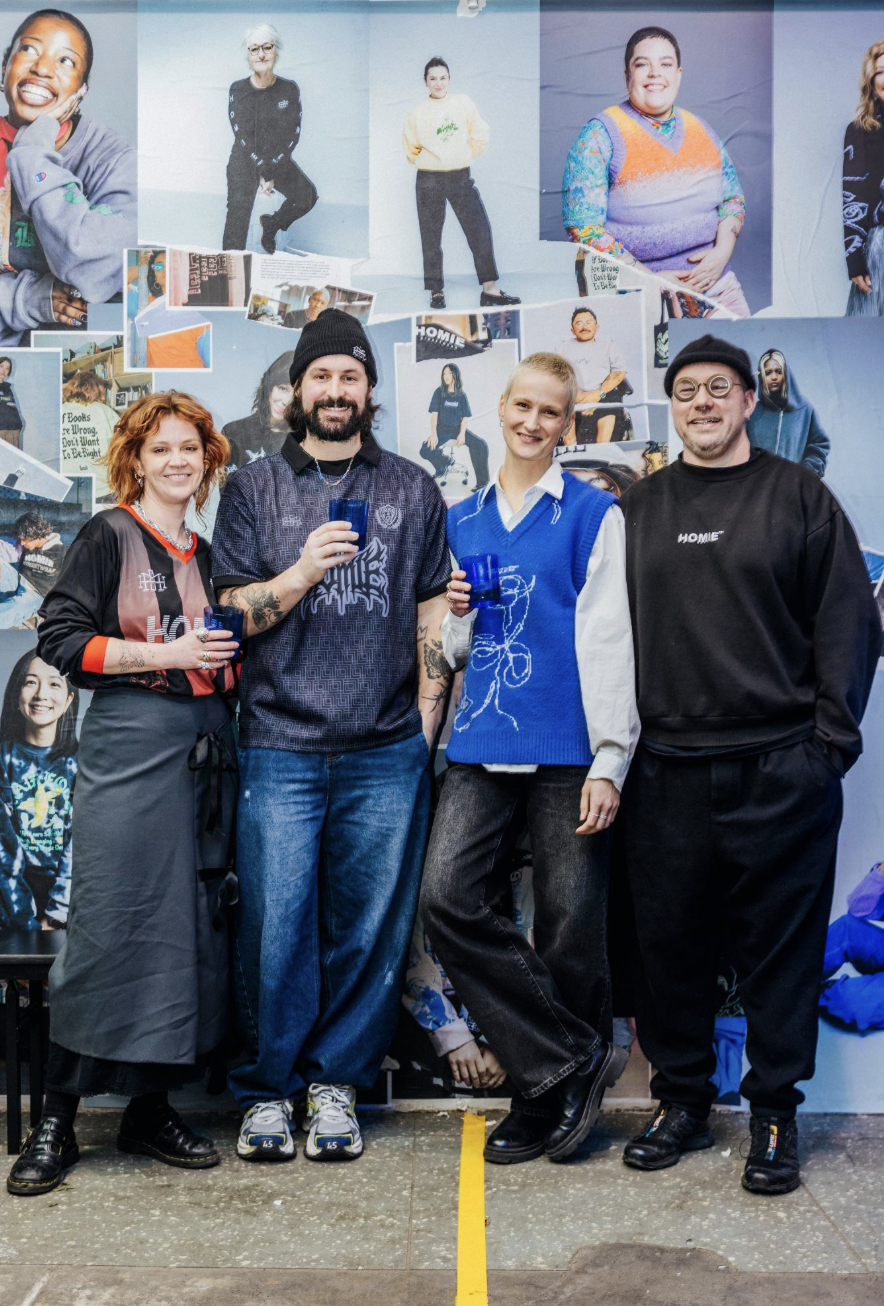
It’s such an untapped opportunity, particularly with work-integrated social enterprises like HoMie, where we actually employ the cohort of people we exist to support within our business. It’s a win-win and it absolutely makes sense.
If we’re able to tap into the commercial realities of the world we live in, where people are ready buying goods and services (whether that’s streetwear, hoodies or caps in our case), and then create employment opportunities through that process, that’s incredible. There are so many brilliant and innovative solutions to the social issues we face, not just in Australia but around the world. But, even though There are thoughtful people already doing extraordinary work, the key question is how can we sustainably fund those solutions to unlock their potential?
In a context like Australia, where we don’t yet have a funding environment where government is contributing meaningfully to social enterprise, and where there’s still a huge reliance on philanthropy, there’s something really exciting about social enterprise being able to have its hands on the steering wheel and be in control of its own destiny.
If we can generate our own revenue through commercial activities and use that to fund innovative solutions to social issues, then I think that’s a win on all fronts.
Where do you see key opportunities for Australia’s social enterprise movement to continue growing and accelerating its impact?
At its core it comes down to our government, society and economy recognising the real value of social enterprise. There needs to be a deeper understanding of what social enterprise can offer in terms of creating employment opportunities, breaking down barriers, and contributing economically to the country. The more we can educate the broader economy on what social enterprise actually is and what it does, the better off we’re going to be.
There’s a huge education piece involved because, even in my day-to-day conversations, a lot of people still don’t really know what social enterprise is, how it works, or what it does.There’s a real need for greater understanding around both the meaningful economic value and the social value social enterprises can provide.
There’s no shortage of brilliant ideas and people doing extraordinary things. The challenge is how we unlock funding models that make these ideas sustainable so they can continue to exist now and into the future.
On the other hand, the key opportunity for social enterprises is continuing the tough slog that everyone in the sector is already doing around becoming more self-sustaining. That’s both the challenge and the opportunity sitting in front of the sector right now.
What advice would you give to aspiring social entrepreneurs looking to start or join a purpose-driven business?
The advice I would give, and I’m coming at this from the lens of a consumer-facing social enterprise, is to make sure you’re being really commercially minded.
A lot of social enterprises in Australia operate business-to-business models, which is a really clever approach. For a consumer-facing social enterprise like HoMie, thinking commercially is absolutely critical because that’s the key to self-sustainability.
It’s going to become increasingly important for consumer-facing social enterprises to lead with a strong commercial mindset in order to ensure their sustainability long-term. I like to think of it as having a responsibility to continue to exist now and into the future. It’s not really an option for us to not exist, because there are too many young people who rely on and need our support moving forward.
In order to unlock that impact, my advice would be to think really commercially about how you present in market and ensure that your offering is genuinely commercially viable.
What inspiring projects or initiatives have you come across recently creating positive change?
A couple of social enterprises I really admire and think are doing incredible work come to mind immediately.
The first is The Beautiful Bunch. You may have heard of them before. It was founded by a brilliant woman named Jane Marx, who essentially runs a florist employing newly arrived migrant women and creating meaningful work opportunities for them.
There’s already a strong market appetite for flowers and floral arrangements, and Jane has brilliantly woven a social impact program into that existing demand to create a beautiful space and opportunity for women who might otherwise face barriers to finding work in Australia. I think that’s an incredible model and they’re doing amazing work.
The other one I wanted to give a shout out to is New Leash Dog Salon, which has recently opened in Camberwell in Melbourne. It’s a dog grooming service where the workforce behind the grooming is made up of formerly incarcerated women who are being provided employment opportunities through the business.
Again, it’s such a clever idea because it stems from an existing market demand. There are plenty of people in Camberwell wanting their dogs groomed, and at the same time there’s an opportunity to create meaningful work for people who may face barriers to employment.
It’s a really innovative and thoughtful example of solving two problems at once, and I’d absolutely encourage listeners to get around them as well.
What books or resources would you recommend to our audience?
My favourite resource is social enterprise related, but it’s actually not a book or a podcast. It’s a group of women who are incredible champions of social change in Australia and who lead social enterprises or purpose-driven businesses. I connect with them regularly, at least once a month, and coming together to share ideas, leadership challenges and the things we’re seeing across the sector has become a really important resource for me and a way of filling my own cup.
It’s perhaps not the typical answer, but I would encourage anybody working in this sector to surround themselves with people who are experiencing similar challenges or navigating similar hurdles.
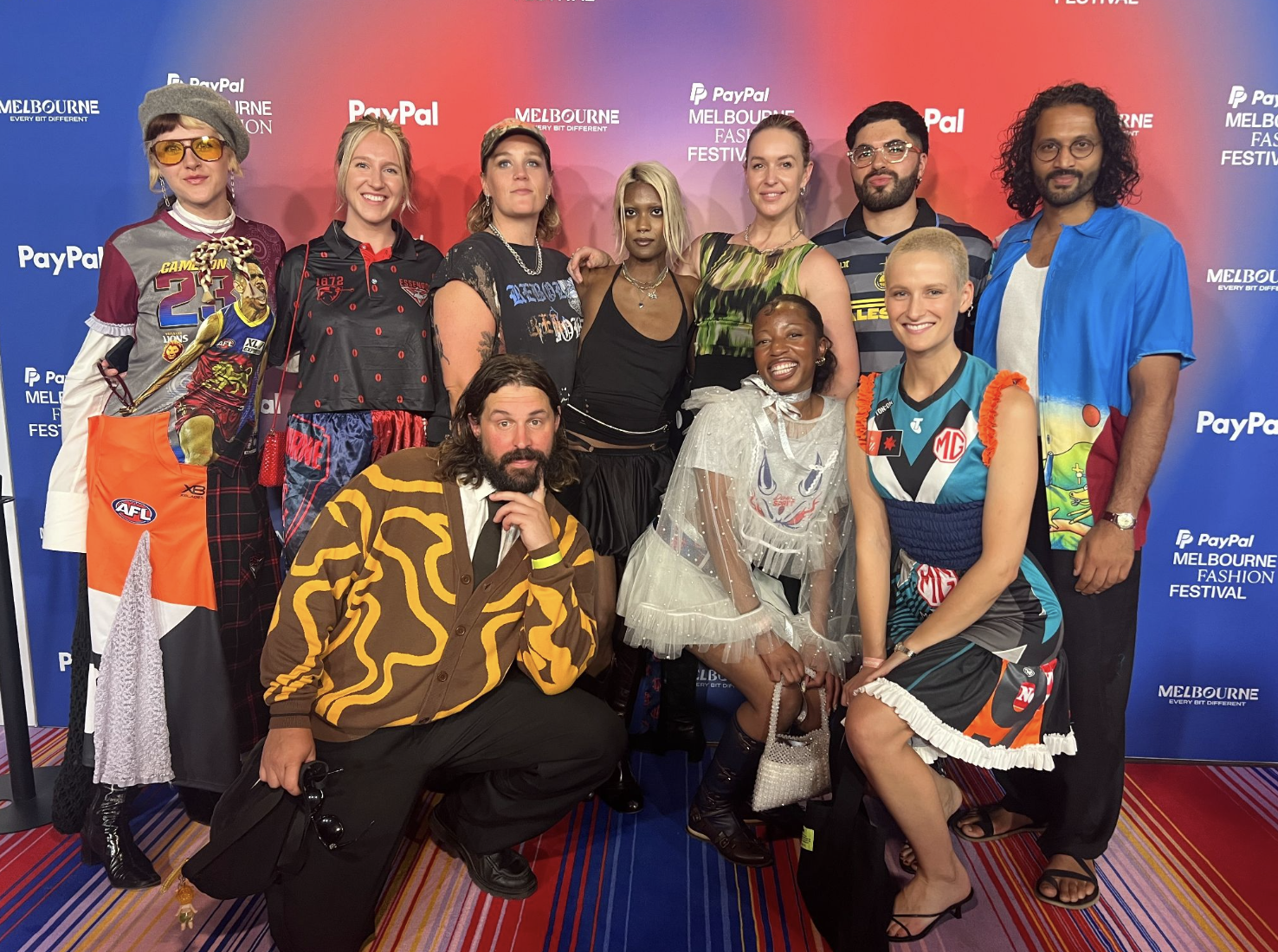
Having people around you who truly understand the work and are deeply in it with you can make such a difference when you’re working through challenges or trying to sustain yourself in this space.
What final thoughts would you share on building a stronger community of social entrepreneurs and changemakers?
I think there’s a vulnerability and honesty component to it all. It’s okay to acknowledge that this work is really challenging.
We’re becoming more open to having those conversations and sharing what some of those challenges actually look like, because at times it can feel like you need to put on a brave face and show up in a certain way to represent what is a really brilliant sector.
The other important part of it, though, is hope. It’s been a really challenging time post-COVID for purpose-driven businesses and non-profits alike. There have also been significant changes to the funding landscape for social enterprise in Australia over recent years.
This is a really important moment for impact led organisations to take the bull by the horns and show leadership through hope and determination.
Like I keep saying, there’s no shortage of brilliant ideas, and there are ways to fund them. We just have to keep being innovative, keep coming together as a community, and continue supporting one another because we can do it.
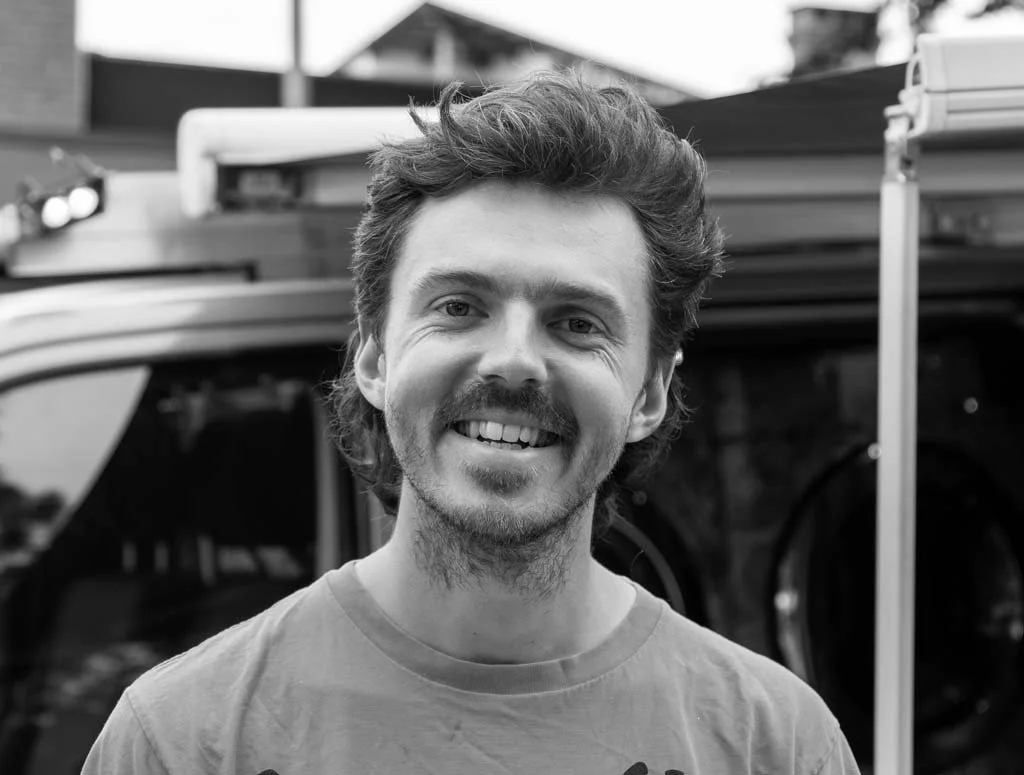


On Episode 634 of Impact Boom, Stephanie Say of HoMie discusses building commercially minded social enterprises creating employment pathways for young people affected by homelessness, and how reciprocal corporate partnerships and purpose-led business models can strengthen Australia’s impact ecosystem sustainably.