
Dr. Chris Davis On Breaking Addiction Stigma Through Accessible Telehealth Recovery Support
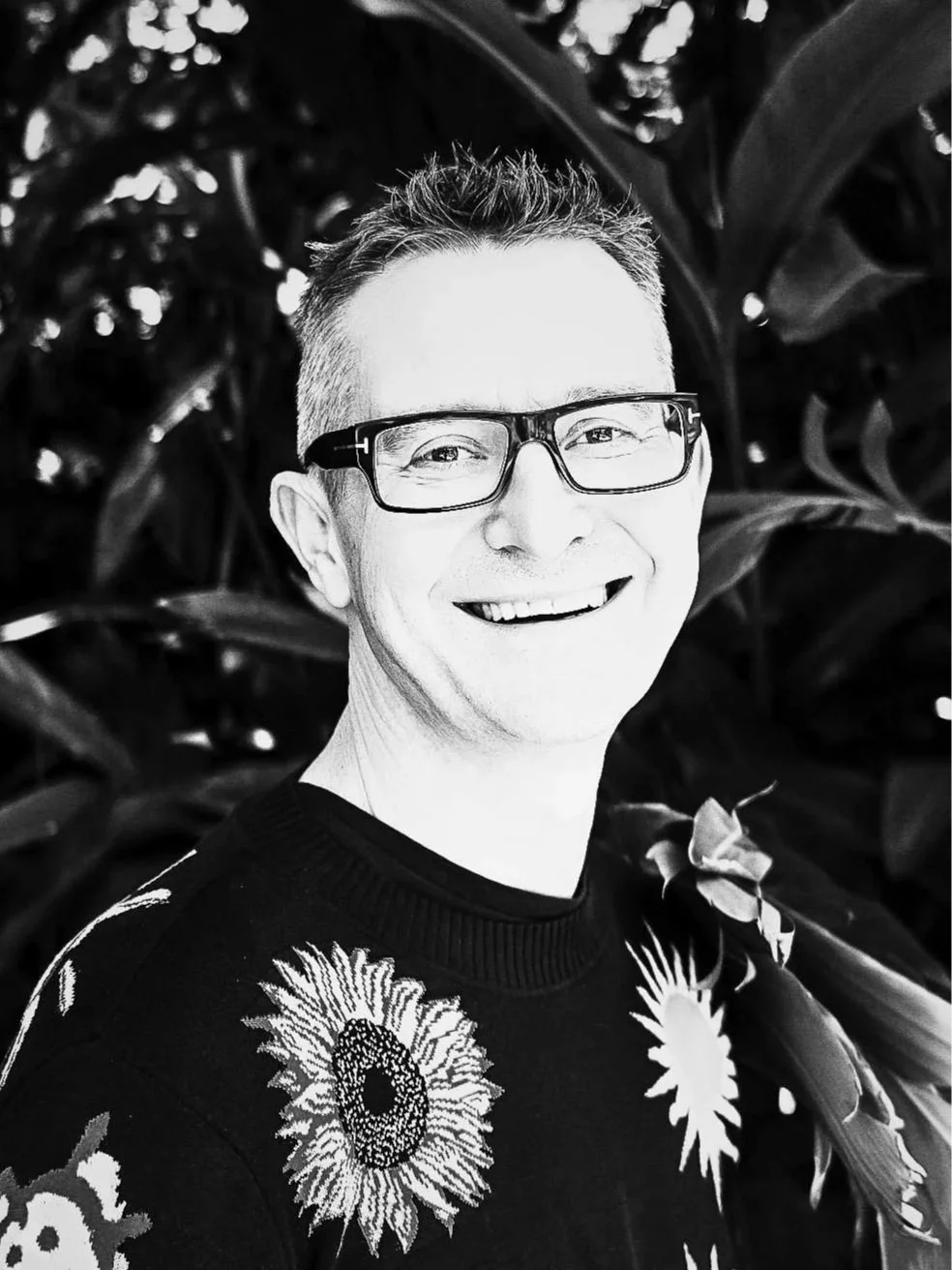
Dr Chris Davis is a GP and Addiction Medicine Specialist with more than 15 years’ experience delivering evidence-based treatment for alcohol and drug dependence across the UK and Australia.
He is the clinical co-founder of Clean Slate Clinic, Australia’s leading virtual detox and recovery service, and a national expert in home-based alcohol withdrawal.
Dr. Davis discusses breaking stigma around addiction, improving access to alcohol detox services through innovative telehealth models, and why accessible, evidence-based healthcare is essential for supporting long-term recovery and wellbeing across diverse Australian communities.
Highlights from the interview (listen to the podcast for full details)
[Indio Myles] - To start off, can you please share a bit about your background and what led you to work in health, wellbeing and addiction medicine?
[Dr. Chris Davis] - I was born in northern England in the late seventies and early eighties, into a big Roman Catholic family of nurses. Mum was one of seven, and all her siblings were in the nursing sphere, so I was very much brought up in that caring environment. Choosing medicine wasn’t far off script, I guess.
Where I grew up near Liverpool in the UK in the eighties was a fairly religious place. I’m not religious myself, and it was during the time of the AIDS crisis, so homophobia was pretty rife when I was growing up. I am gay, and I was heavily closeted due to the homophobia I grew up around. That was where I first felt shame and internalised stigma, which then often breeds addiction and seeking solace.
At a young age, probably 13 or 14, I was playing cricket and drinking beer with the men at the cricket club. It felt like a safe space; I remember my first drink and thinking, “This is one way I can fit in with these older men who I looked up to.” I think alcohol, shame and stigma led me to finding my way into addiction medicine later in life.
As the co-founder of Clean Slate Clinic, can you share more about the organisation and how you’re delivering accessible, evidence-based addiction recovery services?
To take a step back before the origin story of Clean Slate Clinic, I trained as a GP and then came to Australia after my health jobs and met Luke, who is now my husband. I came out at the age of 25 and didn’t get the response I was hoping for from all my loved ones. Most people were fantastic and very accepting of Luke and our relationship, but not everybody. That was your greatest fear, that you were going to be rejected.
I had very much been a people pleaser up until that point. We then moved back to London and I took on a GP role in a busy, fairly toxic inner-city practice where I was being bullied. At the same time, things were difficult at home. We bought a flat, and everything that could have gone wrong with that flat did. I also had some issues with family and found myself drinking as I always had, in a binge fashion on weekends.
I had done that throughout my university days and my junior doctor years. I was functioning okay and doing what everyone else was doing, but it got to a point in London where I was at a friend’s wedding and I had a panic attack when my phone rang, because I thought it was the landlord.
I was in a place full of friends and joy, yet I was panicking because my phone had rung. Luckily, I knew it was a panic attack and not a heart attack, like many of my patients think they are experiencing. However, I understood why people would think that because it was such a horrible feeling.
It was at that point I really gained the insight that this binge drinking pattern was not helping my mental health. In fact, it had now led to me having a panic attack at a wedding.
I remember driving to work after that wedding with the fear and anxiety of a Monday morning following a big weekend. Something changed. I knew I had to change my relationship with alcohol.
I started asking my patients about their drug and alcohol use, which I hadn’t done before. You would think that would be part of a normal GP history, but it really isn’t for a number of reasons. When I started asking my patients about their drinking, it opened up a whole world. Alcohol is used traditionally and culturally for so many medicinal purposes: for pain, anxiety and sleep. That’s what I was starting to realise.
Then, when my patients would ask for help, the model of care was to refer them to a public hospital outpatient drug and alcohol service. People just didn’t come back. They didn’t ask for help again. I often didn’t see them again, or if I did, they wouldn’t want to talk about it. Sometimes they didn’t make the appointment and then thought that was it, that there were no other options.
I knew that wasn’t right, and not all my patients needed hospital care. Some simply needed a bit of support, a listening ear and proper treatment.
I completed some additional qualifications and, together with two other GPs in the area, started delivering home alcohol withdrawal and home alcohol management services. Patients who needed help could receive it where they were at. They could see their GP, just as they would for any other health condition, and receive the support they needed.
To ask someone a question and have them give you the gift of the answer is a privilege. For 25 years, I held the secret of my sexuality tightly. People were surprised when I came out; not everyone, but many people were. When I decided to give that gift, if it wasn’t handled well, my whole world would have fallen apart.
This is what people are experiencing when they tell you they have a drug or alcohol issue. They are giving you a gift ,because they know that by sharing that information, you could shatter their world with a single word of judgement or by labelling them an alcoholic or an addict.
People were willing to give me that gift of information, and I was so grateful for it. Instead of saying, “Thank you for that gift, but now you have to go and tell someone else in a public hospital,” I could help them directly. Patients would often respond, “What? I’ve got to tell someone else? I told you, so can’t you help me?”
To be able to respond “I can help you. Here’s the treatment, and I’ll see you tomorrow,” made all the difference.
Seeing people in the throes of drug or alcohol dependency become free from that dependency within a few weeks, even if only for a week or two, was transformational. The hope it gave people was incredible. It transformed not only my own relationship with alcohol but also my entire medical career.
I immigrated to Australia in 2014 with Luke and set up the same home alcohol withdrawal service in Blacktown, Sydney, where my first GP practice was based.
The problems in Australia were the same as they were in the UK. It’s a massive issue. One in four Australians drink at risky levels, yet only one in five ever asks for help.
Imagine if only one in five people with diabetes ever sought treatment. The harms that would result from that would be enormous, and the harms associated with untreated alcohol use disorder are just as significant.
The traditional care model in Australia was inpatient detox, inpatient rehabilitation or attending Alcoholics Anonymous (AA). They were considered the standard pathways.
However, there are effective medications available for alcohol use disorder, including naltrexone and acamprosate. They are safe, effective, PBS-listed, affordable and have been available for years. We have strong evidence showing they make a real difference.
Yet only one in 50 people with alcohol use disorder ever gets close to accessing these simple and effective treatments.
There were massive barriers preventing people from accessing the help they needed. Delivering home detoxes through my GP practice was my way of addressing that problem within my small cohort of patients. If you could walk in to see me or catch a bus to a GP appointment, then I could help you complete a home alcohol detox. However, if you lived outside that catchment area or simply didn’t know about me, then you couldn’t access that support.
There were a handful of home detox clinics operating through public hospitals, but they were few and far between.
I spent years lobbying Primary Health Networks (PHNs) and local health districts, saying, “We need to incentivise GPs to do this work.” GPs are genuinely overworked and underpaid. I can probably say that now because I’m no longer practising as a GP. Looking back, we do an enormous amount of work for free. We are the lowest-paid doctors in the health system, yet we save the health system more money than any other profession.
Why would GPs take on additional work if there is no funding attached to it?
My big idea was to secure an MBS billing code and Medicare rebate for GPs delivering addiction treatment. Unfortunately, I was barking up the wrong tree, and I barked up that tree for a very long time without getting anywhere.
I had seen similar models work within the NHS, where there is a more integrated healthcare system. In Australia, however, trying to convince the federal government to save state governments money by preventing hospital admissions simply wasn’t the right approach. Nobody wants to give money to GPs, and nobody wants to give money to addiction medicine because it isn’t considered a particularly attractive area of investments, even if the social impact it can have is enormous.
Then COVID hit, and suddenly inpatient detox units were closing. At the same time, Australia’s alcohol consumption increased by around 27 per cent. The problem became significantly worse, yet bottle shops were classified as essential services, so they remained open and continued delivering alcohol.
If someone developed a dependency and needed a detox, they often had nowhere to go. Rehabilitation services were either closed or operating at reduced capacity. The detox unit at St Vincent’s Hospital, where I worked, was periodically converted into a COVID ward, so then people had nowhere to turn.
I became inundated with emails and phone calls. I even had two people fly from Adelaide to Sydney while the border was open solely for a GP appointment. They were that desperate for help. I had already started conducting a small number of telehealth detoxes, but there was no Medicare funding available for that either.
That was when the co-founders and I put our heads together and developed Clean Slate Clinic in its current form as a telehealth social enterprise.
You mentioned there are many barriers preventing people from accessing alcohol and drug treatment services. Beyond geography, what other barriers exist, and why has telehealth been such a powerful tool for addressing them?
I would say the number one barrier is still stigma.
Alcohol Use Disorder is recognised as a disease under DSM and ICD standards, yet it is often treated as a moral issue rather than a health issue, even among healthcare professionals.
I never sought professional help for my own alcohol use disorder. I found my own path, but the fear I might be struck off from my profession was enormous. People are heavily stigmatised. There is a widespread belief that you should be able to solve the problem yourself or simply learn to drink responsibly, as alcohol advertising often suggests.
Parents are terrified that their children will be taken away from them. People in high-profile positions worry they will be labelled alcoholics and lose their reputations. Families are affected too. Stigma is everywhere, and it takes many forms.
For me, the most familiar form is internalised stigma. I would often have patients come to see me after already speaking with two or three healthcare professionals about their drinking. They had been told they didn’t have a problem, that drinking a bottle or two of wine every night was normal and that it was what most Australians did.
They would be told, “Why don’t you just cut down?” or “Why don’t you stop for a while and have a break?” Their response was often, “You’re not listening to me.” If it were that easy, they wouldn’t be sharing this deeply personal information in the first place.
Judgement comes in many forms, and as a society we are often guilty of perpetuating that stigma. Stigma becomes even more significant for people already experiencing minority stress. Whether you are part of the LGBTQI+ community, from a culturally and linguistically diverse background, a First Nations community, a veteran, experiencing homelessness, or have spent time within the justice system, it can feel like yet another burden to carry.
A friend of mine, Andrew Addie, once wrote that telling people he had a drinking problem felt like coming out twice. That resonated deeply with me because I understood exactly what he meant.
Stigma is a major reason many people avoid seeking treatment. They don’t want to attend a public hospital because that makes the problem feel real. They don’t want to be sitting alongside people who society has already heavily stigmatised. They don’t want to attend Alcoholics Anonymous because they feel that doing so labels them as an alcoholic.
Geography is another major barrier. Before we started Clean Slate Clinic, there were no detox beds at all in Western Queensland. People often had to be flown by the Royal Flying Doctor Service to Brisbane for five days, away from their community, family and comforts, before being flown back into the same stresses they had left behind.
You can imagine what the relapse rates were like in those circumstances.
Geography is a major barrier, but there are also family and cultural barriers. We see this particularly in regional and remote communities where the pub is often the social hub and people who don’t drink can be viewed with suspicion or even treated as outsiders.
I’ve heard stories from patients who returned home from detox or rehabilitation to find their favourite glass of champagne waiting for them as a celebration. I’ve even had well-meaning loved ones smuggle wine into hospital wards. These barriers exist everywhere and, unfortunately, changing them will take time.
I knew telehealth would work because I had been delivering care remotely for years. I knew it was safe and effective, and its geographical benefits are fairly obvious.
As long as someone has internet access, I can support them through a detox using their phone, which simply wasn’t possible before. This remains one of the most important ways telehealth has enhanced treatment accessibility, but what surprised me most was its ability to reduce stigma. One example is the difference we have seen among women accessing treatment.
Traditional face-to-face alcohol and drug services often see roughly a two-to-one ratio of men to women. At Clean Slate Clinic, we have seen that pattern completely reverse. Women face additional barriers to treatment. If they have children or are pregnant, they often carry significant caregiving responsibilities. Detox units are frequently mixed-gender environments, which can feel uncomfortable or unsafe. Appointment times can also be inflexible, so seeing participation rates reverse within our model has been incredibly encouraging.
The simplicity of telehealth also makes a difference. People can pick up the phone, speak with an onboarding team member, meet with their nurse the next day, and receive all their information electronically or by post.
They don’t have to get in the car, travel to a clinic, speak with a receptionist or sit in a waiting room.
The longer someone holds onto their secret, the harder it becomes to share it. Patients often tell me, “When I came to see you last month, I was actually planning to tell you about my drinking, but I changed my mind in the waiting room.” They’ll tell me they invented another reason for the appointment because they simply weren’t ready yet. Trust takes time to build.
Being able to receive treatment at home, while only sharing your situation with the people you choose to tell, has proven incredibly powerful.
As a social enterprise with a strong mission-driven focus, how do you balance clinical outcomes, commercial sustainability and impact within the Clean Slate Clinic model?
Clinical outcomes and clinical excellence are completely non-negotiable. Our clinical governance is robust, and it runs through the entire organisation. It was a key priority from the beginning.
Pia, our fearless CEO, is also my best friend. I’ve known her for a long time, well before Clean Slate Clinic was even an idea. She trained in the NHS (like myself), so we both strongly believe in the principle of a single-tier healthcare system where access to quality care is not determined by wealth.
Unfortunately, that isn’t the reality we live in.
When I first came to Australia, having to charge patients for GP appointments was difficult for me to understand. The way I reconciled it was by recognising that the people who could afford to pay enabled me to support those who couldn’t.
When I worked in a bulk-billing practice in Blacktown, most consultations were six or seven minutes long. I simply couldn’t work that way. It wasn’t in my nature. I wasn’t earning much, but I knew patients needed more time and support than that model allowed.
Later, when I became the owner of a mixed-billing practice, I realised that charging patients who could afford it allowed me to bulk bill people experiencing homelessness, receiving Centrelink payments or facing other forms of disadvantage. They could receive exactly the same level of care. In many ways, I created my own means-tested version of the NHS.
Our dream is that everyone who needs Clean Slate Clinic can access it, regardless of their financial circumstances. Even now, Pia and I still conduct onboarding calls with prospective patients when we are short-staffed. We speak directly with people who are considering the program and want to learn more about whether it is right for them.
The hardest part of the job is knowing that Clean Slate Clinic could genuinely help someone, but there is no funding available for them to access the service. Having to refer them back to systems that I know are not as connected, accessible or comprehensive as ours is incredibly difficult.
We make the service as affordable as we possibly can, and we’ve been incredibly fortunate to have investors who genuinely believe in our mission. Organisations such as Snow Foundation, Medical Angels, Scale Investors and Giant Leap are all impact-focused investors. They understand the purpose that drives both Pia and me and what we are trying to achieve through this social enterprise.
The reality is that we now have publicly funded places available through five Primary Health Networks. This includes regions such as Western Queensland and Western New South Wales, where people in rural and remote communities often have very limited access to support services. In those areas, eligible participants can access our program free of charge.
We also work with three Sydney-based PHNs that fund places within the program, along with two Aboriginal health services, one in Queensland and one in Armadale, that are able to offer the service at no cost to their communities.
Our focus is on expanding these kinds of partnerships so that publicly funded access becomes available to more people. We know the service is more accessible, more cost-effective and often more convenient than traditional alternatives.
Most major private health insurers also contract with us. However, access is often limited to members with higher levels of cover, so there is still significant work to be done.
We keep our pricing as low as possible. The full 12-month program costs $3,900 and includes assessment, withdrawal or detox support, and 11 months of ongoing recovery care.
When you compare that with a three-week stay in a private inpatient facility, which is often considered the alternative in this space, costs can range from around $15,000 to well into six figures for some programs.
I believe our model represents excellent value, but more importantly, it is helping us build a compelling case for broader government support.
We are now approaching 4,000 participants who have accessed our service across every state and territory in Australia. As that number continues to grow, it becomes increasingly difficult to ignore the evidence.
The cost-effectiveness, accessibility and social impact are significant. At some point, I believe the evidence will become so compelling that government support will be inevitable.
Do you see any opportunities for further innovation and impact within addiction medicine and preventative healthcare, either through Clean Slate Clinic or across the broader sector?
If we’re talking about addiction medicine and drug and alcohol treatment, the greatest opportunity within addiction medicine is cultural.
When we achieve a cultural shift where dependency is viewed as a health condition rather than a character flaw, that’s when we’ll start seeing people access support earlier, before they reach crisis point, before they end up in an emergency department or police station, and before they are admitted to a detox unit simply hoping for the best.
Technology also has an important role to play, and we’re already seeing that through the telehealth model we’ve developed at Clean Slate Clinic. We recently acquired a mobile application called Curb from the UK, which already has a strong scientific evidence base behind it.
One of the major challenges in healthcare is fragmentation. As a GP, I might see a patient for 10 minutes once a month, but for the rest of that month I have very little visibility into what is happening in their life. I don’t know whether they are following the advice I provided or taking the medication I prescribed.
We recognised that same challenge at Clean Slate Clinic, and to address it, we have built daily SMART Recovery groups into the program, with one or two recovery and support sessions running every day. We also provide drop-in counselling and regular nurse check-ins.
Even with those supports, there are still large portions of the day when people are on their own. We see technology as a critical tool for reducing that fragmentation and helping people stay connected and supported when they need it most, which might be at three o’clock in the morning when no phone service is available.
We are currently involved in some exciting research projects with Innovate UK that explore the use of AI-powered voice-to-text technology. This could allow participants to simply say, “I’m feeling stressed,” or, “I had a drink yesterday when I wasn’t planning to,” enabling us to respond in real time and provide support when it matters most.
We are also exploring ways to connect the app with wearable devices so we can identify patterns that may indicate a heightened risk of relapse. For example, if someone’s sleep quality begins to deteriorate, that could signal that they need additional support.
The goal is to intervene earlier, provide timely assistance and help prevent situations that people may later regret.
There is enormous potential in AI and digital health technologies, provided they are implemented with appropriate clinical oversight and governance. It’s a genuinely exciting space, and I believe its future is very bright.
What advice would you give to aspiring healthcare innovators or social entrepreneurs who are trying to build scalable solutions that create positive outcomes for people?
It still feels a little strange being asked for advice because I feel like I’m still learning every day. Even though we’ve grown to become the largest provider of alcohol detox services in Australia, which is still mind-blowing to me, only a few years ago I was a sole GP sitting in a consulting room helping a handful of people each week. Today, we support more than 70 detoxes every week.
I never intended to become the co-founder of a health technology company. I simply saw a problem and knew there had to be a better way to help the patients I was seeing every day. For many years, I kept trying to highlight and solve that problem. Then COVID arrived and, in many ways, telehealth became part of the solution we had been searching for.
My first piece of advice would be to stay focused on the problem.
Work out exactly what problem you are trying to solve and remain committed to that. Too often, people become attached to a solution before they have fully understood the problem.
The second lesson is to be very intentional about who you bring on the journey with you, and to understand your own limitations.
I’ve been fortunate to have Pia as our CEO. She has been one of my closest friends for many years. Starting a business with a friend certainly comes with risks, but she is someone I trust implicitly. That trust means I know that when she gives me difficult feedback or challenges my thinking, it comes from a place of genuine care and shared purpose.
You also have to be willing to let go of your ego. Doctors are not always known for enjoying being told what to do, and I’m certainly no exception. However, if you want to build something meaningful, you need to listen, learn and trust the people around you. So my advice would be to choose your partners carefully and leave your ego at the door.
The third lesson is to be prepared to play the long game. Pia and I often joke about what we would do if the funding ever ran out. Hopefully it never will. We’ve been fortunate to attract strong impact investors who genuinely believe in our mission and the work we are doing.
However, if funding disappeared tomorrow, we would still find a way to continue because we see the impact this work has on people’s lives every single day. When you have a clear purpose and you know the work is making a difference, it becomes very difficult to walk away from it. Stick with it. Be patient. Focus on the people you are helping.
If your work is genuinely improving lives and driven by a meaningful purpose, that purpose will sustain you through the challenges and uncertainty that inevitably come along the way.
What inspiring projects or initiatives have you come across recently creating a positive change?
Most of the projects I come across are in the drug and alcohol space, and one organisation that made a strong impression on me very early on was Sober in the Country, founded by Shanna Whan.
They are doing incredible work across regional and rural Australia through initiatives such as the Okay to Say No campaign. Shanna is an inspiration to all of us at Clean Slate Clinic, and her work is genuinely life-saving. She is shining a light on an issue that often goes unspoken about in communities that need support the most.
Another organisation doing exceptional work is SMART Recovery. It is a not-for-profit organisation supporting people experiencing drug, alcohol and behavioural challenges.
The model is built around peer support groups facilitated by trained professionals, providing participants with accountability, connection and a sense of belonging, alongside practical tools and psychoeducation that help people achieve their goals. The groups are available both online and face-to-face, and importantly, they are free to access.
The program is grounded in cognitive behavioural therapy and has a strong evidence base behind it, which is one of the reasons we have embedded SMART Recovery into the support and recovery phase of the Clean Slate Clinic program.
Today, we offer one or two SMART Recovery groups every day. I’m also proud to say that we were the first provider to facilitate an online Yarn SMART Recovery group specifically for First Nations peoples.
That program continues to grow and deliver positive outcomes, and it’s something we’re incredibly proud to be involved with.
To finish off, what books or resources would you recommend to our audience?
As you know, I’m a huge podcast fan. I walk to and from work a couple of days each week, so my ears are usually full of podcasts. Naturally, Impact Boom is one of them.
I also regularly listen to Talking HealthTech to stay up to date with developments in health technology and to explore how different innovations might be applied within the addiction treatment space.
Another podcast I would highly recommend is Cracking Addiction, hosted by Victorian addiction specialist Dr Ferghal Armstrong. It provides highly accessible and practical information about addiction medicine and recovery.
Beyond podcasts, we’ve also curated a wide range of resources through the Clean Slate Clinic website. There are book recommendations, TED Talks, videos, brochures and educational materials covering a broad range of topics.
The resource library is designed not only for people who want to change their relationship with alcohol or other substances, but also for GPs, healthcare professionals and anyone wanting to better understand addiction, recovery and evidence-based treatment approaches.
Initiatives and people mentioned on the podcast
Recommended books And Resources
Cracking Addiction Podcast by Dr Ferghal Armstrong
On Episode 635 of Impact Boom, Dr. Chris Davis of Clean Slate Clinic discusses breaking stigma around addiction, improving access to alcohol detox services through innovative telehealth models, and why accessible, evidence-based healthcare is essential for supporting long-term recovery and wellbeing across diverse Australian communities.