
Roz Holt On Social Connection And Empowering Communities Growing The Circular Economy
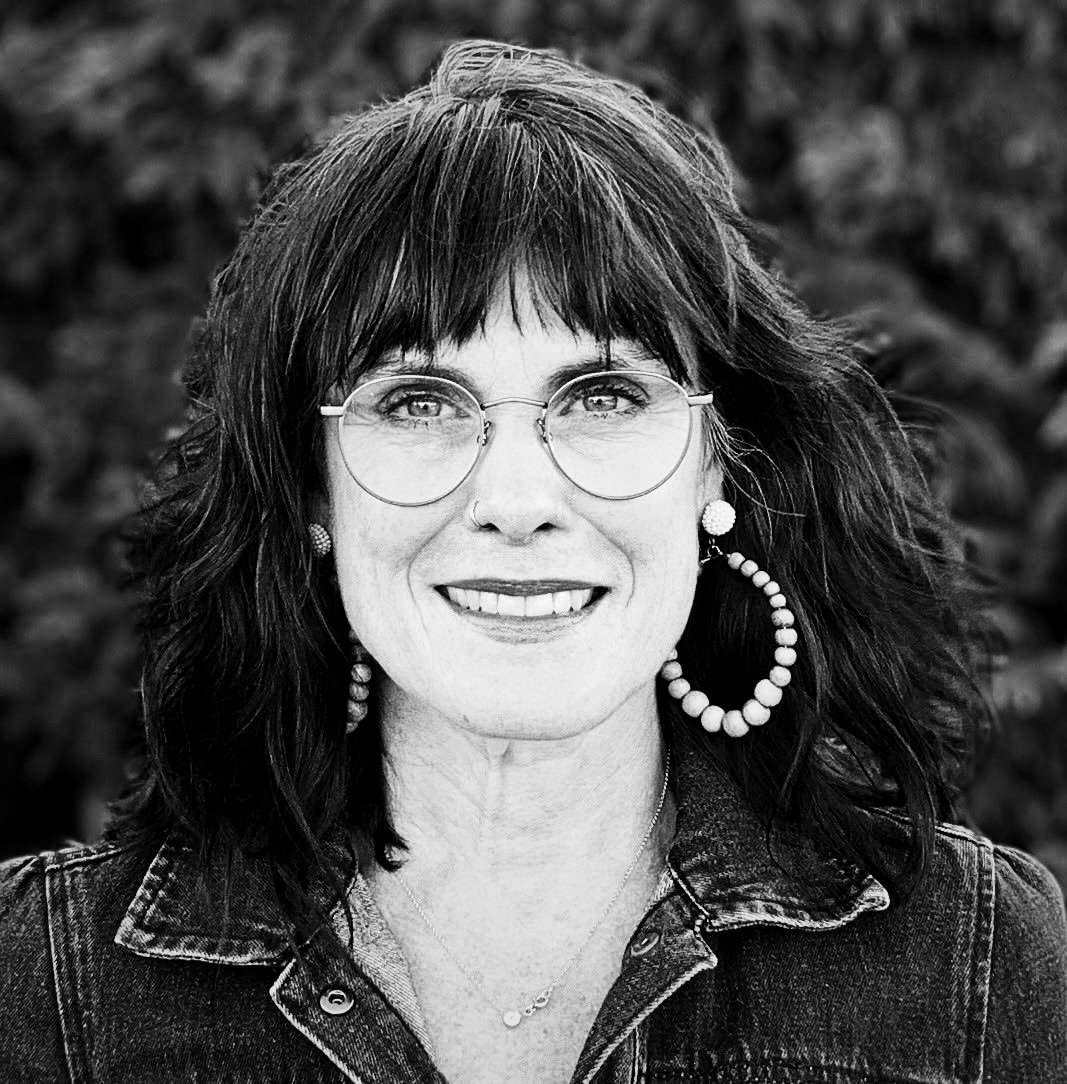
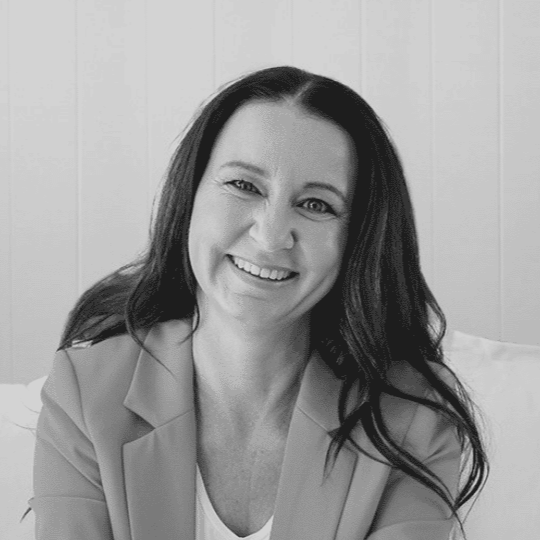
Roz Holt is the Founder and CEO of The Nest Community, a Queensland-born charity and social enterprise leading a global shift in community-powered textile recirculation.
With a career spanning the arts, entertainment, business development and charity sectors, Roz has spent her life turning imagination into practical action. Her superpower? Seeing possibility where others see waste — in materials, systems and human potential.
Through The Nest Community, Roz has pioneered a financially independent, volunteer-powered model that tackles social isolation, textile waste and overconsumption through creativity, connection and shared purpose. What began as a grassroots response to loneliness has evolved into a thriving movement that reaches more than 66,500 people online and in-house.
By transforming donated textile resources into affordable access, community participation and environmental impact, Roz is proving that circular economy solutions don’t need to start in boardrooms — they can begin around a craft table, powered by people who believe things, and people deserve another chance.
Roz discusses transforming a grassroots craft initiative into one of Australia’s largest textile reuse hubs, tackling textile waste through community-led circular economy solutions, and why creativity, skill sharing, and collective action are essential for lasting social and environmental impact.
Highlights from the interview (listen to the podcast for full details)
[Indio Myles] - To start off, can you please share a bit about your background and what led you to create The Nest Community?
[Roz Holt] - I’ve had quite a diverse career across the arts, entertainment, and charity sectors, but the common thread has always been business development, creativity, and innovation. I’ve always enjoyed finding opportunities where others see obstacles and figuring out how to make things work. That’s probably my superpower.
Back in 2012, I was a practising artist working from a home-based studio. My daughter was struggling socially, and I discovered that when she invited friends over for craft-based play dates, the creative projects gave the girls something to focus on together. It made connection easier, and I could see my daughter beginning to learn how to build friendships. Her confidence was growing, and they had something in common through the projects they were creating together.
Those early play dates led me to start the Craft Nest Project, because I was teaching handmade living skills to girls from her school. Mothers started asking me, “Could you teach me?” and, “Could you teach my daughter?” They wanted me to share my knowledge of craft and making because many of them weren’t makers themselves; they belonged to a generation where making had become less necessary because most things could be bought rather than made.
At the same time, sustainable living was beginning to emerge, and handmade items were becoming valued again. I think this was because they represented something slower, more thoughtful, and more nurturing.
People were looking for this more, and you could see it in the fashion industry. Kmart was selling jumpers that looked as though they’d been hand-knitted rather than machine-made. Around 2012, people were beginning to ask, “What is it about handmade things? What makes us feel good about them?”
At first, the Craft Nest Project was simply a small business built around the skills I already had. I wouldn’t call myself the best craftswoman, but I quickly realised something much bigger was happening. The girls weren’t just learning how to make things; they were forming the same kinds of friendships I’d seen with my daughter, and they were supporting one another. They were beginning to find a sense of belonging, and that was a real turning point for me.
The Craft Nest Project was a bit like a craft version of Brownies or Girl Guides, except it ran every Saturday afternoon. As the classes grew, I had one group of girls aged eight to 10 and another aged 10 to 12, so I divided them into two groups. I called them the Red Robins and the Blue Birds. The Blue Birds were the older girls, and their role was to come in and help the younger Red Robins. That’s how I was able to teach 20 girls on a Saturday afternoon, because the girls helped each other.
This was where the concept of skill sharing really emerged for me: helping each other rather than having just one person teaching everyone. There was also something incredibly empowering for the girls aged 10 to 12. They’d say, “Hey, I’m a Blue Bird and I’m showing the Red Robins what to do.” I actually borrowed that idea a little from my own experience in Brownies!
Around the same time, I started to see the potential for something that could serve the wider community rather than simply operating as a business. I thought, “Wouldn’t it be amazing if we took this model and applied it to adults?” If we could create the same energy that existed amongst the young girls, it could be powerful.
Men’s Sheds were becoming much more visible and receiving significant funding, and I remember thinking women needed spaces like that too. Places where we could share skills, talk about our life experiences, and connect across generations, just like the positive outcomes coming from Men’s Sheds.
The problem was I had no idea how to run a charity or even form one. I didn’t know anything about grants, governance, not-for-profits, or what a social enterprise was. What I did know was how to build something from the ground up and bring people together around an idea. I understood marketing, how to communicate a vision, and how to inspire people to follow it. If you want people to come on the journey with you, you need to be able to paint a picture of what could be possible.
What I wasn’t prepared for was the calibre of women involved in crafting. They are incredibly generous and exceptionally talented. So many accomplished women came forward to help: lawyers, changemakers from Brisbane City Council, lecturers, accountants, and many others. Everybody seems to have a hidden craft hobby; it’s incredible how many people will say, “Yes, I knit,” or, “I sew my own clothes.”
People brought skills, experience, and perspectives that shaped the organisation in ways I never could have achieved on my own. The other remarkable thing is that when you’re surrounded by that level of passion, it’s contagious. It drives you forward. You can’t walk away from it because you’ve got all these people saying, “Come on, we can do this.” That’s what collective action has taught me: together, everything is possible.
The Craft Nest Project eventually became the charity we now know as The Nest Community. Fourteen years later, my role has evolved from founder and volunteer to founder and CEO.
I never set out with a grand plan to build a charity. It began as something deeply personal, simply as a way to help my daughter. It grew because so many people believed in the vision. They generously gave their skills, their time, and their support. Looking back, I don’t think I chose this path in the traditional sense. Instead, it grew around me, and I feel incredibly fortunate to have been part of what it has become.
As the CEO and founder of The Nest Community, can you share more about the organisation and how you’re pioneering community-led textile recovery and circular economy initiatives?
It’s become quite different from what any of us imagined in those early days. While The Nest Community began as a project focused on connection, creativity, and shared learning. The textile recovery side of our work actually emerged almost by accident.
People started donating fabric, sewing supplies, and craft materials so we could keep our workshops affordable. This was when we first moved into the heritage-listed house, and we were operating without funding. We needed to find a way to pay the rent, electricity, and all the other expenses.
I used to run classes, and the money we raised through ticket sales paid the rent. That’s when other people started joining me and saying, “I can run a knitting class.” In those early days, every class was delivered entirely by volunteers. We were all simply donating our time and using the proceeds to keep the organisation going.
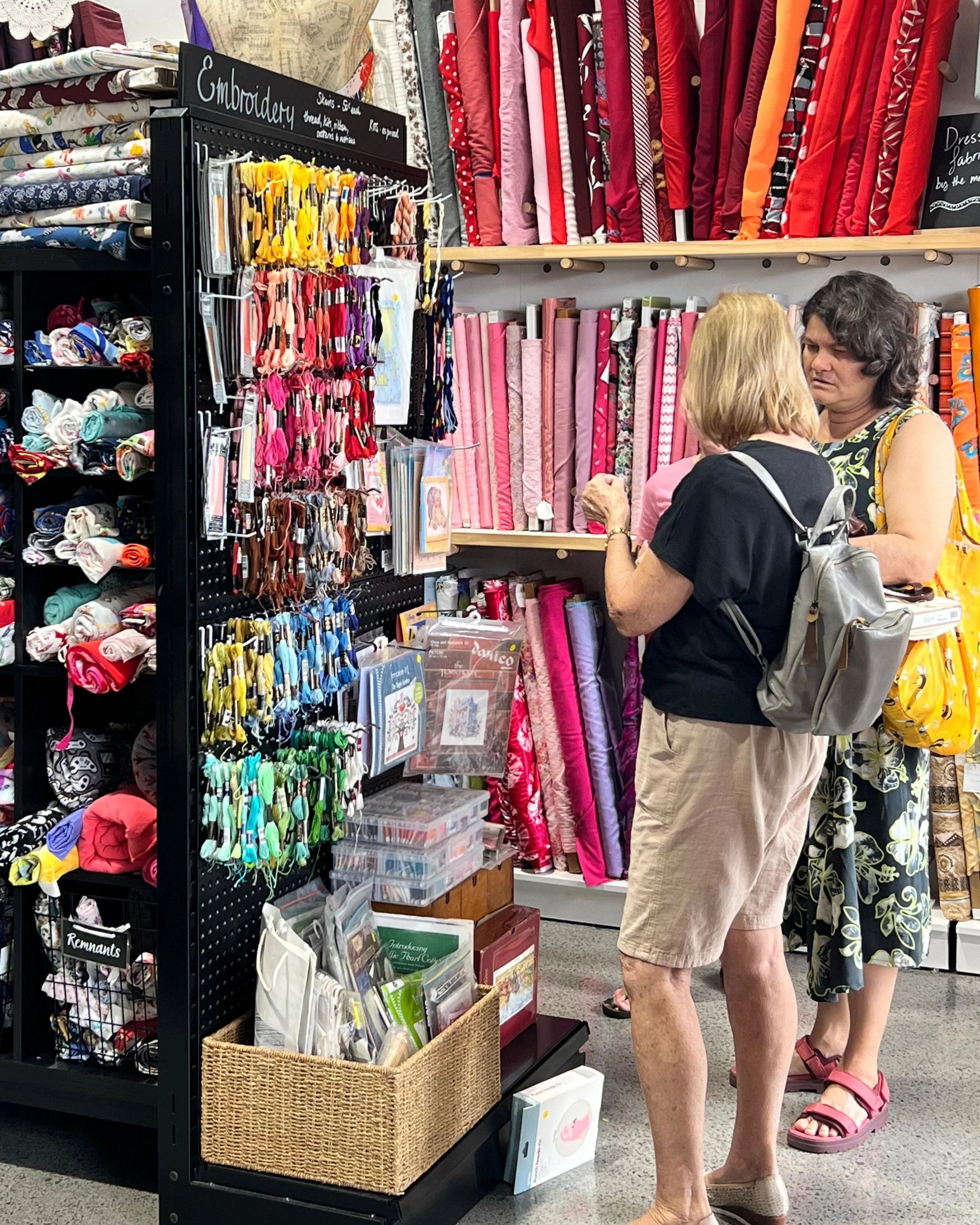
Meanwhile, more and more materials kept arriving. People would say, “What you’re doing is fabulous. What can I do to help?” Before long, two or three rooms of the heritage-listed house were completely filled with donated resources.
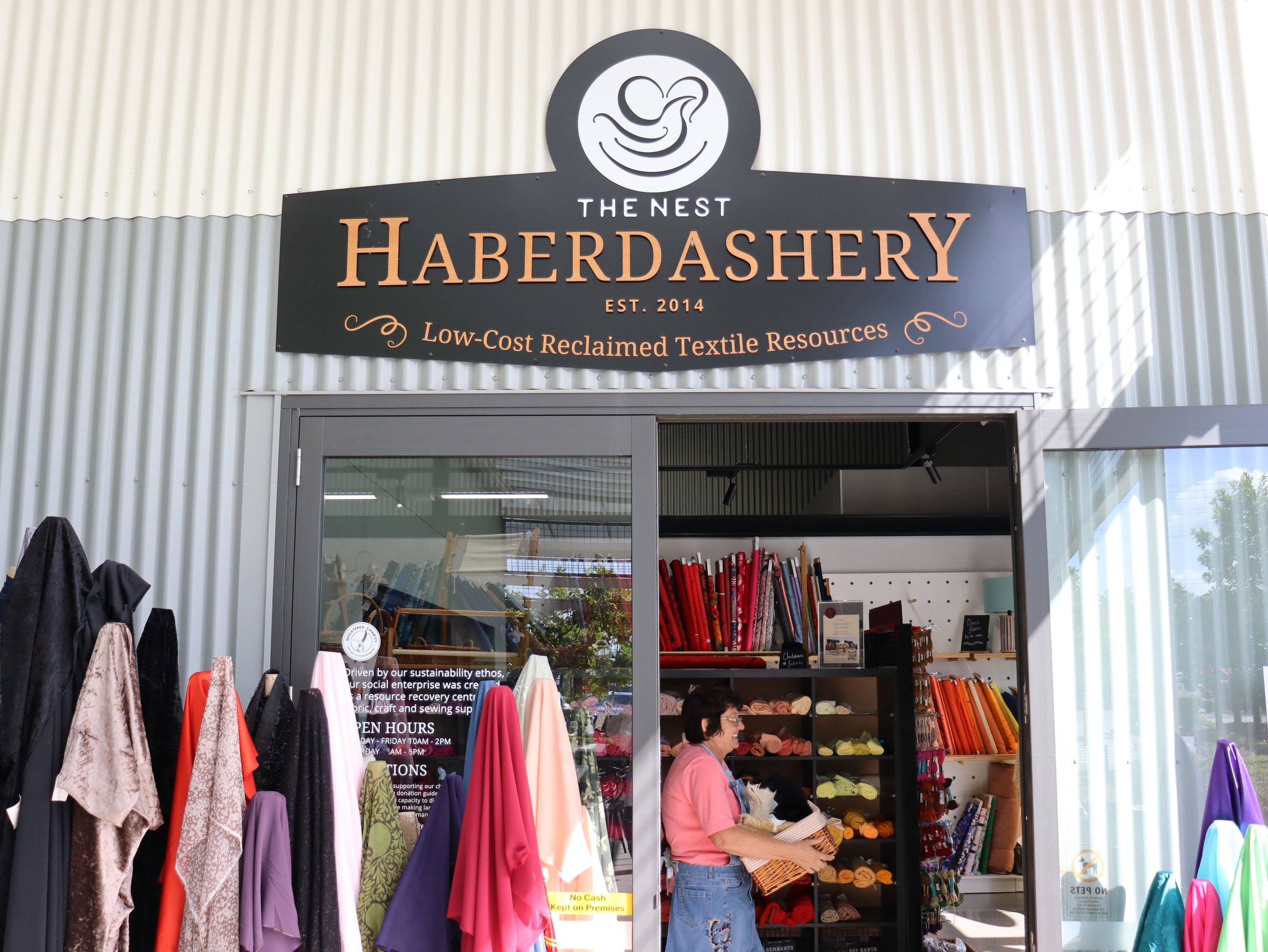
One day, being located just up the road from Spotlight [a large Australian textile store], I had an idea. I thought, “What if we sold this material? It’s not second-hand; it just hasn’t been used.” It made perfect sense because anyone coming down the hill from the north side had to drive past us before they reached Spotlight.
What happened next completely changed the direction of the organisation. The idea grew rapidly. People loved that the materials were affordable, but they also appreciated knowing these valuable resources were being diverted from landfill.
It became a twofold solution. Over time, that small stall, where we displayed donated materials across the wraparound verandas three days a week, began to grow into something much bigger.
That evolved into the Nest Haberdashery, and today it has become one of Australia’s largest textile reuse hubs.
Each year, more than 20,000 volunteer hours go into our resource recovery work alone. That’s simply revaluing the donated materials that come through our doors. Every week, we receive more than 5,000 litres of donations and recirculate around 1,500 metres of fabric back into community use.
From the donations we receive, we achieve a recirculation rate of around 70%. When you compare that to the national average of 16.5% for other thrift charity organisations, it’s quite remarkable. Since we began in 2014, we’ve recirculated enough fabric to wrap around Suncorp Stadium more than 400 times. It’s a wonderful way to understand the scale of something that literally started on a veranda.
What makes our model different is that textile recovery isn’t actually the end goal. The textiles are simply the catalyst. They create opportunities for people to connect, learn, contribute, and participate.
circular economy isn’t just about materials; it’s about people. Textiles bring people through the door, but our community creates the impact. What we’re doing isn’t just recirculating resources or reducing consumption, we’re recirculating skills and knowledge.
Even though you can achieve strong outcomes from the fantastic systems I’ve just described, you have to address the cause of the problem, not simply ask what to do with the problem once it exists. The cause is that people have stopped feeling confident enough to make things, so they consume instead. In many ways, consumption is a social issue.
You can’t ask people to stop consuming if there’s no alternative. We offer an alternative, and that’s our journey.
You touched on the work of the Nest Haberdashery. What have been some of your biggest learnings about creating behavioural change around reuse, repair, and conscious consumption?
One of the biggest lessons I’ve learned is that people don’t change their behaviour because of guilt. They change when they experience a better alternative.
For years, we’ve been told to recycle more, buy less, and reduce waste. While those messages are important, information on its own rarely changes habits. What we’ve found is that behaviour change happens when people can actually see, touch, and experience the value in something that might otherwise have been discarded.
We often say that we add value. When donations arrive, they usually come in tubs or bags. They come from all sorts of places. They might be from a deceased estate, someone with a very generous personal stash, or even dead stock. Yet when you walk into our shop and see everything so beautifully curated, it’s hard to imagine it all arrived as one big collection of miscellaneous items.
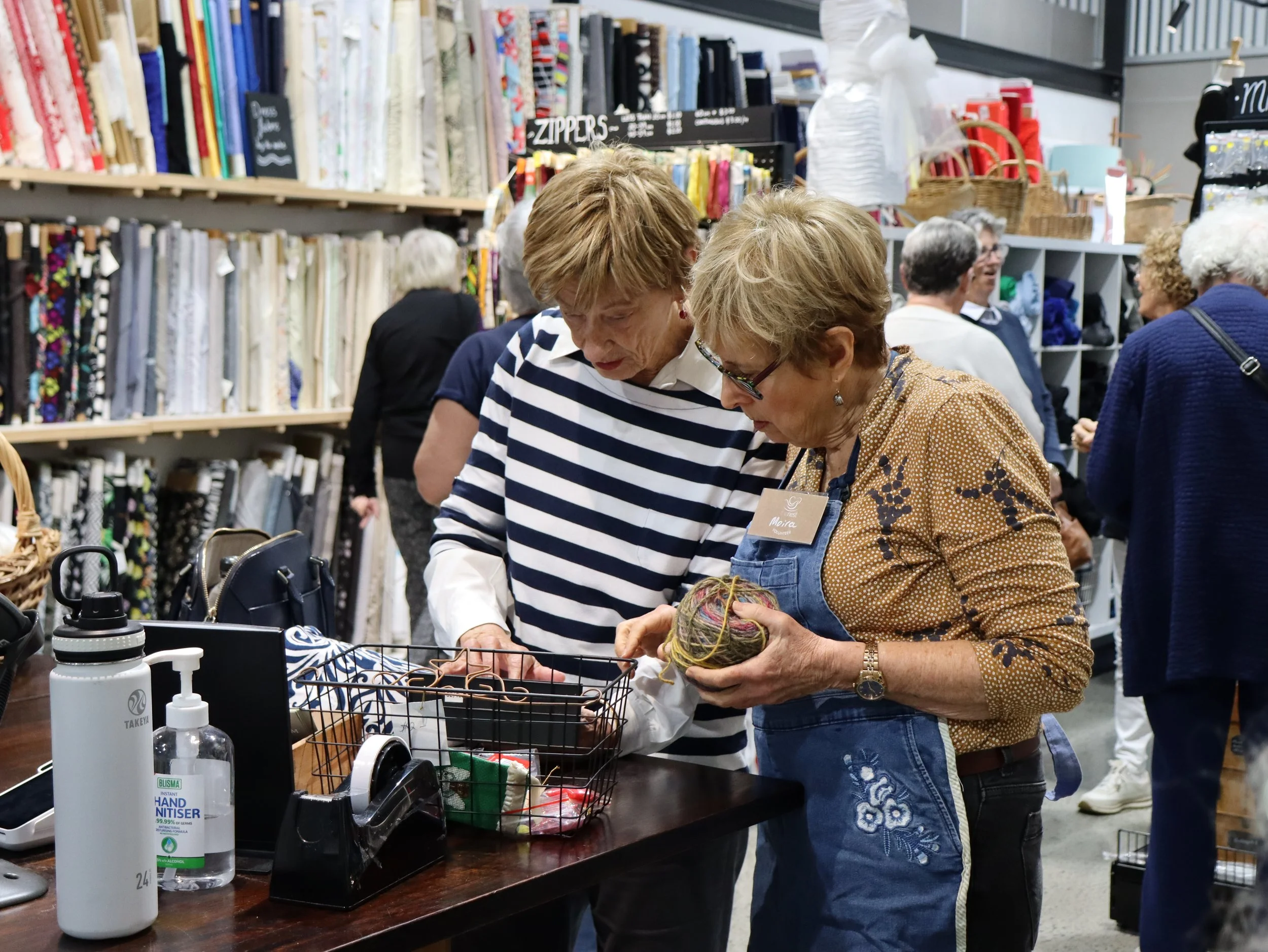
Our volunteers take materials home, wind ribbons and trims onto cards, stitch buttons onto display cards, and reattach size tabs to zips. When you look at a display of 200 zips, it’s worth remembering that almost every single one may have come from a different donor. That’s quite remarkable. It’s the value-adding process that transforms these resources.
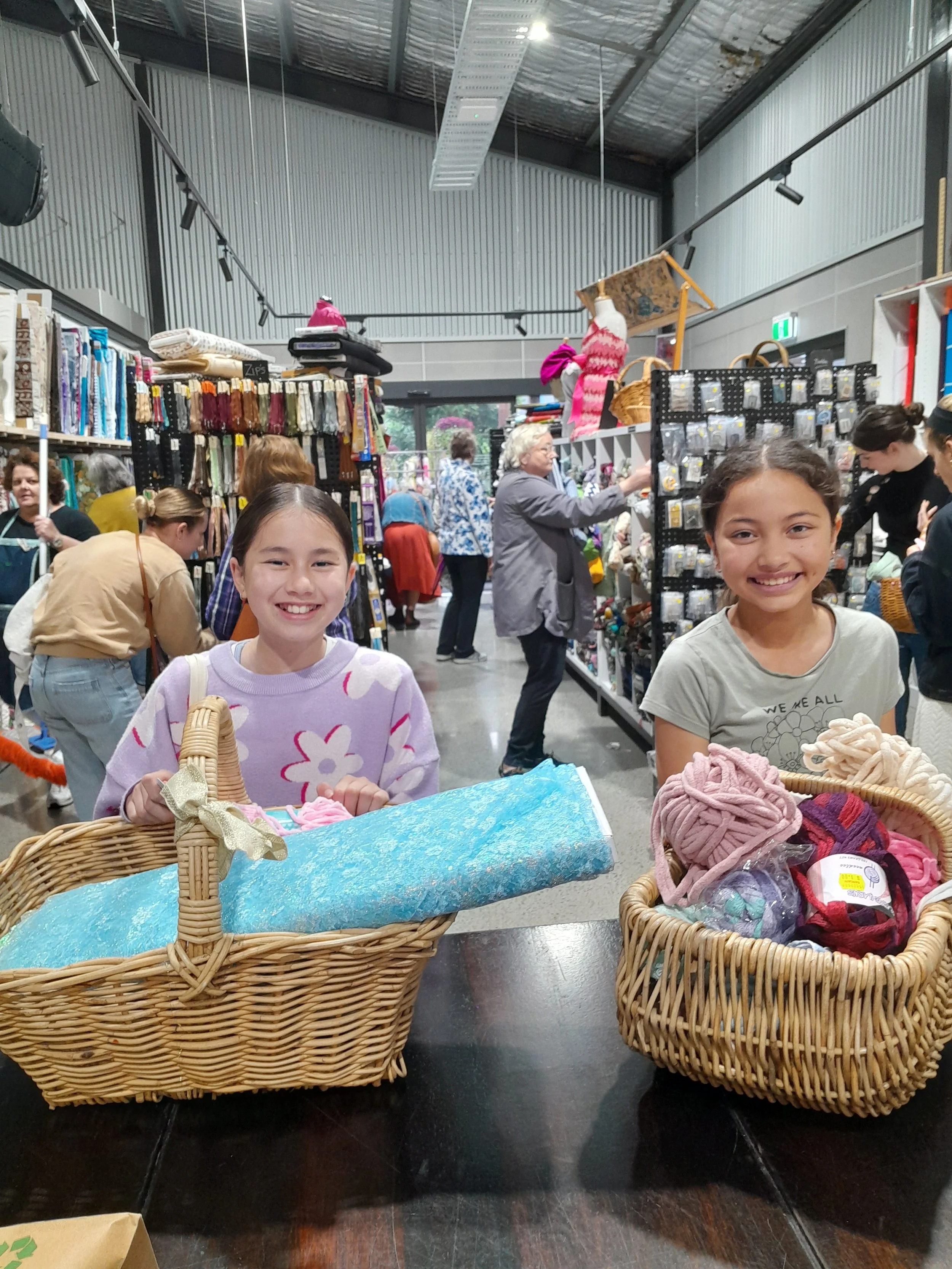
At The Nest Community, people don’t just hear about circular economy principles; they actively participate in them, often without even realising it. They donate materials, volunteer their time, purchase reclaimed resources, and see those materials begin a second life in someone else’s hands. Suddenly, the conversation shifts from, “What do we do with waste?” to something much more positive. You walk into our shop and it’s full of happiness. Our volunteers are happy, our visitors are happy, and the space is full of energy. It doesn’t feel like waste management. Instead, those discarded resources have created a thriving community hub.
As a result, people begin to think differently about consumption. Somebody once described walking into our shop as feeling like receiving a big grandmother’s hug, and I think that’s true. It’s a welcoming space with an incredible atmosphere.
That experience has inspired us to provide seed funding for a documentary called Woven, which will be released soon. A talented film crew has explored how creativity, making, and traditional skills can help address many of the modern challenges we’ve been discussing.
The documentary is incredibly positive. The filmmakers have visited many of the students, community groups, and schools we’ve supported over the years. I think we’ve donated around $30,000 worth of free resources, and they’ve gone out to see the real outcomes that occur when those materials are placed into the hands of community members.
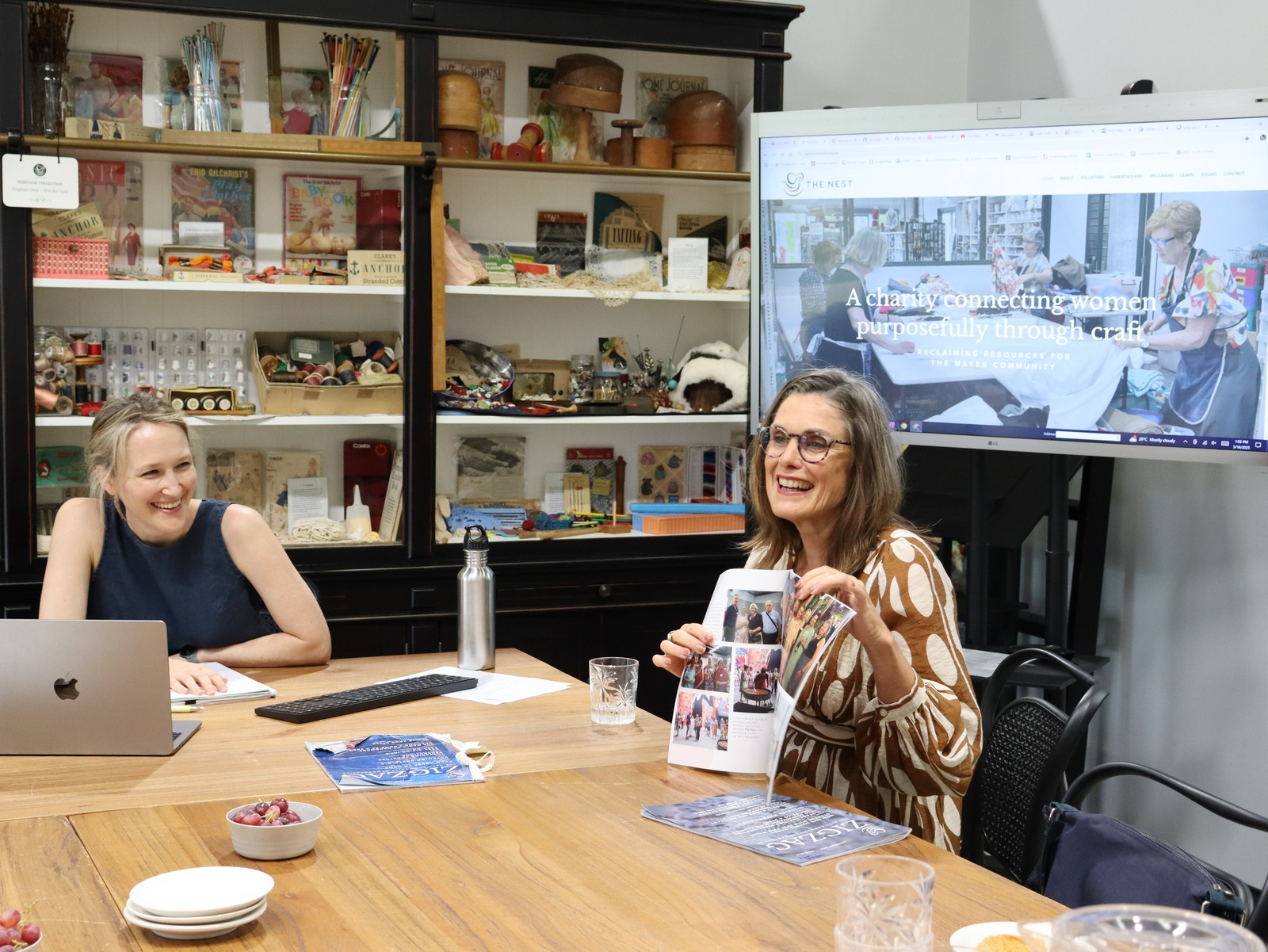
Ultimately, our mission is to help people consume differently. We need to help people see value differently, because that’s where genuine behavioural change begins.
You can also follow Woven through its Instagram page, @woven.documentary.
We’ve discussed how The Nest Community is powered by a large volunteer network, but I know you’re also exploring opportunities around corporate volunteering. Can you share what’s next for The Nest Community and why community ownership, combined with strong partnerships, is so important for creating long-term impact?
One of the things we’re focused on now is building partnerships that allow community-led solutions to grow. We’ve spent years developing a model that works, so the opportunity now is figuring out how we can create even greater impact without losing the sense of community ownership that has made it successful in the first place.
We’re looking at expanding outwards rather than upwards by growing our networks and strengthening our partnerships.
The Nest Community was built by volunteers. They didn’t just help deliver programs; they helped create the organisation. Even today, our relatively small team works alongside 120 volunteers who contribute around 400 hours every week. Our staffing is the equivalent of only four full-time employees supporting 120 volunteers and welcoming around 25,000 visitors each year. That combination is what makes so much of our work possible.
Over the years, we’ve learned community ownership doesn’t mean asking volunteers to carry the weight of an organisation. Our role today, here at The Nest Community in Brendale, is to create the systems, support, and structure that allow people to contribute in ways that are meaningful and enjoyable.
That same philosophy sits behind our corporate volunteering program, Roll for Good, which we’ve recently launched.
We don’t see corporate volunteers as simply an extra pair of hands. We see them as future advocates and partners.
The program we’ve developed through Roll for Good is oriented around team-building. We’re just down the road from the wonderful Hip Hops Brewers, so when teams come and volunteer with us, they also enjoy lunch at the brewery. It makes for a really enjoyable day.
Our hope is that people don’t just leave having had a fun team-building experience, but that they also gain a much deeper understanding of textile waste, circular economy solutions, and the power of community-led action. That’s the real outcome we’re looking for as we continue expanding outwards.
We’ve also got a couple of other initiatives in the pipeline. Recently, we partnered with the Embroiderers’ Guild to run a series of skill-sharing workshops. The Guild is such a respected institution, with generations of embroidery knowledge. Eight of their members joined us, and together we delivered workshops for around 32 participants throughout the day.
The workshops focused on visible mending, which is an on-trend embroidery technique. It was a fantastic outcome and the studio was absolutely buzzing.
The beauty of this program is that the Embroiderers’ Guild keeps all of the ticket sales. Supporting organisations like the Guild is an important part of our ethos because they hold many of the traditional skills we’ll need as we move forward and continue making use of the resources we already have.
It’s another example of how we’re working collaboratively within the community while broadening our impact.
Our philosophy is sustainable impact happens when communities, businesses, and other partners each bring their strengths to the table. Communities bring passion, local knowledge, and, most importantly, lived experience. Partners bring resources, opportunities, and reach, whether that’s through corporate volunteering programs or collaborations with organisations like the Embroiderers’ Guild.
When those strengths come together, we can achieve far more than any one group could accomplish on its own. That’s the power of collective action.
What role do you think grassroots organisations and local communities play in advancing the circular economy and sustainability? What opportunities do you see for greater collaboration between social enterprises, businesses, and government?
Grassroots organisations are often where innovation happens first. They’re close enough to the problems to see opportunities that larger systems sometimes miss, and they’re agile enough to test ideas, make mistakes, learn quickly, and adapt. The challenge is that community organisations are good at proving what works, but they’re not always resourced to scale those solutions. That’s where collaboration becomes so important.
Businesses can create responsible pathways for surplus materials, like we’ve been able to do. Governments can invest in infrastructure, policy, and long-term planning. Social enterprises can then connect those resources directly with communities and create practical outcomes on the ground.
No single sector can solve textile waste on its own. It requires collaboration and collective action. Together, we can build systems that make circularity easier, more accessible, and ultimately more normal.
What advice would you give to aspiring changemakers wanting to build a community-led organisation that creates lasting impact?
The reality is most community-led initiatives grow through action, learning, and adaptation. I’d encourage people to focus on solving a real problem and to listen carefully to the people they’re trying to serve.
Build relationships before you build programs. Many of our most successful initiatives were never part of a strategic plan; they emerged because we paid attention to what the community was already doing and what it needed. Everything we’ve created has been a response to genuine demand, and that has guided every step of our journey. Sometimes innovation isn’t about having all the answers; it’s about recognising what’s already working and having the courage to follow it. We often think, “We can make it better,” but sometimes that’s unnecessary.
Be prepared for persistence because social change takes time. When I first started, I thought, “We’ll have The Nest Community all over Australia, just like Men’s Sheds. Give me two years.” That certainly wasn’t the case. Perhaps one day it will happen, but not within the timeframe I originally imagined.
There will always be setbacks and challenges, but if you’re creating genuine value and staying connected to your purpose, you’ll find a way forward. My partner gave me a saying that has stayed with me: you’ve got to keep the rudder tucked under your arm. You have to navigate through the sea, but never let go of that rudder. Maintaining focus is incredibly important.
These days, as CEO of what I believe is a successful grassroots organisation, I spend more time saying no than yes. Having the confidence to say no is essential. People will constantly come to you saying, “I’ve got a great idea,” but my first question now is, “Do you have the time to make it happen?”
Over the years, people have also told me, “I’d really love to replicate The Nest Community.” My response is always, “Great. Who’s going to help you?” If the answer is, “Just me,” then I know they’re going to struggle. You need more than yourself.
You also need to be disciplined about your mission and your purpose. Stay true to them ,because people will inevitably try to pull you in different directions, often because it serves their interests rather than yours.
What inspiring projects or initiatives have you come across recently creating a positive change?
There are incredible organisations across Australia doing inspiring work through initiatives such as Repair Cafés, Men’s Sheds, tool libraries, community gardens, and so many other circular economy projects that people can become involved with.
What I love about these initiatives is they demonstrate sustainability doesn’t have to be complicated. They’re not waiting for someone else to solve the problem. Instead, they’re creating practical solutions using the resources, knowledge, and people already available within their communities.
I believe we’ll continue to see more of these initiatives emerge as communities respond to increasingly complex social and environmental challenges. Local knowledge, local relationships, and local action will become some of our most valuable resources moving forward.
To finish off, what books or resources would you recommend to our audience?
My favourite book of all time is Toxic Charity by Robert D. Lupton. Interestingly, it wasn’t a book that influenced the creation of The Nest Community. We’d already built our model when one of my favourite volunteers, Sharon, said to me one day, “Roz, you need to read this book. It’s basically about what you’re doing.” I remember thinking, “What? Toxic?”
Lupton’s core message is that good intentions alone are not enough. Many charities measure success by how much they give away or how many people they serve, but he argues that this can sometimes create dependency and reinforce a power imbalance between the helper and the person being helped. Instead, he advocates for approaches that empower people to become active participants in their own development by building capacity, dignity, and self-determination first.
For me, Toxic Charity didn’t provide the blueprint for The Nest Community, because we’d already developed our model. What it did provide was a language to explain why our approach was working. It helped articulate many of the principles that had emerged through our own experience, particularly the idea that lasting change is strongest when people are active participants in shaping solutions rather than passive recipients of them.
I’d also recommend keeping an eye out for our documentary, Woven. It’s an invitation to slow down, reconnect, and rethink our relationship with the things we consume, the communities we belong to, and the future we’re creating together.
I love reading and watching anything that encourages us to rethink those relationships because the future isn’t out of our hands. We can influence its direction.
There’s understandably a great deal of anxiety about the environment. Textile waste is one of the major environmental challenges we need to address, while social isolation is recognised by the World Health Organization as one of the significant challenges facing communities globally.
I’d encourage people to seek out stories that offer hope, kindness, and practical solutions. They’re the kinds of ideas that inspire social change rather than simply highlighting social problems.
Editor’s Note: Post recording this interview, The Nest Community was announced as a finalist for the Queensland Social Enterprise Awards in the Environmental Impact category. These awards are for enterprises making a measurable difference for climate, agriculture, food systems, sustainability, and circular economy.
Initiatives and people mentioned on the podcast
Recommended books and Resources
Toxic Charity: How Churches and Charities Hurt Those They Help by Robert D. Lupton
Woven documentary (follow via Instagram: @woven.documentary)
On Episode 646 of Impact Boom, Gill Whelan of Gill Whelan Projects discusses building authentic relationships between funders and social impact organisations, embracing risk and resilience, and shifting power dynamics to unlock stronger partnerships and greater philanthropic impact.