
Melissa Redsell OAM On Empowering Young Mothers and Overcoming Adversity
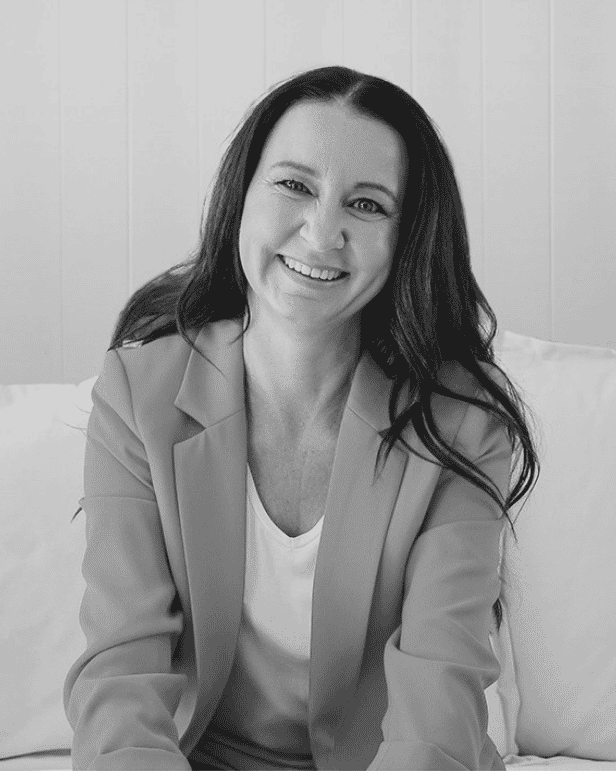
Melissa Redsell is the founder and CEO of A Brave Life, a Queensland-based charity organisation that aims to see all vulnerable new mothers and their babies have adequate support & resources available to them, to enable positive change for a brighter future, no matter where they are in Queensland.
Melissa grew up in Townsville, North Queensland and had her first child at seventeen. Growing up in a home filled with domestic violence, Melissa overcame many challenges from a very young age. In her last year of high school, Melissa found herself pregnant with her daughter and graduated high school seven months pregnant. After repeatedly being told that she had ruined her life and that her life was now over, Melissa was determined not to let these comments define her future. Melissa enrolled in university with a one-year-old in tow and, with sheer determination, qualified as a registered nurse and then, a midwife.
After many years working as a Midwife, Melissa recognised the need for more practical support in her community for vulnerable mothers who were facing a broad range of challenges such as domestic violence, homelessness, poverty, trauma, and perinatal mental issues. In 2015, A Brave Life was started in Melissa’s garage, and she now leads a passionate team, based in Brendale.
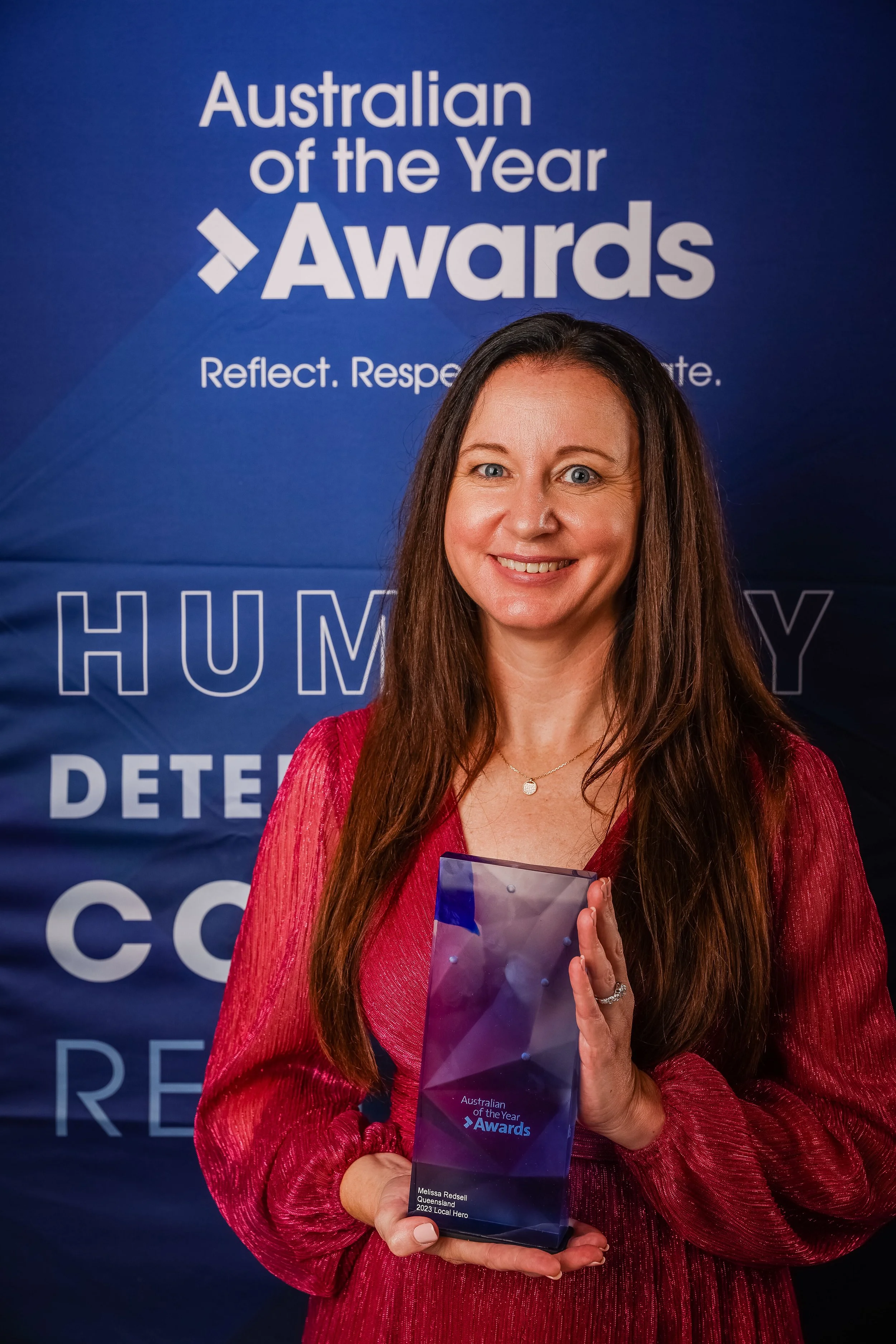
Melissa is a published author, the 2023 Australian of the year, local hero and was named in the King’s Birthday 2023 Honours List and awarded a Medal of the Order of Australia (OAM) for her service to Social Welfare.
Melissa is a wife and mother to three adult children and recently became a grandmother.
Melissa discusses the importance of evaluating your own work, the power of community support in times of struggle, and the value of lived experience in creating positive change.
Highlights from the interview (listen to the podcast for full details)
[Emma Dimech] - To start off, could you share a bit about what led to your work in community support and empowering mothers?
[Melissa Redsell] - What led me to where I am today, running A Brave Life, was really just the lived experience of being a teenage mum without the essentials and support I needed.
After high school, I went on to become a registered nurse and then went back to university to become a midwife. During my time working as a midwife with vulnerable and young mothers, I noticed the gaps in the services that were out there for them. The lack of support after having their baby, having to turn up to the hospital without the essentials they needed.
I really wanted to make a difference in my community, instead of the more professional support I was providing as a midwife. I wanted to make a tangible difference for vulnerable mothers, which could be mothers dealing with homelessness, domestic violence, and perinatal mental health issues.
I never set out to start a charity. I hear that from a lot of charity founders. They either see a need, or they want to use their lived experience to make a difference. I just started putting together some baby products and gifting them to services in my local area. That then morphed into people wanting to jump on board and support us, and then registering as a charity in 2016. We're now in our tenth year of being a registered charity, which is pretty exciting.
You're focused on equipping vulnerable mothers with the tools and support they need to thrive with their newborns. Could you tell us how you're providing this life-changing support?
Our Baby Bundle Program is our biggest program and it’s one that I'm super proud of.
The backstory is that when I was pregnant with my daughter, I was bouncing between homes and trying to finish year twelve. I couldn't get a job because no one was going to employ a teenage pregnant girl.
One day, a friend of mine turned up with a basket, and it was full of handmade clothes, cloth nappies, wipes, baby powder, baby cream, all those immediate essentials. To this day, I still don't know where she got this basket from.
It’s such a stark memory, somebody gifting me something with no strings attached. I grew up in a home that was highly dysfunctional with domestic violence, so there were a lot of attached strings in my childhood.
So that gift basket has always stuck with me, and the idea that somebody would give me something without expecting anything in return.
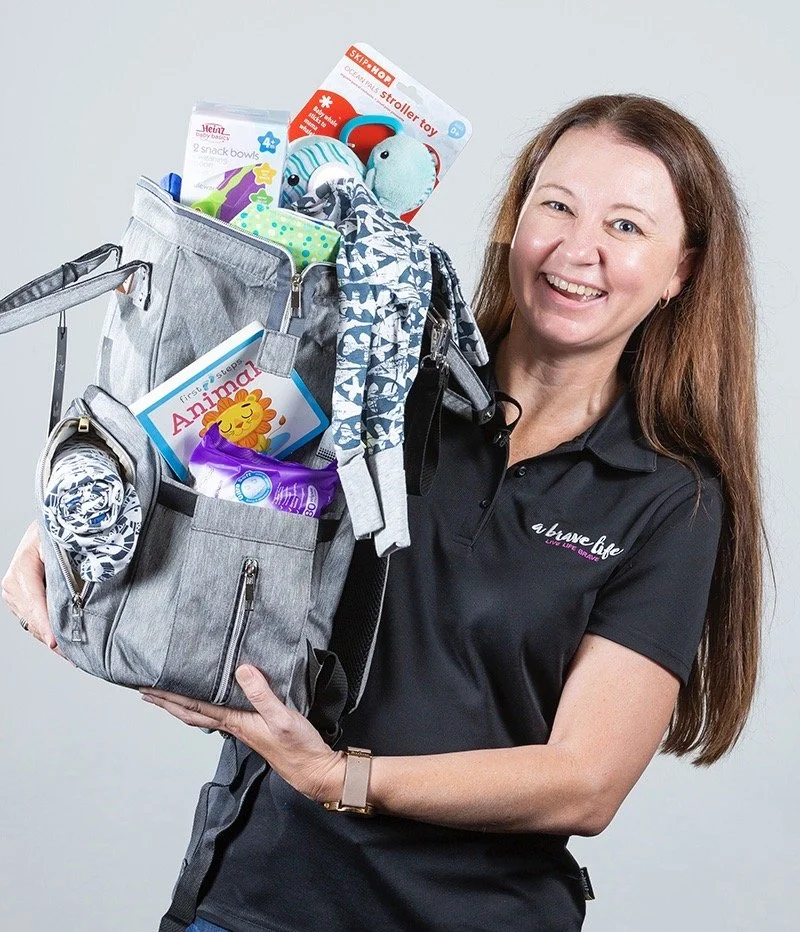
Then, seeing things as a midwife, like mothers turning up to hospital with plastic grey shopping bags, I thought “We could do better than this." The next step, pulling from my experience as a midwife, I asked myself, “what does a mum actually need when they turn up to hospital?” What happens if they’re fleeing or they're dealing with domestic violence? What are they actually going to need?
While thinking about those products, I also wanted our Baby Bundle Program to be more than just a bag of items. I wanted it to have resources in it so that no matter where mum was in Queensland, she had an emergency contact card so she could reach out to perinatal mental health services, domestic violence services; whatever she needed.
I also wanted some information in there so that if she is having a day where she's struggling, she can pick up one of the cards and know that there's a community out there cheering for her, even if we've never met her.
With our Baby Bundle Program, we probably don't meet ninety-nine percent of the recipients. They're gifted via the midwives and social workers because we wanted to ensure that the bundles went where they were needed. The best people to do that are the people actually working with pregnant mothers, or mothers in that perinatal period after they've had their baby.
Over the years, we started to see the biggest impact our bundles were having was in how they helped build rapport between the woman receiving it and their healthcare provider. For me, that’s highly important, because we know that women who don't engage with services whilst they’re pregnant are at a higher risk of poor outcomes. We wanted to help improve infant and maternal health outcomes for mothers right across Queensland, and the Baby Bundles are doing that, which is amazing.
Building rapport is an impact I wouldn't have thought about from an outsider’s perspective, but that's such a valuable aspect of your system.
Yes. We received lots of anecdotal feedback when we were gifting the bundles, but we then went a step further and ran an evaluation of our program. It was pretty amazing to get those results this year after running the evaluation throughout 2025. I wanted to know that we were doing more than just giving away items, and I wanted to hear what mothers were thinking when they received their Baby Bundle.
The results came back, and astoundingly, around eighty-nine percent of women were actually engaging with their healthcare providers because of the Baby Bundle. It was improving their wellbeing and they loved the products.
We only gift brand-new products because we figure if somebody's doing it tough, we want to give them something with dignity that makes them feel valued and cared for. As a midwife, it's important that we are gifting products that are safe, and that we know mothers are going to actually use.
In that evaluation, we also looked at where the women were that were receiving the Baby Bundles, and a good percentage of them are reaching mothers in rural and remote communities, which is important. Living in metropolitan areas, we tend to sometimes focus on our areas and forget about our rural, regional, and remote areas.
Additionally, sixty percent of the participants in the evaluation were living below the poverty line when they received a Baby Bundle. Again, it was important for us to know that the Baby Bundles are actually reaching those who need it.
In founding A Brave Life, what are some of the biggest challenges you’ve had to face, and how have you overcome them?
I never set out to start a not-for-profit organisation, and I didn't know a lot about the not-for-profit sector when I founded A Brave Life. I'm a registered nurse and midwife by trade, so I don't have a business degree. Fortunately, I was surrounded by people who did work in the not-for-profit sector or had had some experience working in it. They helped get us started and pointed me in the right direction of who I needed to speak to.
One of the biggest challenges in the not-for-profit space is funding. Navigating how do we keep going each year? What does that look like when you might not have a continual stream of revenue coming in?
In saying that, it's about looking for ways to be creative and to have people join you on your journey, so that you can make a difference together as a community. That's the main thing, to not be isolated.
It's almost like I had to become a business person overnight. Over the years, I've learnt so much on what it takes to run a not-for-profit organisation, be a leader, and how to mobilise volunteers and the community.
What changes have you observed in the charity and philanthropy ecosystem in Australia over the last few years?
I've definitely noticed a lot more not-for-profit and philanthropy organisations. There's such a community feeling that has come about in the last few years. Probably five or more years ago, I didn't know a lot of not-for-profit organisations or even what philanthropy looked like on a bigger scale.
I feel like we're becoming more aware of who's doing the work in our towns and across our state. There's this community spirit that's come about in the last few years between not-for-profit organisations and philanthropy.
It feels like everybody wants to work together to have a positive impact for people within the community, the state, and within Australia as a whole.
I'm meeting so many founders and philanthropists now, and I’m realising that there's so many amazing people doing incredible things. I know that when I represented Queensland at the Australian of the Year Awards in Canberra, going down and meeting all the other state and territory winners was just incredible. There's this huge ecosystem of people doing amazing things in every part of Australia.
What advice would you give to changemakers trying to get started in the impact space?
If you're passionate about something, you should do your research about what is already in your local community. Ensuring you've got an incredible team around you is also important. If you’re checking out what's already in your community, you’ll be able to see where the gaps are, and how you can fill those gaps alongside your team.
I'm into doing a lot of research as well. Our organisation partnered with a local university around three years ago to conduct research and surveys, so now we've got published research papers.
I wanted to know what the end user, the vulnerable women we worked with, actually wanted. We've been very intentional with this because sometimes we can get excited about wanting to start something, but it ends up not being what people actually need.
Our team is intentional in learning from those in need about what programs and items are going to make a difference in their lives. I feel like we've done this quite well by going out and talking to people we want to help and then designing our programs around those conversations.
For example, we run a program that supports young mothers called EMALO (Empowering Mothers and Little Ones), and that program came directly from our research. We've had great success with that program supporting young mothers in our community. Then, to take it a step further you evaluate your programs too. That's going to tell you what's working and what's not.
What inspiring projects or initiatives have you come across creating a positive change?
I'm on the north side of Brisbane, and in the last twelve months or so, we've had people start the community fund on our side of town. It's called the River North Community Foundation, and I've been really inspired by that.
I love that it's full of people who are passionate about seeing community work together. Even if you’re already running a not-for-profit or working in that space, it's about looking outside of your own organisation and seeing what else you can do in the community. It doesn’t have to be directly related to your programs; it’s about being part of a community and something bigger.
I also get to meet amazing people in the impact world who are doing incredible things, and I’m hearing about all these organisations that I might not have known about otherwise. You can get so busy in your day-to-day life or running your own organisation that you don't always have time to hear about what's going on. I think stepping out of your own little bubble sometimes and getting involved in the community is important.
To finish off, what books or resources would you recommend to our listeners?
If you're looking at starting a not-for-profit organisation a becoming a leader, I encourage you to do some leadership courses for yourself. Your own personal development is important; invest in yourself and make sure you've got those leadership skills and you've done director's courses so you're knowledgeable about governance.
For books, I just read things that inspire me. I love reading autobiographies about other people's journeys. Each one of us has a unique story. Each one of us has been through something.
I love reading about other people's journeys because there's so many people out there that have faced obstacles, challenges, adversities, that they've overcome, and they've gone on to use those to make a real difference.
I'm a big fan of Brené Brown too. I love the books she's written on stepping out of your comfort zone.
Initiatives, Resources and people mentioned on the podcast
Recommended books
Books by Brené Brown


On Episode 619 of Impact Boom, Sita Sargeant of She Shapes History discusses why storytelling and tourism are essential tools for social change, reframing historical narratives through women-led walking tours, and why designing businesses that centre wellbeing, generosity, and patience leads to more sustainable and fulfilling journeys for entrepreneurs.