
Glenn Bartlett And Maddi Ingham On Reinventing Transactions And Payments To Protect Nature
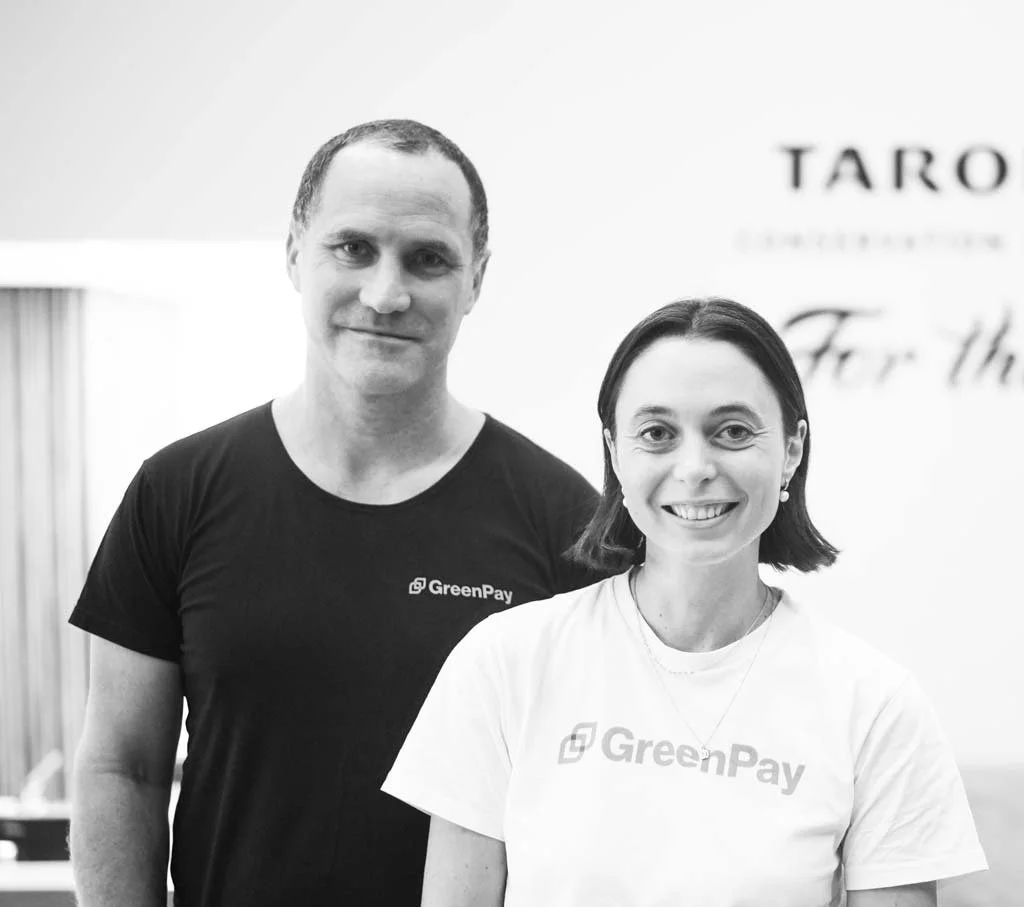
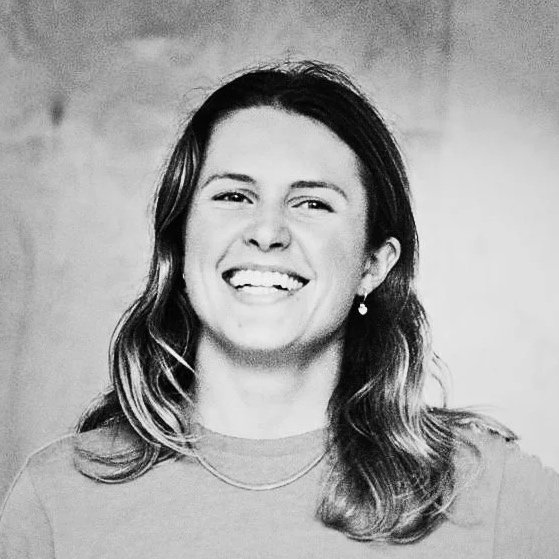
Glenn Bartlett and Maddi Ingham are the co-founders of GreenPay, the Australian payments company turning everyday transactions into conservation by directing 50% of profits to protecting and restoring nature.
An environmentalist using business as the lever, Glenn has spent his career working to disconnect human progress from the degradation of our planet, proving the two aren't a trade-off. He is an active impact investor and a GAICD.
A conviction that innovation is where impact moves fastest, Maddi began her career consulting for some of Australia's largest companies before pivoting to early-stage startups. She is also a non-executive director of a Sydney-based not-for-profit.
Glenn and Maddi discuss how payment technology can become a powerful force for environmental conservation, why commercial excellence is essential for impact-led businesses, and how purpose-driven founders can inspire meaningful action through storytelling.
Highlights from the interview (listen to the podcast for full details)
[Tom Allen] - To start off, can you please each share a bit about your background, passion for conservation, and what led you to working together?
[Glenn Bartlett] - From my perspective, I've been an environmentalist since I was in nappies. That was really all a result of my mum, who used to campaign for Greenpeace when I was a kid. It has never really left me. I often think back to those first few years of my life, traipsing around the streets collecting signatures for various Greenpeace campaigns.
I went through school, then university, and actually started my career in advertising before working for some of the biggest marketing and FMCG companies in the world. For a few years, I was living in London in my twenties. There were a lot of distractions, and I guess I got distracted from the environmental journey for a while.
Then, around 2005 or 2006, while working for one of the world's biggest FMCG companies and marketing some of its products, I became aware of the palm oil crisis and the massive issues it was creating, particularly in places like Indonesia. I learned about its impact on the climate and on species such as orangutans becoming endangered as a result of our insatiable demand for palm oil.
That really set me off. It was a trigger point where I thought to myself, "Hang on.” I was having a great time in London, drinking a lot of beer, but I felt like while I wasn’t doing any harm, I was probably on the wrong side of the ledger.
For the last 20 years since then, in one form or another, I've been on a mission to find a way to help nature and build conservation into what I do. I've had a crack at working in not-for-profits, government, and big business sustainability teams. The biggest lesson I learned from all of my work is the strongest lever we have is business. We need to leverage business, particularly disruptive young businesses, to help change the world and give people, and businesses, the opportunity to buy a better world.
A combination of all this work is what has led to GreenPay, which feels like the ultimate manifestation of what I've been thinking about for the last 20 years. It's one of those things where it feels like there's no choice but to follow this path now.
[Maddi Ingham] - It's funny, I feel like Glenn and I, in a lot of ways, had quite similar childhoods. We were both influenced by our parents to care about the communities around us. He joked about being an environmentalist since he was in nappies, but I was literally in cloth nappies, not disposable ones! There are definitely some parallels between us there.
For me, I started my career in strategy consulting, working with some of Australia's largest businesses. I think that crystallised into the view that big business probably isn't going to get us out of the mess we're in. They'll probably follow quite closely, and they can certainly support, but they're probably not going to lead the charge.
I also was seeing some of the world's greatest innovations coming from small companies with innovative solutions. I found my way into start-ups and, from there, into the impact finance space.
There's something so powerful about trying to create change within financial systems because, at the end of the day, capitalism and money are some of the most powerful forces in our society. If you can turn them into a force for good, they can have outsized results.
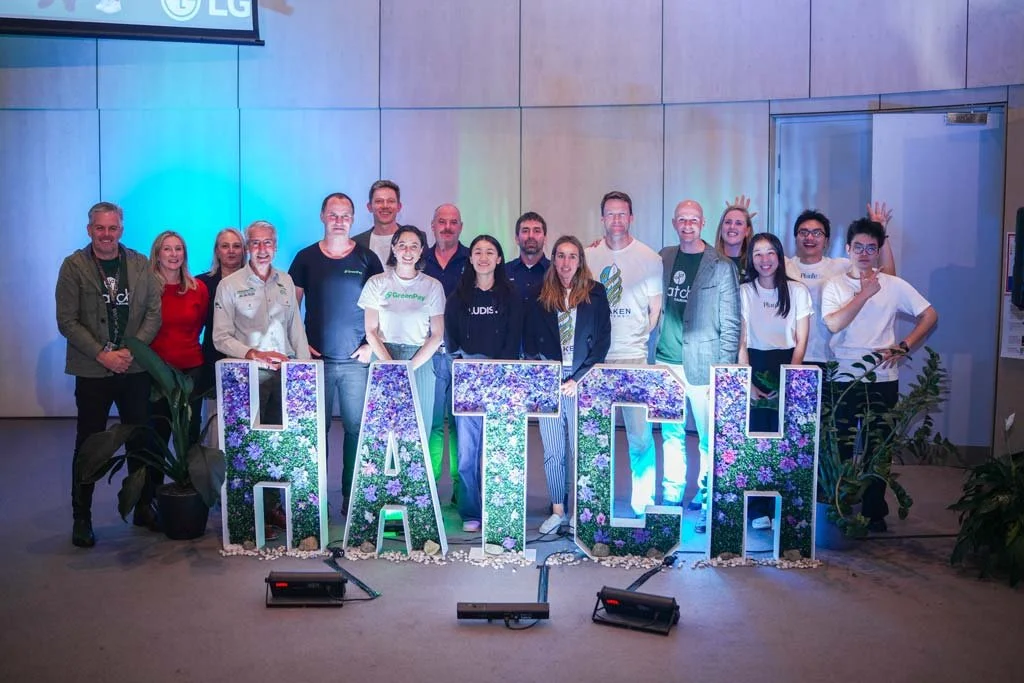
That was the journey to GreenPay and finding my way into the impact finance space more broadly. Glenn and I actually met at my previous company, Verve Super, for those who know it. For those who don't, it's a female-focused, sustainably screened superannuation fund that's working to close the gender super gap between men and women.
I had the opportunity to work closely with Glenn throughout my time there, and that's where it all began.
Can you tell us a bit more about GreenPay, the work you're doing, how it works, and what its vision is?
[Glenn Bartlett] – GreenPay, in many ways, does exactly what the name suggests. We're a payments company, and the whole idea behind what we're doing is to help protect and restore nature.
As you mentioned in your introduction, we donate 50% of our profits to conservation in Australia. We offer the same technology and super-competitive pricing, whether it's for online or in-person payments. Essentially, rather than the fees from those transactions finding their way to big banks or offshore fintechs, with GreenPay they find their way back to Australian nature. It's a circular economy approach to payments.
What that enables businesses to do is to express their values right in the checkout flow. It's obvious to their customers and staff that they care about the environment when they see their payments are being processed by GreenPay.
In Australia, when you look at the statistics, people care about sustainability. Australians care about the environment, but I think people sometimes struggle to find ways to feel like they can make a difference. The statistics show that 90% of Australians believe businesses should be doing more to protect nature. Among younger workers in particular, around 70% say a company's sustainability practices influence whether they stay with that employer.
What we enable businesses to do is to take an everyday expense (payment processing), and use GreenPay to express those values. They can effectively harness commerce right at the point of transaction so it's no longer working at odds with nature, but working for nature. At the same time, they're sending the right message to the Australians we know genuinely care about these issues.
A common theme we hear from social entrepreneurs is the challenge of balancing purpose with commercial excellence. How have you managed this balance while developing GreenPay and building trust with users?
[Maddi Ingham] – It's so interesting you touch on that, Tom, because Glenn and I always talk about having to earn the right to have impact. I'm sure Glenn has thoughts on this as well, but it was really important to us that our customers never had to compromise by choosing GreenPay.
I think that's where a lot of initiatives in the past may have fallen over. As you said, they have bold ambitions to create impact, but the quality of their product isn't up to scratch.
Glenn and I are always asking ourselves, "How can we make sure our customers have the best possible experience?" Whether that's from their first interaction with us all the way through to our customer support systems, it's about making sure our technology is rock solid and, ideally, that customers are not paying any more than they would with their current provider, and in many cases, they're actually saving money with us. Only then do we earn the right to create the impact we want to make.
Without those first two pillars in place (a great product and a great customer experience), we'll never be able to achieve the impact we're aiming for.
You've both spent the past couple of years working incredibly hard to build this, and like many entrepreneurs, I'm sure you've faced plenty of challenges along the way. What advice would you give to other purpose-driven founders on a similar journey, and what have some of the biggest lessons been for you?
[Maddi Ingham] – We've been learning so much. I think every day brings a new learning opportunity.
Starting with challenges, I'd say the biggest one we've come up against is general inertia. That's one of the difficult things about issues like climate change and nature loss, they don't feel like any one person's problem to solve. I think lot of people expect someone else to solve it, or that a new piece of technology will come along and fix everything. As a result, people don't necessarily feel empowered to be part of the solution.
One of our biggest lessons has been learning how to communicate the urgency of the problem without creating guilt or other negative emotions. At the same time, it's about empowering people to take responsibility and take action, ideally by switching to GreenPay, while helping them feel they have a personal role to play in solving the problem.
In terms of advice, we've probably got plenty, but something that's been particularly relevant over the last few weeks has been finding people who are working towards a similar mission. When you're speaking with people every day who may not agree with you about the scale of the issue, or who simply don't see it as their problem, it can be challenging.
The more you can surround yourself with other founders and businesses who genuinely believe in what you're building and in the problem you're trying to solve, the more motivating and inspiring the journey becomes.
[Glenn Bartlett] – To your point, Tom, first and foremost, we had to make sure we had a world-class product at the right price. You've got to have a great product with competitive pricing and then, to Maddi's point, you earn the right to have an impact.
I think there's another critical piece to this, and that is recognising you can't expect everybody to care about these issues as much as we do. What's important is framing the benefit around what's important to the person you're speaking to.
We know we're going to create the environmental and conservation impact we're aiming for, but the question is, as I like to put it, "How do you speak into the listening?" What are our customers listening for? What's important to them? How can we frame the message in that way?
One of the most important shifts we've made has been moving away from talking primarily about the challenges facing nature. There are plenty of issues we could talk about. We could talk about species loss, climate change, or the conservation funding gap, and I could easily spend hours discussing those topics.
The reality is, while people might empathise with those issues and genuinely care about them, that's not necessarily what's going to motivate them to switch to GreenPay.
What motivates our customers is helping them understand what GreenPay can do for their brand. It's about sharing the statistics we mentioned earlier: that 90% of Australians expect businesses to be doing more for sustainability and the environment, and that potential employees increasingly care about these issues as well.
For businesses, switching is a simple decision that doesn't require any compromise. It gives the marketing team another authentic brand story to tell and provides the sustainability manager with something tangible they can take to the board without asking for additional budget to fund offsets or other initiatives.
For us, framing the message in that way has probably been the biggest lever.
What are some of the most important traits you've observed in impact-led leaders and founders tackling complex social and environmental challenges?
[Glenn Bartlett] – That's an interesting question because, on one hand, I don't think they're any different from other great leaders. I'm not even sure it's that useful to categorise ourselves specifically as impact leaders. I think we're simply leaders who are looking to have a positive impact, as most people are, frankly. We're probably just more focused on it than most people.
To answer your question more directly, though, when I think back over the many leaders I've met and invested in over the years, there are two things that really stand out.
Firstly, they all have heart, passion, and a mission that's centred around creating impact in some way. That mission can look different for everyone, because impact means different things to different people.
The successful ones, however, all seem to have another two qualities in common. They're highly commercial. They never let the impact story get in the way of the commercial story. They understand their profit and loss, they know where margin can be made or lost, they understand their target customer, and they know their market incredibly well. They're deeply commercial in how they operate.
The second quality is their ability to tell a compelling story and bring people along with them. As I said, I think those are the hallmarks of any great leader. But from an impact perspective, it's especially important not to lose sight of the commercial fundamentals while also inspiring people through storytelling and a clear sense of mission.
You're both speaking at this year's Global Impact Summit in Sydney this August, where you'll be sharing more about your journey. I know you'll also be joined on stage by one of your customers to talk about that partnership. Maddi, what are you most looking forward to about the summit?
[Maddi Ingham] – I think Glenn summed it up really well.
The thread that connects commercial thinking and storytelling is that we're often speaking to people who may not initially care about the impact we're trying to create. If you can combine compelling storytelling with strong commercial know-how, it becomes a no-brainer, even for people who aren't naturally invested in those impact outcomes.
We're incredibly excited about the Global Impact Summit. For those who aren't familiar with it, it's designed to bring together corporates, funders, social enterprises, and not-for-profits. Glenn has been much more involved than I have in the specific sessions GreenPay will be participating in, so I'll let him speak to those. But it's shaping up to be a fantastic couple of days. A busy couple of days, but a really good couple of days.
What makes the Global Impact Summit particularly special is the organisers are focused on delivering practical outcomes. They're bringing together a diverse group of people (from social enterprises and corporates to funders and not-for-profits), all united by a desire to create positive impact. Most importantly, they're encouraging genuine collaboration and tangible outcomes from the sessions themselves.
For me, it's a conference that's designed to create impact, not just talk about impact. That's what excites me most.
From a GreenPay perspective, we're incredibly excited to have one of our flagship customers, Ben & Jerry's, joining us on stage to talk about our partnership, why they chose GreenPay, and the impact they're working to create. As many people know, Ben & Jerry's has been one of the original impact-led businesses, with purpose at the heart of its business for more than 30 years. It's a real privilege to have them join us to talk about the power of collaboration.
We'll also be taking part in discussions with other organisations across the finance sector, including banks, superannuation funds, and payments companies, exploring the simple changes people can make in their everyday financial decisions that can create an outsized impact. I think that'll make for a really interesting conversation as well.
What are some other organisations or initiatives you've come across recently that are creating positive impact?
[Maddi Ingham] – There are so many that it's almost hard to know where to start.
There are a couple of businesses we've really looked up to at GreenPay because they have a similar model to ours and have managed to create outsized impact. The two obvious examples are Who Gives A Crap and Humanitix, both of which have significant donation models. We're fortunate that they've paved the way by proving this type of business model can be commercialised successfully. They've done a lot of the market education for us, which we're incredibly grateful for.
We're also lucky to work with an amazing group of customers who are all creating incredible impact in their own spaces who are genuinely wonderful people to work with. There are far too many to mention, but a few that come to mind are the not-for-profits we interact with regularly. There's Dry July, which raises money for cancer charities and has just kicked off again. There's the Biodiversity Council, which supports us with expertise and research, and Planet Ark, which runs fantastic programs that create meaningful environmental impact.
Then there are businesses that are simply finding better ways of doing business. Ben & Jerry's is a well-known example, but there are also companies like Made by Fressko, which creates beautifully designed reusable cups and bottles. They're taking products people use every day and finding better, more sustainable ways to deliver them.
Perhaps the most rewarding thing for us, though, is that every GreenPay customer has found a way to create positive impact. Whether it's the local mechanic, the neighbourhood florist, or the entire Ben & Jerry's franchise network, they've all found a way to contribute to positive change, regardless of whether they're traditionally considered an impact business.
To finish off, what books or resources would you recommend to our audience?
[Glenn Bartlett] – Whenever anyone asks me about books, the first one that comes to mind is Good Strategy Bad Strategy by Richard Rumelt, which I genuinely think is the best book ever written on strategy. That's a big call, I know.
Strategy isn't everything. You've still got to execute, build the right culture, and get all of those other pieces right, but it certainly helps to have a strategy that makes sense.
What I love about the book is that it's often difficult to know whether your strategy is good or bad. In many ways, only time in the market will tell you. However, the book provides a practical checklist you can use to evaluate your strategy. Have you made clear choices? Is your strategy understandable? Is it built on genuine insight? These are the kinds of questions you can ask yourself to determine whether you're on the right track.
I think it's a must-read for anyone looking to build a company.
The other book that immediately comes to mind is Defiance by Bob Brown, which I recently finished reading. For those who don't know Bob Brown, he's the former leader of the Australian Greens and an incredible environmental campaigner. Over the decades, he's spent time behind bars on more than one occasion, standing in front of tractors and chainsaws, particularly in Tasmania.
Reading his stories and learning about everything he's done was incredibly inspiring. For anyone who has that conservation gene inside them, I'd highly recommend it.
[Maddi Ingham] – I actually had to go back through my Goodreads account to remind myself of some of my favourites!
One book that's really stayed with me is The Life You Can Save by Peter Singer. I read it at the beginning of this year, and I think when a book stays with you long after you've finished it, that's always a good sign.
It's a well-known book in the effective giving and effective altruism space, and I found it quite challenging, particularly as someone who already feels like they're putting a lot of effort into making the world a better place.
It challenges your assumptions around philanthropy, how to give effectively, how much we should give, and how much everyone else gives. It's a fascinating book, and I find myself coming back to its ideas regularly.
It's become a treasured book for many people, and despite tackling some difficult topics, it's an accessible and enjoyable read.
Initiatives, Resources and people mentioned on the podcast
Recommended books
Good Strategy Bad Strategy: The Difference and Why It Matters by Richard Rumelt
Defiance: Stories from Nature and Its Defenders by Bob Brown
The Life You Can Save : How to Do Your Part to End World Poverty by Peter Singer

On Episode 639 of Impact Boom, Alison and Jan Schutt of Stationery Aid discuss how interconnected impact can be across social inclusion, education, and the environment, and the importance of exploring and contributing to your community.