
Adele Stowe-Lindner On Strengthening Leadership And Governance Across Australia’s Community Sector
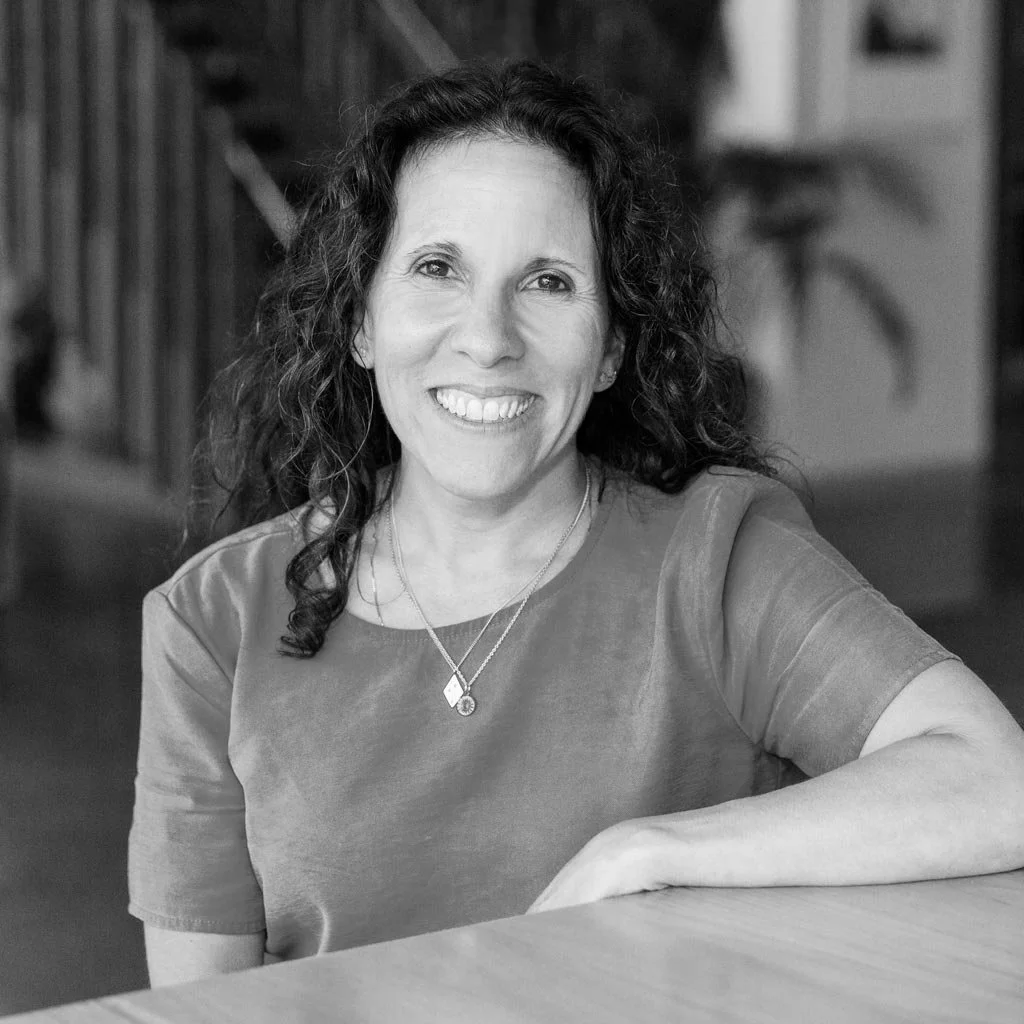
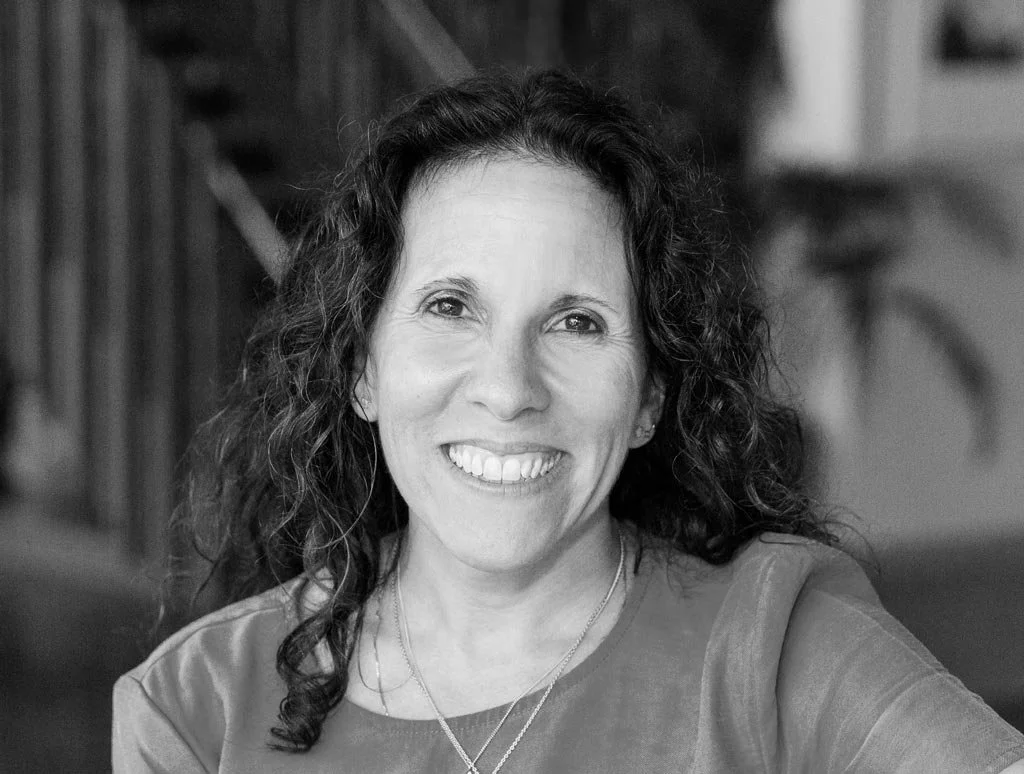
Adele Stowe-Lindner is Executive Director of Institute of Community Directors Australia, which delivers leadership and governance support to over 350,000 people in the for-purpose sector, annually, across Australia.
Adele has worked over two decades across homelessness, refugee support and educational equity in London and Melbourne. She holds a Master’s in Community Work from the University of London and a Master’s in Leadership from Deakin University.
Adele’s career centres on scaling for-purpose organisations for innovation and impact and she currently enjoys serving on three community sector boards.
Adele discusses building confident and values-led governance, fostering leadership development within purpose-driven organisations, and why social cohesion, ethical decision making, and professional development are critical for the future of Australia’s not-for-profit sector.
Highlights from the interview (listen to the podcast for full details)
[Tom Allen] - To start off, can you please share a bit about your background and what led you to your passion for leadership and governance?
[Adele Stowe-Lindner] - I’ll separate each of these passions because I think I came to them separately. Like many people, my interest in governance initially stemmed from my own board roles. I’ve been on boards for over 13 years, as well as working in roles reporting to boards.
I commenced my first board role untrained, probably like many people, and very nervous. I gained a lot of experience through making many mistakes, again, like many listeners, I’m sure. For my next board role, I was invited to join the board as one of the much younger board members and one of very few women, and that had its own challenges. I learnt a huge amount in that context through the support of the chair and the CEO. All of these combined experiences drew me towards the position I’m in now and my passion for governance.
In terms of leadership, it was a much longer journey. I undertook my first leadership training at the age of 16 in a youth group setting, and it was absolutely love at first sight. Even then, I loved the creativity and potential of leadership, and the fact that you can often see results, not always, but often. I love being creative and having the opportunity to gently push from behind or alongside staff, beneficiaries, or organisations and see them flourish over time.
At 21, because of that opportunity as a youth leader, and because I’m very passionate about leadership opportunities for young people, I was running the youth organisation alongside my peers. That involved residential camps across Australia for hundreds of children aged eight to 18, weekly activities, budgeting, professional development, curriculum design, and even fixing broken infrastructure.
On that basis, I was recruited to the UK to do the same thing in a similar organisation. After working in leadership roles in charities supporting vulnerable populations, I gave myself the gift of undertaking a very nerdy master’s in leadership so I could deeply explore how leadership theory can be applied in practice.
Tell us more about the work you’re doing at the Institute of Community Directors Australia and how you support community leaders.
All of those different passions and experiences drew me to the work we’re currently doing.
At the Institute of Community Directors Australia, we support the development of skills, knowledge, confidence, community connections, and ethics within not-for-profit organisations. That includes all kinds of for-purpose organisations.
We deliver training in person, live online, and through self-paced modules to support governance and leadership training for not-for-profit boards, as well as for the senior staff who work with those boards.
We have specialist training for each key board role, including the secretary, chair, and treasurer. We also offer a leadership program, deep-dive three-hour sessions, lunch-and-learns, and in-house training when organisations would prefer a private space to learn together rather than sending a few people into a public session.
We have this breadth of delivery because so many of our trainers have been on boards themselves, are currently serving on boards, or have worked in executive teams alongside boards. We listen to what people are need and also try to understand how they want to learn.
We work across Australia with government and many different types of organisations. For example, we’ve been running the Joan Kirner Emerging Leaders Program for the Victorian Government over the past two years. We’ve got a building full of participants today, and we also train all the cemetery boards in Victoria.
We also provide a free policy bank containing around 70 up-to-date policies, help sheets, and news products. That comes from an understanding that many organisations don’t necessarily have a lawyer on the board who can simply draft something up, and people learn in different ways.
Being able to read the news, access analysis, and use practical policy resources is exactly what many people need to ensure their organisation has the strongest governance possible.
You’ll no doubt be sharing more insights and experiences from your work in the sector at this year’s Social Impact Summit in Sydney on July 1 to 2. What are you most looking forward to about the event?
I’m most looking forward to the side conversations you can have after hearing someone ask an absolutely killer question. That’s always the person you most want to be sitting next to at lunch.
In terms of other Social Impact Summit speakers, I’m especially interested in a session from Paul Thambar about creating the conditions for social innovation. Social innovation is something I’m deeply passionate about, and I feel like you could spend the rest of your life learning about it and still only scratch the surface. I think his recognition that culture is such a key part of social innovation ties very closely to my own interests in governance and leadership.
For purpose-driven leaders looking to either join a board or gain more experience in governance, what would your top tips be?
I would suggest people try, if they can, to do a really short course first. Not something where they’re diving straight into the deep end, but something small so that when they join a board, they have the confidence to speak up initially.
From there, they can continue their education because things make much more sense once you’re already sitting at the table. I think that confidence to speak up helps people understand they’re there for a reason and that the board genuinely wants to hear their contribution.
We find that one of the biggest things stopping people from contributing is a lack of confidence, and to me that’s a real shame because it’s a waste of talent. To be sitting at the table and not contributing, despite having the experience, perspective, or lens that brought you there in the first place, is a huge waste.
There are two things I think are especially important to take seriously. The first is disagreeing functionally, which does require confidence. If something doesn’t make sense to you, it’s important to kindly and generously raise that concern and ask the question, even if it goes against the grain.
You need to do that at the table so all the stones are lifted and all the problems are uncovered, because raising concerns afterwards only undermines the group.
The second important hing is understanding that once the group has made a decision, your fiduciary duty is to support that decision, even if it wasn’t your preferred outcome. You put the work into disagreeing constructively, but once you walk out of the room, you are one voice. Supporting the board in that way is incredibly important.
What other traits do you believe are crucial for impact-led leaders?
It’s really important for impact-led leaders to have a strong ability to listen to voices, not necessarily to follow the loudest or most recent voices, but actively not to follow only those voices.
Leaders need to be able to listen carefully and make decisions that are not always easy. They’re not always decisions that fit neatly, and you’re not always popular for making them, but they’re made for the long-term benefit of the organisation rather than for your own immediate gratification as a leader or the short-term gratification of the organisation itself. That long-term view is an important trait.
I’m also incredibly passionate about prioritising the learning and development of staff. McKinsey released a report a few years ago, just after COVID, looking at talent loss within the for-purpose sector. There are many pathways that lead to insufficient investment in professional development.
We may end up training our staff so well that they leave and move into another organisation in the community sector, and that’s actually a great thing because it means your impact as an organisation and as a leader extends beyond your immediate patch and into the broader sector.
Professional development should be viewed as something of a higher order, with those staff members in mind, rather than thinking too narrowly and under-resourcing it purely for the sake of retaining talent within your own organisation.
What have been some of the biggest shifts you’ve observed in Australia’s not-for-profit and social innovation sectors over the past few years?
I don’t think I’m alone in observing that the role of not-for-profits within Australia’s broader commitment to social cohesion has become a much more important focus. I’m not sure we’ve always spoken so clearly in Australia about the potential for the community sector, another name for the not-for-profit sector, to contribute to a strong and socially cohesive society. That expectation perhaps wasn’t articulated as strongly before.
At the moment, people are even discussing how working with the community sector could help encourage Australians to adopt and engage with AI technologies. Across many different areas, there is now a growing acknowledgement that the community sector is a genuine vehicle for positive development in Australia, beyond the individual mission or values of each organisation.
It’s also a difficult time in Australia in terms of social cohesion. Understanding how not-for-profit organisations can contribute to a stronger and more connected society, while still navigating the pressure of delivering on their own mission and impact goals, is something I’ll be speaking about because it’s a particularly sticky issue for many organisations currently approaching us for training and support.
What inspiring projects or initiatives have you come across recently creating a positive social change?
I’m loving the work being done by the Cranlana Centre for Ethical Leadership at the moment. I actually completed one of their courses myself, and I really value how they place ethical questions at the centre of leadership.
The Cranlana Centre for Ethical Leadership creates a safe, positive, and interesting environment where people from different industries can come together and challenge one another thoughtfully. It gives participants the opportunity to ask curious questions without feeling like they have anything to lose. I’ve enjoyed observing the work they’re doing and participating in it as well.
I also think BoardPro is doing interesting work at the moment. Originally from New Zealand, they’re strongly advocating for the safeguarding of private information. Boards commonly send sensitive documents via email, and as AI becomes more powerful, and potentially less secure in certain contexts, there are increasing concerns around how those documents are handled.
Not-for-profit organisations often hold highly sensitive information relating to some of Australia’s most vulnerable people, so the work organisations like BoardPro are doing around secure board portals and the protection of private information is both incredibly important and very timely.
To finish off, what books or resources would you recommend to our audience?
I’m a big reader, so if you asked me on a different day, I’d probably give you a completely different list of books! At the moment, though, it’s no surprise that I’m reading a lot about social cohesion and the community sector.
One book I’d recommend is Talking to Strangers by Malcolm Gladwell. It’s a few years old now, but I really appreciate his commitment to asking questions. I also admire that with each book he publishes, he’s very open about how he has grown as a person and how his thinking has evolved. He’s willing to say, “I disagree with things I wrote a few years ago, come on the journey with me.” I value that quality in a leader rather than someone tying themselves rigidly to something they once put in writing.
Jonathan Haidt is focused on social media conversations at the moment, but if you explore his back catalogue, I’d highly recommend The Righteous Mind: Why Good People Are Divided by Politics and Religion. It’s another older book, published in 2012, but it has really stayed with me, and I’ve recently been re-reading it.
What he talks about in terms of making yourself open as a leader, and deliberately making the effort to listen to and read perspectives you might not agree with, is incredibly valuable.
I’m also very interested in AI at the moment, particularly in relation to governance and leadership, and I’ve found The Economist is offering a lot of nuance around that topic each week, which I’m finding really interesting.

On Episode 643 of Impact Boom, Patrick Struebi of Fairtrasa discusses how purpose-led business models empower smallholder farmers to accelerate grassroots change, and explore the role of local partnerships, systems thinking and visionary leadership in building a more equitable future.