
Margaret O'Brien On Youth-Led Innovation Strengthening Communities And Sparking Change
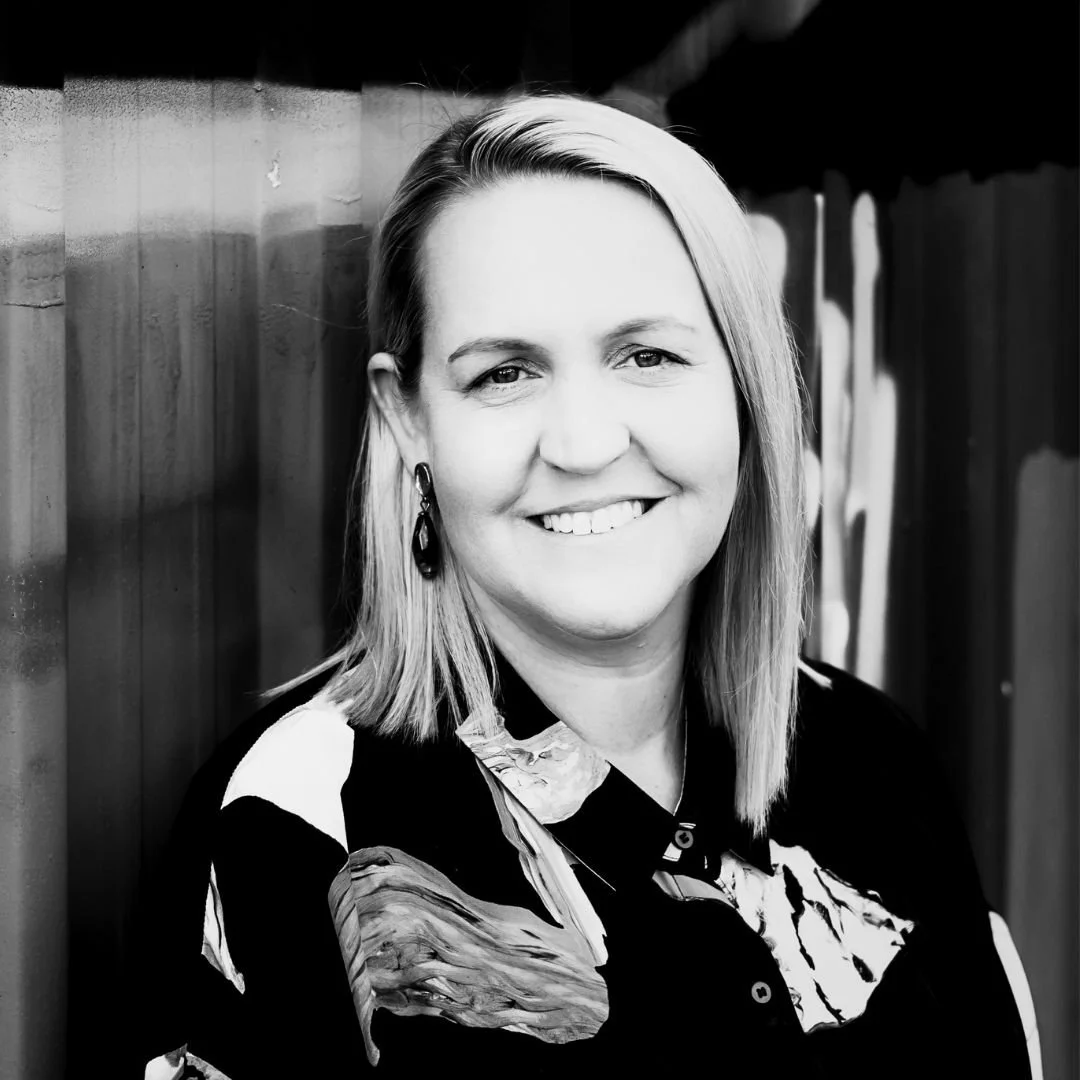
Margaret O'Brien is the Co-Founder and Non-Executive Director of social enterprise Young Change Agents and Partnerships & Impact Senior Manager at Telstra Foundation.
She has previously been a Social Impact Advisor at Social Traders and was on the Founding Board of SECNA (Social Enterprise Council NSW & ACT).
Margaret discusses how youth-led innovation and entrepreneurial education can drive systems-level change, and the value of cross-sector partnerships, purpose-driven leadership and collaboration in shaping the future of impact.
Highlights from the interview (listen to the podcast for full details)
[Indio Myles] - To start off, can you please share a bit about your background and what led you to working in social enterprise and youth innovation?
[Margaret O’Brien] - Early in my career, I worked in business, including start-ups, scale-ups and quite large companies in the UK and Australia. It was there that I started to see the potential for how business could do good in terms of social impact. In the UK, I ran the first corporate social responsibility audit of my quite large organisation, and I came across people doing some cool things that I didn't even realise our company was doing or that were possible.
It was then that I found my love for business and my real passion for social impact could actually merge. Fast-forward a number of years later, and I found myself working as a volunteer in Colombia with local charities.
I met a man named Talen, who was a carpenter, and he was running what I now know to be a social enterprise. He was taking boys out of gangs and teaching them carpentry skills. I said to him, “What do you need?” He said, “I just need contracts.”
That was a real light-bulb moment for me in understanding social enterprise. I thought, to be able to get these boys out of gangs, what he actually needs is not charity funding, but contracts to be able to run it as a social enterprise. It was a real eye-opener.
I was setting up literacy programs at the time and had a bunch of furniture that needed to be created, so by giving him a contract to create the furniture, suddenly I was giving these local boys in gangs opportunities to get out of those gangs, learn skills and become employed. At the same time, the libraries and literacy programs I was involved in managing were getting this fantastic youth-made furniture.
It was such a big win-win. I then ran some social entrepreneurship programs, not with those boys, but with the younger generation there who were part of our literacy clubs. I saw how deeply they understood the problems in their own community and how they were able to flip those problems into opportunities and become young change agents.
Ultimately, that's the organisation I started when I came back to Australia. Young Change Agents has since become a labour of love for me. I've been running it as the founder, and now serving on the board, over the last decade.
As Senior Manager of Partnerships and Impact at Telstra Foundation, can you share more about the organisation and how it supports young people and communities to make a difference?
Telstra Foundation is the philanthropic arm of Telstra, the big Australian telco that we probably all know. What I love about Telstra Foundation, and Telstra generally, is that Telstra Foundation supports young people to thrive in the digital age.
We're all feeling massive change now because of AI, and obviously over the last decade we've seen a significant change for young people in terms of the opportunities available to them through work and economic participation, but also socially and environmentally. There are all these different changes that digital technology brings, and we want to make sure young people have equitable access to the opportunities it can provide, while also making sure they're mentally well and safeguarded.
There are a lot of opportunities to do that, and we deliver this work through our partners. We have community partners we call our Flagship Partners, including PROJECT ROCKIT, Orygen Digital, ReachOut, The Smith Family and WorkVentures. These are the types of partners we work with to fulfil those goals.
What have been your biggest insights into how young people can be empowered as changemakers, and why is youth-led innovation so important right now?
The cliché is that young people are the future, and they absolutely are the future. But I actually think they can do a lot now, particularly through their unique perspectives.
If you speak to any group of young people, they will have different lived experiences. Young people from Northern Australia will have completely different lived experiences from a young person living in Canberra. Every time you meet with young people, there is this richness of lived experience.
The premise of Young Change Agents is that you flip problems into opportunities to make a difference through social entrepreneurship, using an entrepreneurial mindset, skillsets and tools. That's the real capability building we do.
Young people can be told there isn't a lot of hope for the future, that there are so many challenges, AI is going to take their jobs and homes are expensive. They hear so many negative messages, and they are also hearing unprecedented negative messages about themselves as a cohort. In the media, you hear a lot of negative commentary around young people.
Social enterprise is a real way for young people to reframe their role as a generation, because young people are so capable. I hate to say it, but as we get older, we lose a lot of our creativity. We kind of get that beaten out of us!
When you're young, you're at a time in your life where you're able to be super creative and maybe take some more risks. With young people, especially the young change agents we work with who are often still living at home, it's a great time to think of innovation like a bit of a sandpit, where the risk is lower.
You can try things, build resilience through a bit of failure and maybe do some pivoting. For me, it's just the perfect time to get young people thinking about themselves as change agents, and you're never too young to start with that mindset.
Looking at Australia’s impact and social enterprise ecosystem more broadly, what trends are you seeing and where do opportunities lie for people looking to make a difference?
The social sector in Australia obviously includes charities and social enterprises, and a lot of social enterprises are charities. There are thousands and thousands of charities across Australia.
We're getting better as a sector at thinking about how we can work more effectively together. In my role in partnerships and impact at Telstra Foundation, I see part of the opportunity as looking at the systems in which we operate and how we might help facilitate systems change over time. Systems change takes a lot of work, but it's about asking: how do we learn from everyone in the system, listen deeply, and then better connect the different parts of that system? I think that's a role we hope to play on top of the obvious part, which is funding.
Telstra Foundation has actually done that for a long time, and I think storytelling is a really important part of the picture. If you tell the story of how you create impact and bring others into that story, then we can create a lot more change.
I think the intention of every single charity is to do good. The intention of government is to do good, and the intention of funders is to do good. The next piece of the puzzle is how we do that more effectively together, and I think a lot of people are on board with that.
How can leaders collaborate more effectively to build pathways that equip young people with the tools, skills and mindsets to pursue purpose-driven careers?
As leaders, you need to ask yourself: "Am I reinventing the wheel? Is there an organisation that's already been funded, or that has put a lot of effort into creating my idea, and could I work with them rather than building it myself?" It's easy to feel competitive in this space because you're competing for funding and grants, but you genuinely need to ask before you build something: "Does it already exist? Is it something we can collaborate on?" That's when you get real change, and that requires a lot of trust.
There are some organisations and initiatives trying to bring more organisations together so that friction is slightly reduced. I think that's really important.
Last year, I was part of something called the Social Impact Leadership Australia (SILA) program, which is funded by the Vincent Fairfax Family Foundation, The Myer Foundation, Paul Ramsay Foundation and now Snow Foundation as well.
It's leadership training that CEOs of not-for-profits can apply to participate in, and there is now an alumni network of around 100 Australian not-for-profit CEOs. It's such a great program because it's bringing leaders together and helping them start to move out of those silos.
It's hard to get out of those silos when you're stuck in the day-to-day of running an organisation, so those types of initiatives are really valuable for Australia.
What tips do you have for building trust as an impact professional, social entrepreneur or not-for-profit leader?
For me, trust is about doing what you say you will do, and if for some reason something happens, owning up to that and being okay with it.
People ask me, “How did Young Change Agents get into so many schools? How did we get different pockets of funding over the years? How did we expand across Australia?” I think the main thing is showing up and doing the work.
There are no shortcuts in social enterprise, just as there aren't any in business. I think my business background meant I treated every stakeholder like a customer, and there's no expectation that they will continue to support you unless you communicate well, do what you say you will do and keep doing that over time.
People are watching to see whether you're a flash in the pan, whether your excitement is there for a month and then you've moved on to the next thing. Relationships are built over time when people see that you're not just excited about something for a minute, but that you're in it for the long term.
What advice would you give to an emerging leader or changemaker who wants to build an impactful career, particularly through education, social entrepreneurship or innovation?
This is what I say to young people all the time: have a think about what is going to stop you from doing it. For most people, the biggest thing is probably, “How do I get started? It’s too big to start.”
Don’t think about it like that. Think about what the next thing is. Always have your big vision, but in some ways, who cares? That’s so far out there. Whether you’re saying, “I want to help every child in Australia,” or, “I want to help every child in the world,” that is a very big goal, which is great.
How are you going to do what you want to do in the next month or the next six months? Think of it like a triathlon, where you need to get one leg done before the next. You have to think, “What can I practically do?” Then, how are those little incremental steps joining all the dots to get you to that bigger goal?
Actually, it’s sort of like a triathlon with a chessboard! You have to have different moves happening.
People often say to me that I’m doing too much or I need to narrow my focus. I personally believe systems change is more like a chessboard than one direct route. You need to be able to keep an eye on the different parts of the system. Sometimes you need to make sure you’ve working across different areas because you’re trying to bring it all together at some point. If you’ve only chosen one thing to focus on, you might miss important connections.
Some people will disagree with me on that, but I think we are capable of doing more than one thing at the same time.
You need to be able to see the system. It’s good to read about systems change, to be able to name all the parts of the system and understand them, and to be strong on your theory of change.
It’s not just about what you want to happen in the short or medium term, but also understanding your enablers and the key activities that will make change happen.
What inspiring projects or initiatives have you come across recently creating a positive change?
One that I've been fortunate to work on since coming into this role at Telstra Foundation is a really good example. WorkVentures is a fantastic social enterprise in Australia, and it's working on an initiative with Good Things Australia called the National Device Bank.
Essentially, it's a program and charter where corporates across Australia can sign up to donate their devices. WorkVentures and Good Things Australia then take those devices, complete maintenance on them where needed, grade them, prepare them and connect them with young people and other cohorts who need them and would otherwise be digitally excluded.
It's a great initiative because it now has support from government and a number of large corporates across Australia, and that charter will really help push the initiative forward.
I think the reason I raise it as a good example is that it's a great social enterprise model. When devices are donated, some are repaired and sold, which brings in income. The rest of those devices then go out to the cohorts I mentioned.
It's a social enterprise model backed by corporates and government. That's the sort of systems change approach we need to be taking across different areas in Australia.
To finish off, what books or resources would you recommend to our audience?
Obviously, there’s this podcast! I don’t know what book I would recommend because I’ve read so many different ones, but at the moment I’m reading a lot of books on ADHD.
I think it’s interesting to think about how different people think and how we can better utilise different people’s skills. I think people with ADHD typically have more of an entrepreneurial, risk-taking mindset.
Interestingly, in a book I just read called ADHD 2.0, it discusses how people with ADHD can also face a higher risk of early death, addiction and incarceration. I’m really interested in that because I think there’s a real opportunity to consider how we can better utilise the skills of neurodiverse Australians for impact and for good.
They can also bring higher levels of creativity and critical thinking, and that’s exactly what we need to solve problems.
Initiatives, Resources and people mentioned on the podcast
Recommended books
ADHD 2.0: New Science and Essential Strategies for Thriving with Distraction--from Childhood through Adulthood by Edward M. Hallowell and John J. Ratey
On Episode 642 of Impact Boom, Margaret O'Brien of Telstra Foundation discusses how youth-led innovation and entrepreneurial education can drive systems-level change, and the value of cross-sector partnerships, purpose-driven leadership and collaboration in shaping the future of impact.