Dr. Zara Lasater On Place-Based Collaboration And The Power Of Community-Led Action
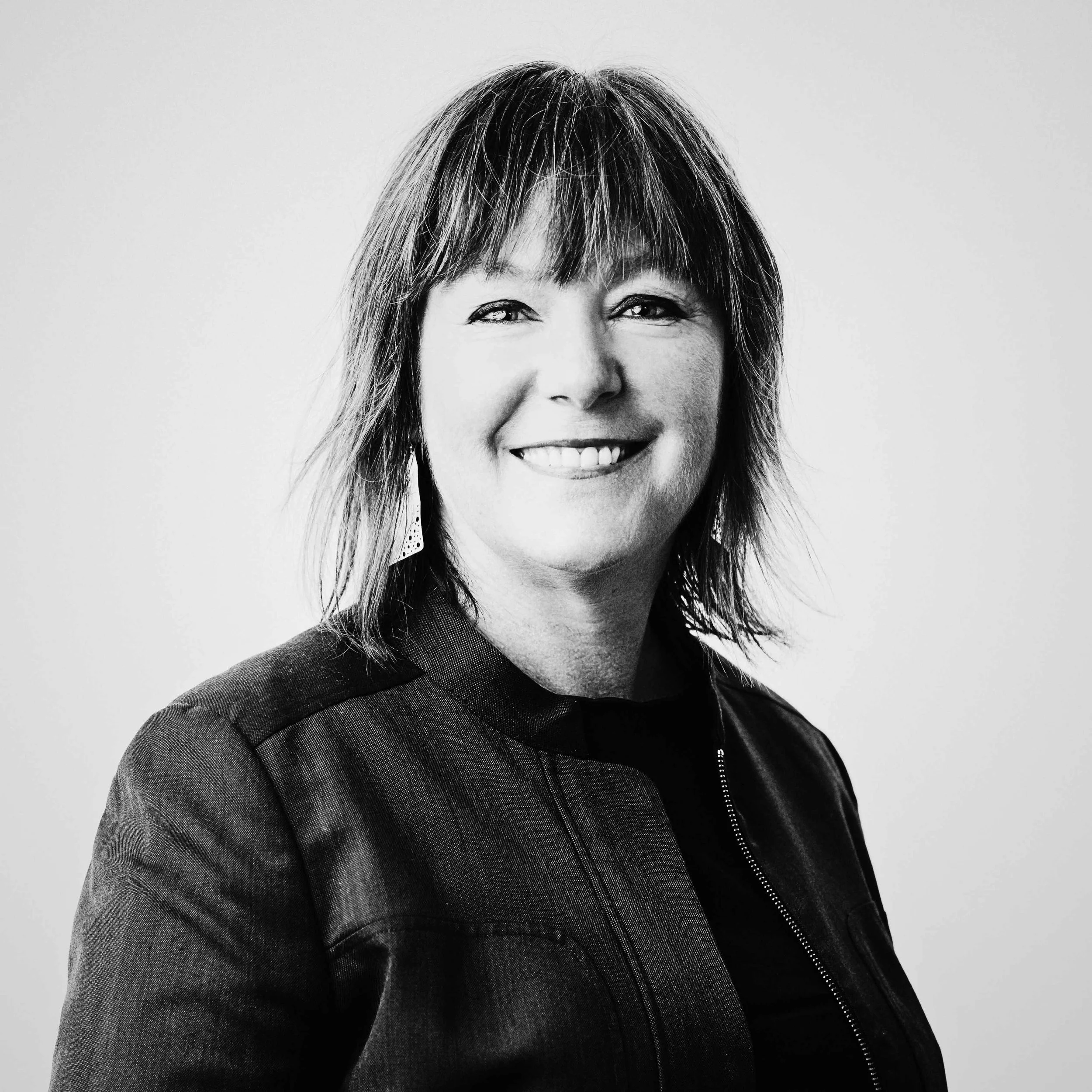
Dr Zara Lasater is Executive Officer of the Frankston Social Enterprise & Innovation Hub, a not-for-profit place-based intermediary, enabling organisations and individuals to launch and scale social enterprises while advancing social innovation in Melbourne’s south east.
She has worked across sectors as a consultant, researcher and not-for-profit manager. She has also lectured at the University of Melbourne, RMIT, and Swinburne University of Technology on social enterprise incubation, leadership for social impact, philanthropy, social innovation and entrepreneurship, human-centred design, research methodologies, evaluation design, public policy design and comparative social policy.
She is deeply committed to social enterprises and place-based approaches having worked as a community planner and engagement expert in the United States, United Kingdom and Australia.
Dr. Lasater discusses how place-based innovation, co-design and social enterprise address complex challenges, and how collaboration and inclusive leadership can build stronger, more equitable communities.
Highlights from the interview (listen to the podcast for full details)
[Indio Myles] - To start, could you share a bit about your background and what led you to discovering social enterprise?
[Dr. Zara Lasater] - I’m the fourth generation in my family to be involved in Asia in some way, and that’s only relevant because it’s how I ended up becoming a community planner. I was looking for a master’s programme in history, and I wanted to focus on Chinese history. The best Chinese history programme at the time that I could get into was at the University of Hawaii at Mānoa.
I landed on campus and, as every poor student knows, I needed a job and some way to bring in an income. I looked for the highest-paying role they were offering at the university, and lo and behold, it was in the urban and regional planning department. I scooted myself over there and got the job, which was focused on coordination between the university and the local community.
The man I was working for, Dr Minerbi, was focusing on the Grameen Bank and the work they were doing around microenterprise for women. I immediately fell in love with this work, and I knew within a week of working there I needed to get another master’s. I ended up with a master’s in urban and regional planning, with a focus on community planning and social policy planning.
It was one of those wonderful “aha” moments when you’re suddenly made aware of wonderful information and what’s happening out there that you had no idea about before. Coming out of the humanities space, I started realising there was an action-oriented way to make a difference in the community, and that was something that just thrilled me. I haven’t looked back since.
That was how I started out in community planning. I then moved to the UK and worked there for a while doing visioning work for local government, before coming to Australia. I’ve done a number of different roles here, and that’s how my journey started.
You’re the Executive Officer of the Frankston Social Enterprise and Innovation Hub. Tell us a bit about the organisation and how you’re supporting social entrepreneurs to build businesses creating change.
We’re a place-based intermediary, as you highlighted in the introduction. What that means is that we don’t do any direct service delivery. We support organisations, and we have two core missions.
One element of our work is we support social enterprises and businesses for good. We use a broad definition of people who are working in the social business space. We also support social innovation, and that can mean any kind of projects that exist in the community and need a little bit of collective impact action. They might need someone like us to bring individuals together to make a difference around common goals and actions.
It’s very much a community planning role, but at an intermediary level. We obviously support businesses, and a key part of that is helping people to start, scale and journey as social entrepreneurs. But it’s important to note that our other focus on social innovation allows us to do a lot of project work that isn’t necessarily focused on business.
You’ve supported a number of different impact organisations. What have been your biggest learnings from tackling complex social and environmental challenges, and where do you see social enterprises playing a unique role in addressing those wicked problems?
I came to social enterprise after I’d come to community planning. I’ve always had this desire to address the fact that, in community planning, you often end up with the barrier of a lack of resources to carry out the work.
One of the things I loved about social enterprises when I came across them was that they offered a creative and unique way to bring in resources and create something sustainable through a business lens. I love how you can bring social and environmental purpose together with business to create something impactful that addresses the complex issues we’re all facing in the community. I also love the creativity that comes from the social enterprise space.
Every social enterprise looks different from every other one, and while they might have some common characteristics, trade in the same way, or sell similar products and services, they’re all quite unique. I love the creativity you see in social entrepreneurs who are able to create flourishing businesses that also make a difference. Sometimes they’re place-based, operating to address the issues a community might be facing. Sometimes they’re focused on larger issues.
Nonetheless, I think they’re all out there tackling something meaningful and doing that in a creative way, with resources that come out of the business space. Granted, some are still using grant money as well, but ultimately, social enterprise provides a solution to some of the issues you face when you’re trying to do community work without the resources to carry it out.
Why is it important for solutions to be designed around the specific needs and strengths of the communities they operate within? What does an effective co-design process look like when creating sustainable business models for impact?
In the community planning space, we were very much interested in participatory planning. This was before we started using the terminology of co-design.
If we think about the design space and how that has come through, particularly in Australia and other places, there’s the Stanford d.school and all sorts of things that have come through around human-centred design. I think that’s where the terminology of co-design has landed.
If you go back to some of their original ideas, you realise that co-design isn’t a methodology. It’s actually a number of principles. I can’t remember them all off the top of my head, but one of those principles, as I remember it, is that you’re never done. There’s a sense that the work we’re doing is not done, and I love what that means for community work.
When you’re engaged in community work, you’re engaged in long-term, genuine change. In the context of community, co-design is the space for thinking about what is truly participatory. What are the power dynamics here? How do we shift some of those power dynamics to be inclusive? By inclusive, I mean the idea that’s fundamental to community planning, which is that we’re doing with, not for.
It involves shifting away from thinking that we are experts and, because we are experts, we can come in and help people understand how to live their lives, or how a programme or policy should be shaped. Fundamentally, for me, co-design means understanding that people have a right to define their own lives,communities and programmes.
When I was working at Good Shepherd, we had a team of designers whom we employed to do co-design. Some of it, I think, was great co-design, where we were able to bring in the voices of people with lived experience who could shape the ultimate design of programmes. But sometimes, it can be tokenistic.
One of the problems with co-design is that tokenistic element and the adoption of it without recognising its rich history in the participatory space, including Arnstein’s Ladder of participation. There needs to be an understanding of power and power dynamics, and a commitment to genuinely empowering people.
I like the space of co-production, where you’re moving beyond consultation in co-design to actually co-produce. You and a community, or you and a group, are creating something together.
What characteristics and capabilities have you observed that are most important for people navigating an uncertain and complex journey while tackling these wicked problems? How can we better support founder wellbeing and capacity to keep leading change?
Sometimes we cluster all these individuals together, but they’re actually quite different and have distinct needs. If I think about the community development and community planning space, the best attributes I’ve found are humility, the ability to listen, understanding the limitations of what you can bring, and being able to empower the people you’re working with.
There’s also the ability to conceptualise, find strengths and ways to take people’s voices and bring them into some sort of cohesive action to move things forward. That takes a certain kind of mind, one that can take lots of input and then come up with something strategic. I’ve seen people who are that way inclined can succeed a lot in those spaces. There are also people who have extraordinary patience.
I remember one woman I worked with who was a brilliant community planner. She would just go and have coffees with people. For the first months of a project, she would hang out in the local coffee shop and have coffees, often unplanned. She was there consistently as a familiar presence, able to build trust, with genuine interest and commitment. She was brilliant in the work she did. When I think about the people I admire in those spaces, it would be her and others who can do that well.
In terms of the entrepreneurial space, I think that’s slightly different. We don’t want “heropreneurs”. I don’t think that’s something we need to encourage. But I do think there’s something about having the ability to spot opportunity. A social entrepreneur has that ability, but they’re looking for opportunities that exist in the social and environmental space.
That’s also a skill set. The individuals I’ve seen succeed in these spaces are able to spot those opportunities, pivot, be agile an aware of context. They also have that little bit of gumption and chutzpah to go out there and try things, along with a certain business style. That’s been important among the people I’ve noticed have been successful social entrepreneurs.
Across both spaces, the commonality is the ability to build relationships, work with others, partner and collaborate, and realise that you’re not the only one out there solving it. In terms of supporting people in these spaces, I think there’s a lot of burnout. I’m sure you’ve heard this from others as well. The burnout is twofold.
If you’re a social entrepreneur, burnout can come from just running the business. We know that many businesses are doing it tough at the moment; there’s a lot of insolvency in Australia across business in general, and I think social enterprises are no different.
They’re facing a business landscape that can be very challenging, even though we have seen from Social Traders data that they do better in terms of being more sustainable. But regardless, there’s the labour, the blood, sweat and tears of running a business that people have to deal with. On top of that, there’s the purpose element.
When you’re coming from a place of purpose and trying to make a difference, you have an emotional connection to what you’re doing that goes beyond the emotional connection you have to running a business.
That’s not to say there isn’t an emotional connection to running a business. I’m sure many people feel very involved. But I think there’s something about that purpose element that adds an extra level of responsibility.
You’re not just running a business. You’re running a business because you’re trying to be part of a solution that contributes to strengthening society and communities. With this work comes a feeling of responsibility, and a lot of the people I speak to are struggling with both the responsibility of running a business and fulfilling their purpose.
At the Hub, one of the things we do to support people is run a Founders Wellbeing Series. We talked about this at the recent Social Traders Convene conference in Brisbane.
At my table, people were talking about how there’s also an element that comes in after you’ve been at this for about three to four years, where you just start to get more tired. You don’t have that initial energy that infused you and got you through the early stages of starting and running your business. At that three-to-four-year mark, things can get tough and you can get really tired.
They were saying it’s important to build wellbeing into all programmes. Those of us who are working to support social enterprises, business for good and social entrepreneurship more broadly need to keep wellbeing at the forefront.
The other thing I’ve seen coming out of the not-for-profit sector is that there’s a lot that people face. When you’re working with people who are coming out of traumatic situations, there can be vicarious trauma. You can also be working with things you haven’t been exposed to before, which can bring up things for you too. There’s a lot in that space.
There are also cost-of-living pressures that people face. There are lots of contextual elements, in addition to business uncertainty, which can make it difficult to be a founder and work in the social entrepreneurship space.
But there is also support. I would say, be sure to keep an eye on your own mental health and wellbeing, and look out for those supports. Look for both the business supports and the supports that will carry you through in terms of your own mental wellbeing.
Looking at the movement as a whole, where do you see the biggest opportunities to strengthen collaboration between government, intermediaries, enterprises and communities? What fundamental shifts are needed to inspire collaboration and build momentum?
I personally love the fact that we’re talking about place-based efforts again in Australia. That makes me excited. There’s a real interest here in place-based work. I’ve seen it cycle, come and go, so it’s exciting to me that we’re back at that point.
I wrote my PhD on integrated government, and another thing that has always excited me is the way you can join up government and do things differently through place-based work. I’m happy to see that’s also coming back into discussion.
One of the things I found in my research was that we need something which I termed integration mechanisms. These are the mechanisms that enable integration, so we don’t just bring people together in conversation and expect things to change. We put in place a concrete policy, action plan or project, whatever it might be, so there’s a way to take that integration beyond the relational conversation into something action-oriented.
I’m excited that, at the federal government level, we’re looking at employment. I know a lot of government interest in social enterprise often comes from trying to solve the problem of people being out of employment. As we know, that’s a particular focus for government.
It’s exciting to me to see the work being done to look at social enterprise as a key component in that space. I like what White Box Enterprises, Social Traders and Social Enterprise Australia are doing around this. There are a lot of people looking at it now and putting forward advocacy and positions on it, and I think that’s very exciting.
In Victoria, we’re coming up on an election, and that will of course change some things. But I think our social procurement framework, social enterprise strategy and things like that really made a difference at a policy level. I’m hoping they will come back in some way because I think they made a huge difference for social enterprises in terms of creating a marketplace, legitimacy and an authorising environment in which to work.
There are a lot of exciting things happening in Queensland with the Olympics, so there are lots of opportunities here. It also gives me hope.
Sometimes you look at the news and all the things that are coming up. I look at it both first thing in the morning and before I go to sleep at night, and I find that it can be disheartening.
When you’re in these spaces of purpose (and it’s my joy to work here because it is a place of purpose), you’re with people who believe in purpose and believe in making a difference. Not to overuse that phrase, but it is so important. I really do think you can tap into hope and optimism for the future.
I do think social enterprise is the solution. The way people can combine a logic of capital and a logic of purpose, and use that creativity outside of government constraints, is just fantastic. I also love what’s coming out of the community wealth space, where you’re actually taking back assets that are community-based.
I’ve always loved asset-based community development, where you’re looking at strengths rather than the issues. A lot of times when we’re writing grants, we justify why we need a grant or a programme based on the deficits, so what’s wrong.
But I think it’s about the assets and identifying those that are unique in every single community and individual. It’s about using those to work through ways to address problems and issues, realising that there are strengths already there and amplifying them. I just think there’s a lot of hope in all of that, for me anyway.
What inspiring projects or initiatives you’ve come across recently that are creating positive change?
I’ve talked about community wealth, which I think is really exciting. I’ll be a little parochial and mention two things that I think are interesting down our way.
We run something here called the Southeast Social Procurement Champions. It brings together lots of different organisations to look at social procurement and talk about ways to address social procurement issues in our area. I think this network is a community of practice, and it’s quite unique and innovative. It does make a difference.
We’re also involved in something called the Community Plate, which is looking at food systems down here in the Mornington Peninsula Shire and Frankston. That is a genuine collective impact project with the capacity to make a huge difference down here.
Those are the sorts of things happening down here that get me excited. I think I’ve already talked about the larger landscape and some of the initiatives coming out of that, particularly some of the work being done in Queensland. Everyone’s quite excited about the government’s focus there.
For me, it’s also about acknowledging the people who are out there every day doing it tough, trying to do their best through their businesses or their community work. That includes people in the not-for-profit sector as well as those working in the social enterprise and for-purpose sector. Acknowledging all of their work is super important too.
To finish off, what books or resources would you recommend to our audience?
I was thinking about this one and trying to find a community planning handbook, because it’s been a few years now since I did my master’s. I found The Community Planning Handbook by Laurel Johnson, and I’d recommend people have a look at that. It’s an Australian-focused resource.
I also listen to the ABC while I’m driving around, and there are quite a few reports coming out at the moment that I would recommend people find out more about.
One that I thought was worth highlighting is the Motherland report, put out by Motherland Australia. It’s based on a survey of over a thousand people in rural and regional Australia and looks at the issues they’re facing. We need to keep our eye on what’s happening in the regions.
The other report I think is important in the context of homelessness and the housing crisis we’re all facing here,is the Council to Homeless Persons’ recent report. It highlights some of the huge issues facing that sector. Those are the sorts of things I care about and think people should keep their eye on.
The other thing is that every time I’m near a bookshop with anything to do with a purpose orientation, or when I’m back in the States or travelling in the UK, I keep my eye out for workbooks or resources for facilitators. Anything around the way we can do facilitation differently.
If you can find anything like that, I’d always recommend people look at it. I’ve got an open space workbook, and I was trained in that particular way of working with a group. There are lots of workbooks out there that offer facilitation techniques, and I think that’s important too.

On Episode 655 of Impact Boom, Dr Zara Lasater of the Frankston Social Enterprise and Innovation Hub discusses how place-based innovation, co-design and social enterprise address complex challenges, and how collaboration and inclusive leadership can build stronger, more equitable communities.